
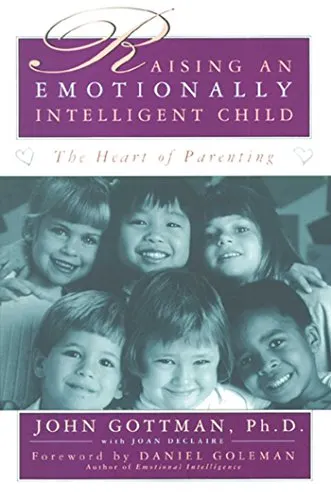
Raising an Emotionally Intelligent Child by John Gottman reveals how to nurture emotional intelligence through “Emotion Coaching.” This science-backed method teaches parents to validate feelings, set loving limits, and turn meltdowns into growth moments. Packed with real-life examples and practical steps, this book empowers caregivers to raise resilient, empathetic, and confident kids, equipped to thrive in life, love, and relationships.
Raising an Emotionally Intelligent Child is a groundbreaking guide that teaches parents how to nurture emotional intelligence (EQ) in their children, the critical skill that shapes happiness, resilience, and success more than IQ ever can.
Written by Dr. John Gottman, the world-renowned psychologist and relationship expert best known for his research on marriage and emotional communication, this book offers a practical, science-backed framework called “Emotion Coaching.”
“Children who are raised with emotional intelligence don’t just feel better,they do better in life.”
This summary walks you through the core principles of the book, offering a clear, compassionate breakdown of how to become an emotion coach, transform tantrums into teaching moments, and raise kids who are confident, empathetic, and emotionally resilient.
Gottman begins by challenging the outdated belief that emotions should be suppressed or ignored, especially in children.
He argues that:
“Your child’s emotions are doorways to connection, not obstacles to discipline.”
The goal isn’t to stop tantrums cold, but to use them as opportunities to teach emotional awareness and regulation.
At the heart of the book is a simple but powerful five-step process any parent can learn:
Recognize when your child is upset, even if they’re not crying. Look for subtle cues like clenched fists, silence, or irritability.
“Don’t wait for the storm. Notice the clouds.”
Many parents miss early signs because they focus only on behavior, not underlying feelings.
Instead of seeing emotional outbursts as misbehavior, view them as chances to connect and educate.
“When your child is drowning in feelings, that’s when they need you most.”
This shift turns conflict into closeness.
Get down to eye level and say things like:
Validation doesn’t mean agreeing with bad behavior, it means acknowledging the emotion behind it.
“A validated child calms faster than a criticized one.”
Expand their emotional vocabulary beyond “mad” or “sad.”
Research shows that naming emotions reduces their intensity, a concept known as “name it to tame it.”
Once your child feels heard, set boundaries and guide them toward solutions.
This teaches self-control without shame.
“Discipline with dignity builds responsibility.”
Based on decades of research, Gottman identifies four parenting styles based on how they handle emotions:
Children of emotion-coaching parents grow up to be:
Gottman shows how to adapt emotion coaching as your child grows:
Tantrums are normal. Stay calm, validate feelings, and use simple words.
Use distraction and redirection wisely.
Imagination runs wild. Use stories and play to explore emotions.
Teach basic coping strategies like deep breathing.
Face academic pressure, friendships, and bullying.
Help them navigate social dynamics with emotional wisdom.
Experience intense emotions due to brain changes and identity formation.
Emotion coaching during adolescence prevents depression, anxiety, and rebellion.
One chapter is dedicated to fathers, whose involvement has profound effects:
Gottman urges dads to:
“Fathers aren’t babysitters, they’re co-coaches.”
When both parents practice emotion coaching, the impact multiplies.
Gottman also addresses how family dynamics affect children:
For separated parents:
“Children don’t need perfection, they need stability and love.”
Even divorced parents can co-emotion-coach effectively.
Throughout the book, Gottman shares real stories from his research lab and clinical practice:
These examples prove that small shifts in response lead to big changes in behavior.
Gottman’s approach is grounded in rigorous research:
His work aligns with findings from neuroscience:
“Every moment of connection shapes the developing brain.”
Gottman explains that all misbehavior is communication:
Instead of asking “What’s wrong with this kid?” ask:
“What happened to this child? What do they need?”
Answer: Usually, it’s connection before correction.
Gottman provides practical tools you can start today:
Ask daily: “What was the best/worst part of your day?” Listen without judgment.
Have older kids write or draw their emotions each night.
Create a box with stress balls, books, music, or coloring supplies.
Use characters in movies or books: “How do you think she feels now?”
Model accountability: “I’m sorry I yelled. I was stressed, but that wasn’t fair to you.”
“Repair strengthens trust more than perfection ever could.”
Gottman encourages parents to shift their thinking:
These shifts build secure attachment and emotional safety.
Raising an Emotionally Intelligent Child is not about raising perfect children, it’s about raising whole ones.
It teaches that:
As Gottman writes:
“Children learn to regulate their emotions not through lectures, but through the way we treat them when they’re falling apart.”
When you become an emotion coach, you don’t just raise a smarter, kinder child, you help create a more compassionate world.