
variabletribe@gmail.com
We deliver life changing content to our users
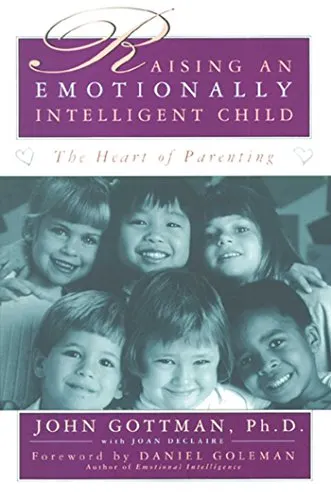
Raising an Emotionally Intelligent Child
Ebook

Raising an Emotionally Intelligent Child

Dr
Dr. John Gottman
247 Pages
1997 Published
English Language

Raising an Emotionally Intelligent Child by John Gottman reveals how to nurture emotional intelligence through “Emotion Coaching.” This science-backed method teaches parents to validate feelings, set loving limits, and turn meltdowns into growth moments. Packed with real-life examples and practical steps, this book empowers caregivers to raise resilient, empathetic, and confident kids, equipped to thrive in life, love, and relationships.

Access Resource

🧠 Short Summary 

Raising an Emotionally Intelligent Child is a groundbreaking guide that teaches parents how to nurture emotional intelligence (EQ) in their children, the critical skill that shapes happiness, resilience, and success more than IQ ever can.

Written by Dr. John Gottman, the world-renowned psychologist and relationship expert best known for his research on marriage and emotional communication, this book offers a practical, science-backed framework called “Emotion Coaching.”

“Children who are raised with emotional intelligence don’t just feel better,they do better in life.”

This summary walks you through the core principles of the book, offering a clear, compassionate breakdown of how to become an emotion coach, transform tantrums into teaching moments, and raise kids who are confident, empathetic, and emotionally resilient.

The Power of Emotional Intelligence

Gottman begins by challenging the outdated belief that emotions should be suppressed or ignored, especially in children.

He argues that:

  • Emotions are not distractions from learning, they are central to it.
  • How parents respond to a child’s feelings shapes their brain development, self-esteem, and future relationships.
  • Children with high EQ are more empathetic, less anxious, perform better academically, and have stronger social skills.

“Your child’s emotions are doorways to connection, not obstacles to discipline.”

The goal isn’t to stop tantrums cold, but to use them as opportunities to teach emotional awareness and regulation.

The Five Key Steps of Emotion Coaching

At the heart of the book is a simple but powerful five-step process any parent can learn:

Step 1: Be Aware of Your Child’s Emotion

Recognize when your child is upset, even if they’re not crying. Look for subtle cues like clenched fists, silence, or irritability.

“Don’t wait for the storm. Notice the clouds.”

Many parents miss early signs because they focus only on behavior, not underlying feelings.

Step 2: Recognize the Feeling as a Teaching Moment

Instead of seeing emotional outbursts as misbehavior, view them as chances to connect and educate.

“When your child is drowning in feelings, that’s when they need you most.”

This shift turns conflict into closeness.

Step 3: Listen with Empathy and Validate the Feeling

Get down to eye level and say things like:

  • “You’re really angry right now.”
  • “It makes sense you’d feel sad.”
  • “I’d be frustrated too.”

Validation doesn’t mean agreeing with bad behavior, it means acknowledging the emotion behind it.

“A validated child calms faster than a criticized one.”

Step 4: Help Your Child Label the Emotion

Expand their emotional vocabulary beyond “mad” or “sad.”

  • “Are you feeling disappointed?”
  • “Sounds like you’re overwhelmed.”
  • “That must have hurt your pride.”

Research shows that naming emotions reduces their intensity, a concept known as “name it to tame it.”

Step 5: Set Limits While Problem-Solving

Once your child feels heard, set boundaries and guide them toward solutions.

  • “It’s okay to be mad, but it’s not okay to hit.”
  • “Let’s think of what you can do next time.”

This teaches self-control without shame.

“Discipline with dignity builds responsibility.”

💡 Four Parenting Styles, and Why One Wins

Based on decades of research, Gottman identifies four parenting styles based on how they handle emotions:

1. The Dismissing Parent

  • Sees negative emotions as harmful or manipulative.
  • Says: “Stop crying,” “You’re fine,” “Don’t be so dramatic.”
  • Teaches: “Your feelings are wrong.”

2. The Disapproving Parent

  • Punishes emotional expression.
  • Says: “You’ll get a reason to cry!” “Big boys don’t cry.”
  • Teaches: “Feelings are dangerous.”

3. The Laissez-Faire Parent

  • Accepts all emotions but sets no limits.
  • Says: “Whatever you feel is okay,” then does nothing.
  • Teaches: “You’re in charge, no matter what.”

4. The Emotion Coach (The Ideal)

  • Acknowledges feelings, sets boundaries, and guides problem-solving.
  • Builds trust, security, and emotional strength.
  • Teaches: “Your feelings matter, and so do rules.”

Children of emotion-coaching parents grow up to be:

  • More resilient under stress
  • Better at handling peer pressure
  • Less likely to engage in risky behaviors
  • Stronger in relationships

🧭 Applying Emotion Coaching at Every Age

Gottman shows how to adapt emotion coaching as your child grows:

Toddlers (Ages 1–3)

Tantrums are normal. Stay calm, validate feelings, and use simple words.

  • “You wanted the toy. You’re mad I said no.”

Use distraction and redirection wisely.

Preschoolers (Ages 4–5)

Imagination runs wild. Use stories and play to explore emotions.

  • Ask: “How do you think the bear felt when he lost his hat?”

Teach basic coping strategies like deep breathing.

School-Age Kids (6–12)

Face academic pressure, friendships, and bullying.

  • Talk about empathy: “How would you feel if someone did that to you?”
  • Encourage journaling or drawing feelings.

Help them navigate social dynamics with emotional wisdom.

Teens (13+)

Experience intense emotions due to brain changes and identity formation.

  • Don’t lecture. Listen first.
  • Say: “Tell me more,” not “Here’s what you should do.”
  • Respect privacy while staying connected.

Emotion coaching during adolescence prevents depression, anxiety, and rebellion.

The Father’s Crucial Role

One chapter is dedicated to fathers, whose involvement has profound effects:

  • Children with involved dads have higher IQs, better grades, and fewer behavioral issues.
  • Fathers often encourage risk-taking and independence, balancing maternal nurturing.

Gottman urges dads to:

  • Play physically (builds confidence)
  • Talk about feelings (“Dad, I’m scared”)
  • Model healthy emotional expression

“Fathers aren’t babysitters, they’re co-coaches.”

When both parents practice emotion coaching, the impact multiplies.

Marriage, Divorce, and Emotional Health

Gottman also addresses how family dynamics affect children:

  • Constant parental conflict harms kids more than divorce itself.
  • A peaceful single-parent home is healthier than a warzone two-parent home.

For separated parents:

  • Keep adult conflicts away from children.
  • Speak respectfully about the other parent.
  • Maintain consistent routines across households.

“Children don’t need perfection, they need stability and love.”

Even divorced parents can co-emotion-coach effectively.

❤️ Real-Life Examples and Case Studies

Throughout the book, Gottman shares real stories from his research lab and clinical practice:

  • A boy who stopped biting classmates after his mom started validating his frustration.
  • A girl who overcame test anxiety by learning to name her fear.
  • A teen who opened up after his dad simply listened instead of fixing.

These examples prove that small shifts in response lead to big changes in behavior.

The Science Behind the Method

Gottman’s approach is grounded in rigorous research:

  • He observed hundreds of families using video recordings and physiological sensors.
  • Found that children whose parents practiced emotion coaching had:
    • Lower cortisol (stress hormone) levels
    • Faster recovery from distress
    • Higher empathy scores

His work aligns with findings from neuroscience:

  • Secure attachment rewires the brain for emotional regulation.
  • Co-regulation (parent calming child) builds neural pathways for self-regulation.

“Every moment of connection shapes the developing brain.”

Psychology of Misbehavior

Gottman explains that all misbehavior is communication:

  • A defiant child may feel powerless.
  • A withdrawn child may feel unseen.
  • An aggressive child may feel unsafe.

Instead of asking “What’s wrong with this kid?” ask:

“What happened to this child? What do they need?”

Answer: Usually, it’s connection before correction.

Tools and Exercises for Parents

Gottman provides practical tools you can start today:

Emotion Check-In

Ask daily: “What was the best/worst part of your day?” Listen without judgment.

Feelings Journal

Have older kids write or draw their emotions each night.

Calm-Down Kit

Create a box with stress balls, books, music, or coloring supplies.

Practice Naming Emotions

Use characters in movies or books: “How do you think she feels now?”

Repair After Conflict

Model accountability: “I’m sorry I yelled. I was stressed, but that wasn’t fair to you.”

“Repair strengthens trust more than perfection ever could.”

🧘‍♂️ Mindset Shifts That Change Everything

Gottman encourages parents to shift their thinking:

  • From: “Stop being sad”
    To: “It’s okay to feel sad. I’m here.”
  • From: “Behave or else”
    To: “Let’s figure this out together.”
  • From: “They’re manipulating me”
    To: “They’re struggling to communicate.”
  • From: “I need to fix it”
    To: “I need to listen first.”
  • From: “Good kids don’t act like this”
    To: “All kids struggle, his is normal.”

These shifts build secure attachment and emotional safety.

 Final Thoughts: Raise Humans, Not Robots

Raising an Emotionally Intelligent Child is not about raising perfect children, it’s about raising whole ones.

It teaches that:

  • Discipline without connection breeds resentment.
  • Love without boundaries creates chaos.
  • True strength includes vulnerability.
  • The best gift you can give your child is the ability to understand themselves.

As Gottman writes:

“Children learn to regulate their emotions not through lectures, but through the way we treat them when they’re falling apart.”

When you become an emotion coach, you don’t just raise a smarter, kinder child, you help create a more compassionate world.

📌 Key Lessons from Raising an Emotionally Intelligent Child

  • Emotions are opportunities for connection, not disruptions.
  • Validating feelings builds trust and calm.
  • Naming emotions helps tame them.
  • Set limits with empathy, not punishment.
  • Listen first, solve later.
  • Fathers play a vital role in emotional development.
  • Conflict between parents harms kids more than divorce.
  • Misbehavior is communication in disguise.
  • Emotional intelligence predicts life success better than IQ.
  • You don’t need to be perfect, just present and willing to repair.
Publisher Simon & Schuster
Publication Date 1997
Pages 247
Language English
File Size 2.0mb
Categories parenting, Psychology

Leave a Comment