
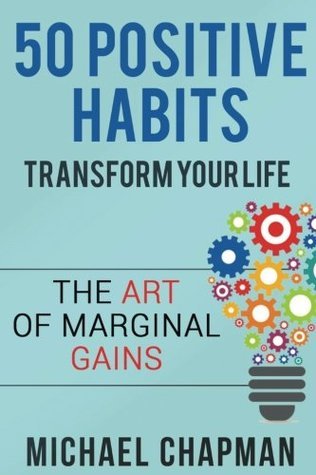
Ready for real change without overwhelm? This “50 Positive Habits to Transform Your Life” summary distills Michael Chapman’s actionable blueprint into daily micro-practices that build confidence, clarity, and calm, one small win at a time. From morning routines to meaningful connections, discover how tiny shifts create extraordinary results. Start your 50-day transformation today.
In 50 Positive Habits to Transform Your Life, author and personal development coach Michael Chapman delivers a practical, no-nonsense guide to building a life of purpose, resilience, and daily fulfillment. Unlike abstract motivational books, this work is structured as a 50-day journey—each chapter introducing one actionable habit designed to compound over time. The “50 Positive Habits to Transform Your Life” summary reveals Chapman’s core philosophy: transformation isn’t born from grand gestures, but from small, consistent choices repeated with intention.
Blending principles from behavioral psychology, stoicism, and modern productivity science, Chapman avoids fluff and focuses on habits that are both accessible and sustainable. His tone is encouraging yet direct—ideal for readers overwhelmed by complex systems or paralyzed by perfectionism. Whether you’re seeking better mental health, stronger relationships, career momentum, or physical vitality, this book offers a modular toolkit you can customize to your goals.
Rather than a linear narrative, the book is organized into thematic clusters:
Foundations of Self-Mastery (Habits 1–10)
Chapman begins with internal alignment: waking early, journaling, practicing gratitude, digital detoxing, and affirming self-worth. Habit #3—“Write Three Wins Every Night”—is particularly powerful, training the brain to scan for progress rather than lack.
Mindset & Emotional Resilience (Habits 11–20)
Here, he tackles limiting beliefs and emotional regulation. Key practices include reframing failure as feedback (#14), setting boundaries (#17), and the “5-Minute Reset” for anxiety (#19). Chapman emphasizes that emotional intelligence starts with daily micro-choices, not crisis management.
Productivity & Purpose (Habits 21–35)
This section bridges intention and action. Standouts include “The 2-Hour Deep Work Block” (#23), “Plan Tomorrow Tonight” (#27), and “Do the Hardest Thing First” (#29). Crucially, Chapman warns against “productivity theater”—busywork that feels productive but lacks impact.
Health & Energy (Habits 36–42)
Physical vitality is treated as non-negotiable. Habits like “Move Before You Think” (#36), “Hydrate Before Caffeinate” (#38), and “Tech-Free Wind-Down” (#41) reflect the science of circadian rhythm and metabolic health.
Connection & Contribution (Habits 43–50)
The final habits shift outward: active listening (#44), random acts of kindness (#46), mentoring (#48), and legacy reflection (#50). Chapman argues that lasting fulfillment arises not from self-optimization alone, but from meaningful contribution.
Each habit includes:
Chapman’s approach rests on three evidence-backed pillars:
Readers report tangible outcomes:
Corporate wellness programs have adapted the book’s framework for employee resilience training, particularly Habits #12 (reframing stress) and #31 (single-tasking).
While 50 Positive Habits lacks original research, its strength lies in curation and clarity. Chapman synthesizes proven concepts from psychology (Carol Dweck), neuroscience (Andrew Huberman), and philosophy (Marcus Aurelius) into digestible actions.
Critics may note the book’s brevity—some habits warrant deeper exploration—but this is intentional. Chapman designed it as a field manual, not a textbook. Its modular format allows readers to skip to relevant sections, making it ideal for busy adults.
Notably, he avoids toxic positivity. Habit #15 (“Feel Your Feelings Fully”) explicitly validates sadness and anger as necessary data—not obstacles to happiness. This emotional honesty elevates the book beyond superficial “just think positive” advice.
Comments
1How to download it