

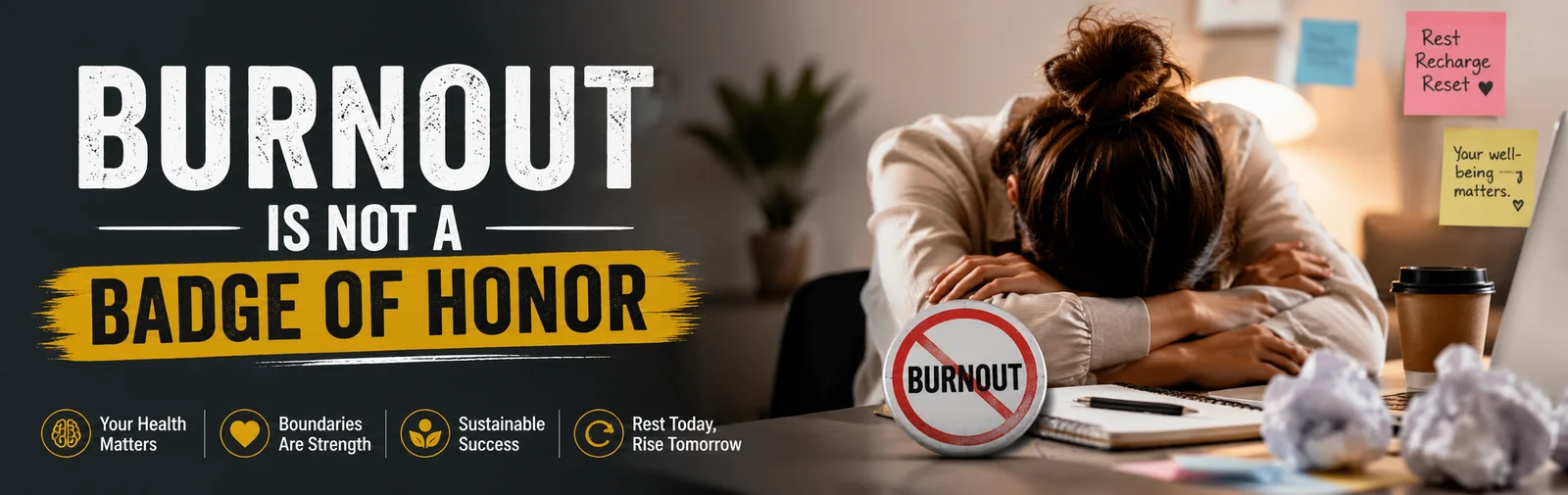
Burnout is not just about being tired. It is what happens when a person spends too much time carrying pressure, expectations, and exhaustion without giving themselves enough space to breathe. In a world obsessed with productivity, people are constantly told to do more, become more, and achieve more, often at the cost of their own mental and emotional well-being. Slowly, life begins to feel less like living and more like surviving. Healing from burnout is not about becoming perfect overnight. It is about rebuilding a healthier relationship with yourself, your time, your energy, and your life.
1. Stop Trying to Fix Your Whole Life in One Day
We experience burnout when we think we are falling behind and try to fix everything at once. Because of this, our mind becomes overwhelmed, and in the end, nothing gets done.
One harsh truth is that life usually does not fall apart because of one bad day, it falls apart after weeks of inconsistency.
So instead of trying to change your entire life in one day, take small steps.
For example, do not force yourself to study for 12 hours if you cannot even sit for 3 hours consistently. Instead, start by revising one small topic.
Small progress is still progress.
2. Try to Make Your Life Easier, Not Harder
Instead of aiming to study for 12 hours a day, study for one focused hour with full concentration.
Instead of wasting time making aesthetic notes, study from messy notes if they help you learn better.
Instead of forcing yourself into an intense one-hour workout, maybe just go for a 30-minute walk.
Life becomes easier when you stop trying to make everything perfect. Burnout grows when every task starts feeling like pressure instead of purpose.
3. Stop Waiting to Feel Ready
People waste years waiting for the “right time” to start. Waiting to feel confident, motivated, fearless, or fully prepared. But the truth is, most people begin while they are still uncertain. Nobody ever feels completely ready for change.
Start scared if you have to, but start anyway.
You need to understand that motivation comes from action, not from waiting. The more you delay things, the heavier they begin to feel in your mind.
4. Your Environment Affects Your Energy More Than You Think
Your surroundings shape your mental state more than you realize. A messy room, constant noise, toxic relationships, negative conversations, unhealthy routines, and endless digital stimulation slowly drain your energy.
Sometimes people blame themselves for lacking motivation when their environment is actually the problem. Peaceful spaces matter. The people around you matter. Even the content you consume daily matters. Protecting your energy is not selfish; it is necessary.
5. Rest Without Guilt, But Do Not Disappear From Your Life
Feeling tired is not weakness; it is a signal from your brain and body that you need rest. But rest does not mean abandoning everything and endlessly scrolling on your phone. That is not real recovery.
Instead, take a day or two off and do things you genuinely enjoy. Listen to music. Go outside. Spend time with people you love. Sleep properly. Give your mind space to breathe. Then return to your responsibilities with consistency instead of pressure.
Remember, burnout is not a sign that you are weak, lazy, or incapable. It is often the result of carrying too much for too long without giving yourself enough time to recover. The truth is, you do not need to transform your entire life overnight to become better. Small steps, consistency, rest, and self-awareness matter far more than exhausting yourself in the name of productivity. Life is not a race to see who can suffer the most while still functioning. Sometimes the healthiest thing you can do is slow down, make your life easier, and allow yourself to breathe again. Growth does not happen through constant pressure; it happens when you stop fighting yourself and start working with yourself instead.
Be kind. Be honourable.