Ascent Code | Episode 5 | Kumar Nitesh
Ascent Code Episode 5 — Kumar Nitesh, IIT scholar and Paralympic Gold medalist, proves that intellectual rigour is the ultimate competitive weapon in sport and life.

Ascent Code Episode 5 — Kumar Nitesh, IIT scholar and Paralympic Gold medalist, proves that intellectual rigour is the ultimate competitive weapon in sport and life.
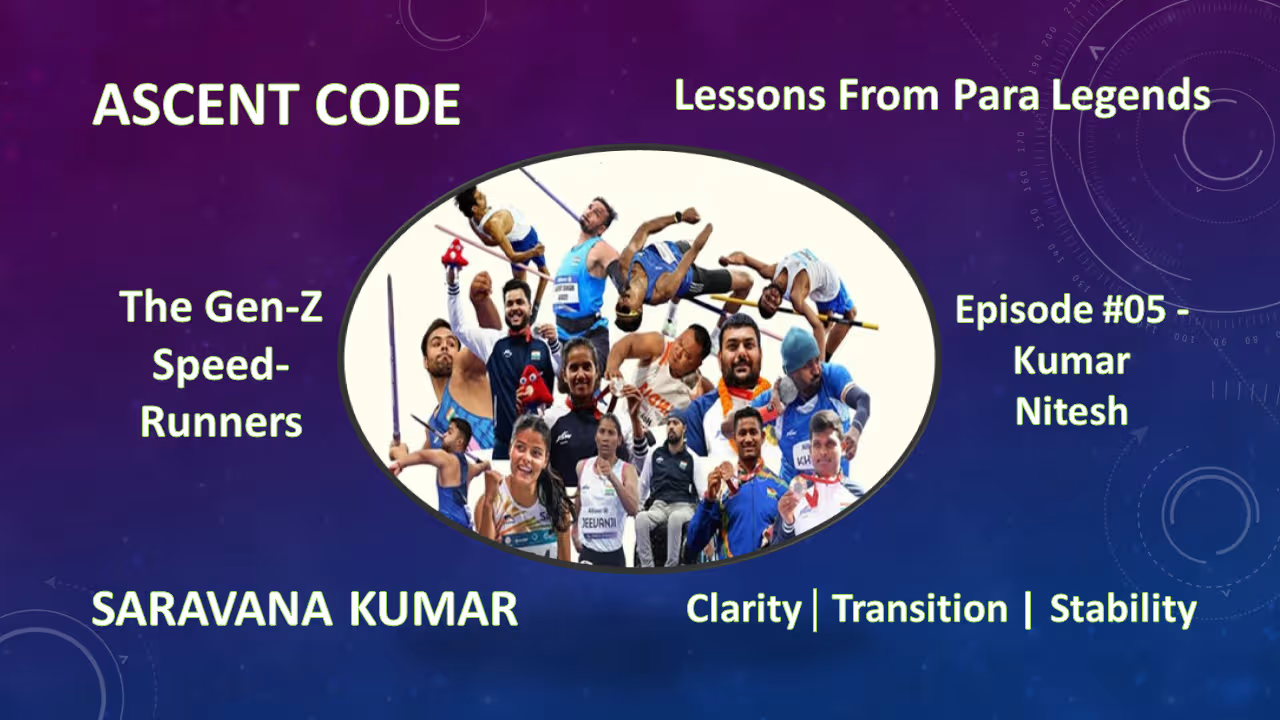
ASCENT CODE: Episode 5
Kumar Nitesh — The Gen-Z Speed-Runners. How an IIT scholar turned a train accident into a Paris 2024 Paralympic Gold medal in badminton.
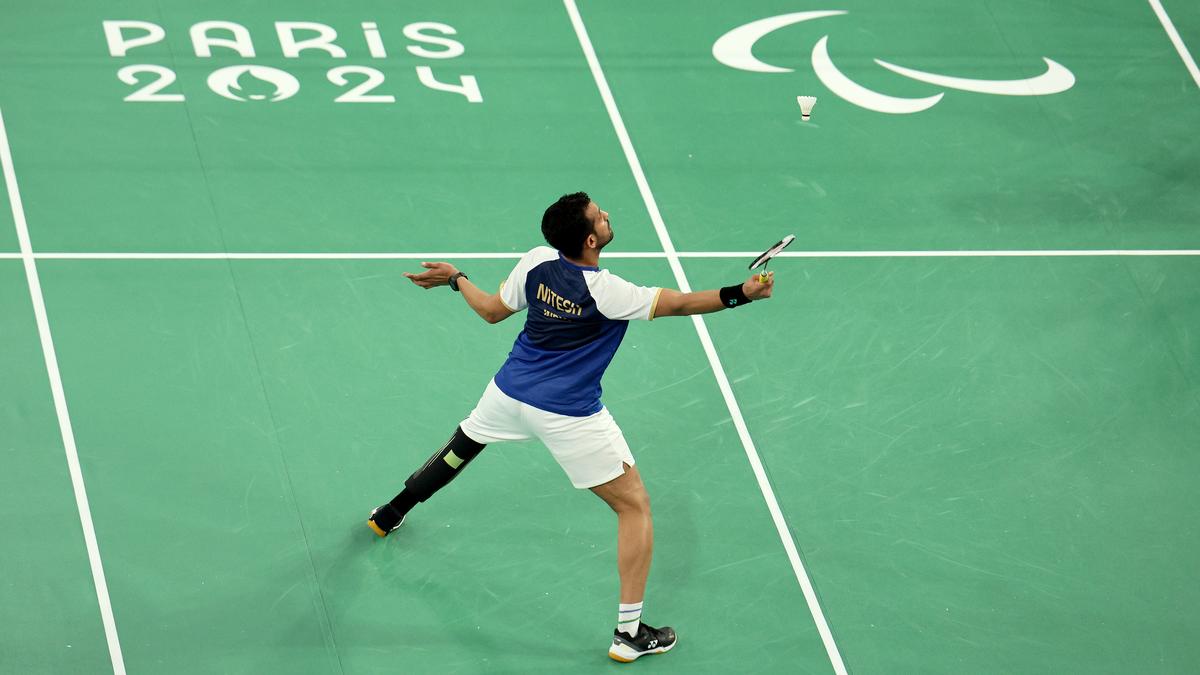
This episode of Ascent Code is the story of Kumar Nitesh, a student at IIT Mandi who lost his left leg in a train accident in 2009, picked up a badminton racquet to stay competitive, and arrived at the Paris 2024 Paralympic Games to defeat the top-seeded Great Britain player in an epic final. He won Gold in SL3 badminton — not despite his academic mind, but because of it.
What separates Kumar Nitesh from every other athlete in this series is the weapon he brought to the court: intellectual rigour. The same analytical discipline that builds an IIT engineer — pattern recognition, strategic iteration, opponent modelling — turned out to be precisely what elite para-badminton at the highest level demands. He did not simply train harder. He trained smarter, mapped his opponents with precision, and executed under Paris pressure with the kind of unflappable focus that only comes from a mind that has been sharpened by years of high-stakes problem solving.
THE ASCENT CODE — THE SCHOLAR-WARRIOR CODE: Intellectual rigour applied to competitive sport produces a level of strategic focus and adaptive execution that physical training alone cannot generate.
It was 2009. Kumar Nitesh was a student at IIT Mandi when a train accident took his left leg. The sterile fluorescent hum of the hospital ward replaced the noise of lecture halls. The smell of antiseptic filled every corridor. The cold metal of the bed rail under his hand was the first thing he gripped as he registered what had changed.
For a young man whose identity was built around intellectual performance and competitive ambition, the physical loss landed on more than his body. The engineering problem he now faced was himself — how to rebuild a competitive life using only the tools he already possessed.
At the Paris 2024 Paralympic Games, Kumar Nitesh walked onto the badminton court in the SL3 final, faced the top-seeded player from Great Britain, and won. Paralympic Gold. The Scholar-Warrior Code — demonstrated on the biggest stage in para-sports.
The shadow phase after the accident was real but brief in its paralysis. Nitesh had a cognitive framework that most athletes do not carry into rehabilitation: a trained engineering mind that instinctively reframes problems rather than cataloguing losses. He turned to badminton not as escape but as methodology — a structured domain where his analytical capabilities could be deployed toward measurable competitive outcomes.
What emerged was his most powerful competitive advantage. He began approaching opponents the way an engineer approaches a system — decomposing their game into patterns, identifying exploitable variables, designing responses before the match began. The court became his new laboratory. Every match was a live experiment with data to harvest.
His primary constraint was time. Maintaining IIT academic standards while travelling for national camps and tournaments meant training by intelligence, not volume. Every session had to produce strategic insight alongside physical conditioning. Constraint forced efficiency. Efficiency produced excellence.
Kumar Nitesh built his game across years of systematic competition, each level providing new data for the analytical framework he was developing. National championships, Asian Games qualifiers, World Championship circuits — each tournament was less a test of physical readiness than a strategic calibration exercise.
Verified Achievement
• Paris 2024 — Gold Medal, SL3 Badminton (defeated top-seeded Great Britain player in the final)
• Multiple Asian and World Championship medals across the competitive cycle.
The Paris final was not a physical upset. It was the outcome of a systematically constructed competitive architecture that had been tested, iterated, and stress-proven across the entire preceding career.
Most athletes think about sport as a physical domain. They train their bodies, develop technique, and build endurance. Kumar Nitesh did all of those things. But he added a layer that most of his competitors did not have: a systematic analytical framework applied to every dimension of competition.
The Scholar-Warrior Code is this: intellectual rigour, when applied with the same intensity to competitive performance as it is to academic problems, produces a strategic advantage that physical preparation alone cannot replicate. Pattern recognition compresses learning cycles. Opponent modelling converts match data into tactical preparation. Strategic iteration means each loss becomes a corrected hypothesis rather than a demoralising setback. The mind that has been trained to solve complex problems under examination pressure is — it turns out — an extraordinarily effective competitive instrument when pointed at an opponent across a net.
The broader application is direct. In any high-performance domain — sales, leadership, entrepreneurship, professional services — the individuals who combine domain skill with analytical rigour consistently outperform those who rely on experience or effort alone. Kumar Nitesh did not win a Paralympic Gold by working the hardest in the room. He won it by thinking the clearest.
Go back to that hospital ward in 2009. The fluorescent hum. The antiseptic smell. An IIT student calculating what had just been taken from him, and what remained.
What the Kumar Nitesh story reveals is that the train accident did not interrupt his competitive trajectory. It redirected it into a domain where his specific combination of capabilities — analytical rigour, strategic intensity, problem-solving under pressure — had no ceiling. In mainstream engineering, he would have been one of thousands of talented IIT graduates. In para-badminton at the SL3 level, he was the most analytically sophisticated competitor on the court. The accident did not diminish his competitive edge. It placed it in an arena where it was decisive.
As of 2026, Kumar Nitesh serves as an Officer in the Haryana Government, holds Paralympic Gold, and remains the reigning SL3 world champion. The Scholar-Warrior Code is not a historical lesson. It is an active competitive reality — proof that the sharpest instrument in any competitive arena is the mind that has been disciplined to think before it acts.
👇 Drop your answer in the comments. The #AscentYouTribe learns together.
Sports science increasingly documents what Kumar Nitesh demonstrates practically: elite performers who apply explicit analytical frameworks to their sport show measurably faster skill acquisition, superior tactical adaptation, and more consistent performance under pressure than athletes who rely on implicit learning alone. The mechanism is well understood — analytical engagement with performance data creates richer mental models of the competitive environment, reducing the cognitive load during execution and freeing attentional resources for real-time adjustment.
Nitesh’s exceptional court coverage — widely noted by commentators — is a direct expression of this principle. Elite badminton movement is not purely physical. It is predictive. The player who has modelled opponent shot patterns moves before the shot lands. Superior anticipation, driven by analytical pre-processing, produces movement efficiency that looks like physical superiority but is fundamentally cognitive. His IIT training did not just give him a degree. It gave him the neural architecture for precisely this kind of competitive edge.
Next on The Ascent: Episode 6 — Joginder Singh Bedi — The Zero-to-One Pioneers.
SARAVANA KUMAR
Clarity | Transition | Inner Stability
What this episode confirmed for me is something I have observed across decades in the corporate world: the most dangerous competitor in any room is rarely the most experienced. It is the one who has done the thinking before the room begins. The Scholar-Warrior Code is available to all of us. It does not require an IIT degree. It requires the discipline to analyse before you act, and the conviction to execute what the analysis reveals.
#SaravanaSays
All the ways to connect, learn, and grow with the Tribe — in one place. Choose your favourite platform and stay plugged into daily momentum.
KEYWORDS: Ascent Code Kumar Nitesh, Scholar-Warrior Code, Paralympic Gold Medal Paris 2024, IIT Mandi para-athlete, badminton Paralympics SL3, Gen-Z Speed-Runners, analytical performance, cognitive competitive advantage, para-badminton India, intellectual rigour sport, high performance mindset, career resilience, strategic execution, disability leadership, Indian para athletes.
HASHTAGS: #AscentCode #AscentYouTribe #SaravanaSays #SaravanaKumar #SpeedRunCode #Clarity #Transition #InnerStability #HighPerformance #MindsetEngineering #ResilienceEngineered #SuccessSystems #CareerPivot #LeadershipPrinciples #StrategicThinking #SelfOptimization #KumarNitesh #ParalympicsIndia #ParaBadminton #Paris2024 #IndianAthletes #AdaptiveAthletes #GenZLeaders