
Introduction
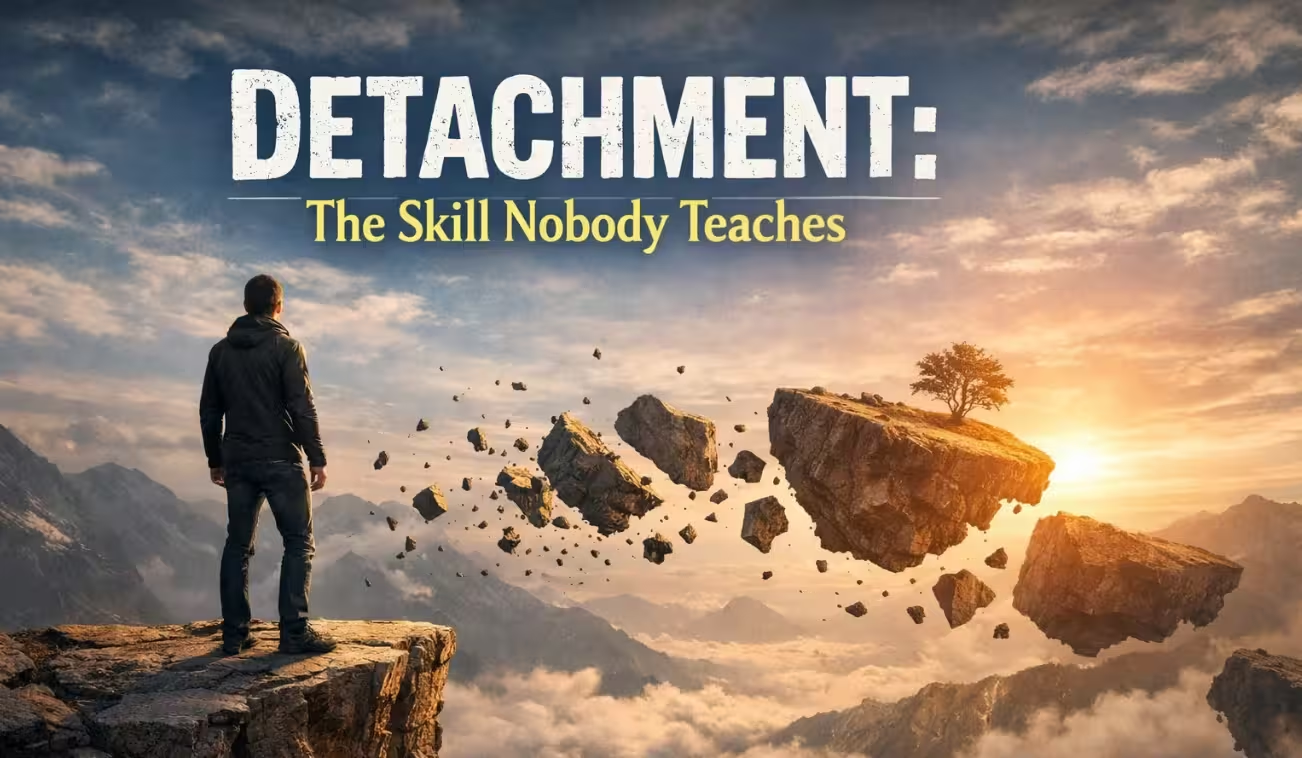
Detachment is often misunderstood.
Some people think it means not caring. Others imagine it as emotional numbness, a life where nothing matters. But true detachment is neither of these things.
Detachment simply means not allowing your inner peace to depend entirely on external things.
You can love someone deeply without believing they must stay forever.
You can pursue success without believing failure will destroy you.
You can desire things without becoming enslaved by them.
Attachment, on the other hand, is when the mind quietly says: “I cannot be okay unless this happens.”
And that single belief becomes the root of suffering. Because life changes, people leave, plans fail. Circumstances shift without asking for permission. When the mind clings tightly to something temporary, pain becomes inevitable.
Detachment is the ability to hold life gently, to participate fully while accepting that everything is temporary. It is not withdrawal from life. It is freedom within life.
“Attachment leads to suffering, Detachment leads to freedom”
Author’s note: Detachment is a skill, and learning a skill takes time. Read further if you’re willing to invest in it.
How to detach from someone or something
1. Acknowledgement: Seeing the Wanting
The first step toward detachment is brutally simple: notice the attachment.
When you see something you want a person, success, approval, or a particular outcome, pause and observe what happens inside you.
Where do you feel it in your body?
A tight chest.
A restless mind.
A sinking feeling in the stomach.
That sensation is the feeling of wanting. Instead of suppressing it, allow it.
Let yourself feel the emotions fully. Grief, longing, jealousy, fear – whatever appears. Cry if you need to. Pretending not to care only buries the attachment deeper.
Acknowledgement is honesty with yourself: “Yes, I wanted this.”
And that honesty opens the door to change.
2. Self-Inquiry: Questioning the Story
Once the emotion is visible, the next step is questioning it.
Start by naming what you feel.
Is it rejection?
Loss?
Fear of being alone?
Fear of failure?
Then look at the story your mind is telling. Often the mind builds dramatic narratives: “I’ll never be happy again.” “Everything is ruined.” “I lost my only chance.”
But stories are not facts. Pause. Breathe out slowly. Create space between the emotion and the narrative.
At this stage, many people find strength in wisdom teachings, or prayer for help and guidance. Not as an escape, but as a reminder that the mind is not always a reliable storyteller.
Ask yourself:
-
Is this thought actually true?
-
Is this moment permanent?
-
Have I survived difficult moments before?
Self-inquiry is basically questioning the feeling.
3. Processing: Finding Meaning
Pain that is ignored becomes bitterness. Pain that is processed becomes wisdom. Detachment grows when we begin asking a deeper question:
What is this experience trying to teach me?
Maybe the lesson is patience.
Maybe self-respect.
Maybe the realization that your happiness cannot depend on another person’s choices.
First comes mindfulness: ‘It is just a thought.’ Then comes prayer: ‘Things will get better.’
Processing is the stage where you start finding meanings or lessons in ‘experience’.
4. Creative Action: Moving Without Desperation
Real detachment does not mean withdrawing from life. It means acting without desperation.
When attachment loosens, a new kind of energy appears. You start new efforts with genuine interest rather than desperation, fear, or the need to prove something.
You work, create, build relationships, and pursue goals because they feel meaningful, not because your identity depends on them.
5. Freedom: The Quiet Stage
Eventually something surprising happens. The memory of the loss or desire remains, but it no longer disturbs your inner peace.
You can think about the person, the dream, or the failure without the strong emotional reaction. This stage often feels like putting down a heavy burden you didn’t realize you were carrying.
Conclusion
Detachment is not about withdrawing from life. It is about participating in life without losing yourself in it. It asks us to love without possession, to work without obsession, and to accept that change is the only constant.
Whether detachment is seen as wisdom or emotional distance ultimately depends on how it is practiced. Used wisely, it brings peace. Used poorly, it becomes isolation.
Be kind. Be honourable.