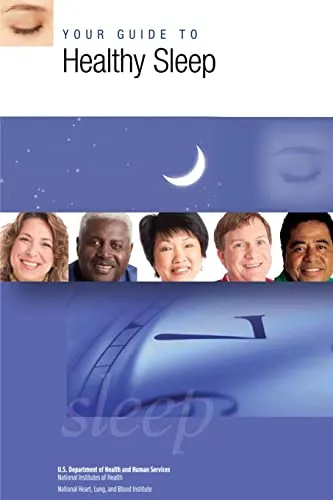
Your Guide to Healthy Sleep by the NIH is a science-backed resource explaining why sleep matters and how to improve it. It covers sleep stages, recommended hours by age, common disorders like insomnia and sleep apnea, and practical tips for better rest. Emphasizing that sleep is essential for brain function, heart health, and emotional well-being, this guide helps readers recognize sleep problems and take action for a healthier, safer life.
Your Guide to Healthy Sleep is an authoritative, science-based resource published by the National Institutes of Health (NIH) that demystifies sleep and empowers readers to understand its critical role in health, safety, and daily functioning.
This comprehensive guide answers essential questions like:
Written in clear, accessible language for the general public, the booklet combines decades of medical research with practical advice, real-life stories, and actionable tips to help people improve their sleep hygiene and overall well-being.
“Sleep isn’t downtime, it’s investment time for your brain and body.”
This summary walks you through the full scope of the guide, offering a detailed breakdown of its key sections, scientific insights, and life-saving recommendations.
The guide begins by dismantling the myth that sleep is passive, a time when the brain and body “shut down.” Instead, modern research shows that:
Sleep is a dynamic, active process essential for survival.
During sleep, your brain cycles through distinct stages, each playing a unique role in restoring physical health, consolidating memories, regulating mood, and supporting immune function.
Poor or insufficient sleep doesn’t just leave you tired, it increases your risk of:
“Chronic sleep deprivation is linked to shorter lifespans.”
The guide emphasizes that quality, timing, and quantity of sleep are all equally important, not just total hours.
Sleep is not a single state but a series of repeating cycles throughout the night, each lasting about 90 minutes.
There are two main types of sleep:
Makes up about 75–80% of total sleep. It has three stages:
Occurs about 90 minutes after falling asleep. Characterized by:
REM sleep is vital for:
“Both non-REM and REM sleep are crucial, you need both for optimal health.”
As you age, you spend less time in deep non-REM sleep, which explains why older adults often feel less rested despite sleeping the same number of hours.
Two primary biological forces regulate when you feel sleepy or alert:
Your internal 24-hour clock, controlled by a part of the brain called the suprachiasmatic nucleus (SCN).
It responds to light cues:
Disruptions (like jet lag, shift work, or screen use at night) throw off this rhythm, leading to insomnia or daytime fatigue.
Your body’s natural drive to sleep increases the longer you’re awake.
Think of it as a chemical “sleep pressure” that builds up during the day due to the accumulation of adenosine, a neurotransmitter. Caffeine works by blocking adenosine receptors, temporarily reducing sleepiness.
“You can’t cheat biology. Eventually, sleep debt catches up.”
The interplay between these two systems determines your energy levels, performance, and mood.
The guide highlights how every major system in your body depends on healthy sleep.
While you sleep:
Lack of sleep impairs:
“Students who pull all-nighters perform worse than those who sleep before exams.”
Chronic sleep loss also increases the risk of anxiety and depression.
During deep sleep, your heart rate and blood pressure drop, giving your cardiovascular system a nightly rest.
Long-term sleep deprivation leads to:
These factors raise the risk of heart attack, stroke, and hypertension.
“People who sleep less than 6 hours per night have a higher risk of heart disease.”
Sleep regulates key hormones:
Result? Increased appetite, cravings for high-calorie foods, weight gain, and a higher risk of type 2 diabetes.
One study found women who slept less than 7 hours were more likely to develop diabetes than those who slept 7–8 hours.
“Sleep is as important for metabolic health as diet and exercise.”
The amount of sleep needed varies by age:
|
Age Group
|
Recommended Hours
|
|---|---|
|
Newborns (0–3 months)
|
14–17 hours
|
|
Infants (4–11 months)
|
12–15 hours
|
|
Toddlers (1–2 years)
|
11–14 hours
|
|
Preschoolers (3–5 years)
|
10–13 hours
|
|
School-Age Children (6–13 years)
|
9–11 hours
|
|
Teenagers (14–17 years)
|
8–10 hours
|
|
Adults (18–60+ years)
|
7+ hours
|
“Most teenagers get only 7–7.5 hours, far below what they need.”
The guide stresses that you cannot fully make up lost sleep on weekends. While extra sleep may reduce immediate fatigue, it doesn’t reverse the metabolic, cognitive, and emotional damage caused by chronic sleep debt.
Many factors interfere with quality sleep:
Anxiety, depression, and worry activate the nervous system, making it hard to fall or stay asleep.
“Stress and sleep problems create a vicious cycle.”
Snoring is common, but it’s not always harmless.
Occasional snoring due to colds or allergies is usually benign. But chronic, loud snoring can be a sign of obstructive sleep apnea (OSA).
In OSA:
Untreated sleep apnea increases the risk of:
“At least 12–18 million American adults have sleep apnea, many undiagnosed.”
If you or a partner notice snoring with pauses in breathing, excessive daytime sleepiness, or morning headaches, see a doctor.
The guide details five major sleep disorders:
Difficulty falling or staying asleep, despite having the opportunity.
Types:
Causes include:
Treatment: Cognitive Behavioral Therapy for Insomnia (CBT-I), not just medication.
As described above, pauses in breathing during sleep.
Diagnosis: Polysomnography (sleep study) in a lab or at home.
Treatment: Continuous Positive Airway Pressure (CPAP) machine, oral devices, lifestyle changes.
An uncontrollable urge to move the legs, often accompanied by uncomfortable sensations (creeping, tingling).
Worse at night and during rest. Relieved by movement.
Linked to iron deficiency and certain medications.
“RLS can severely disrupt sleep and quality of life.”
Treatment: Iron supplements, dopamine agonists, lifestyle adjustments.
A neurological disorder causing extreme daytime sleepiness and sudden “sleep attacks.”
Other symptoms:
Caused by low levels of hypocretin, a brain chemical that regulates wakefulness.
Diagnosis: Multiple Sleep Latency Test (MSLT).
Treatment: Stimulants, antidepressants, scheduled naps.
Abnormal behaviors during sleep, such as:
More common in children but can persist into adulthood.
Often occur during transitions between sleep stages.
“Most parasomnias are harmless, but safety precautions are important.”
The guide provides a checklist of common signs:
“If you experience any of these on three or more nights per week, talk to your doctor.”
Self-assessment tools like the Epworth Sleepiness Scale help measure daytime drowsiness.
The guide offers evidence-based strategies:
Even on weekends. This stabilizes your circadian rhythm.
Take a warm bath, read, meditate, avoid screens.
Especially within 4–8 hours of bedtime.
If needed, keep them under 20 minutes and before 3 p.m.
But not too close to bedtime.
Write down concerns earlier in the day. Use journaling or mindfulness.
“Good sleep hygiene is preventive medicine.”
Your Guide to Healthy Sleep makes one thing clear:
Sleep is not a luxury, it’s a biological necessity.
Just like nutrition and exercise, sleep is a foundational pillar of health. Ignoring it comes at a steep cost: reduced productivity, increased disease risk, and even early death.
The good news?
As the guide concludes:
“Getting enough quality sleep at the right times can help protect your mental health, physical health, quality of life, and safety.”
So tonight, turn off the lights, put away the phone, and give your brain and body the gift they need most: a full, uninterrupted night of restorative sleep.