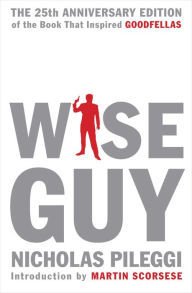
🧠 Comprehensive Analysis
Nicholas Pileggi’s Wiseguy: Life in a Mafia Family stands as a landmark work in true crime literature, not because it glorifies organized crime, but because it dissects it with journalistic precision and human complexity. Through the eyes of Henry Hill, a former associate of New York’s Lucchese crime family, Pileggi delivers a raw, unflinching chronicle of life inside the American Mafia during its mid-20th-century heyday. What makes this book exceptional is not just the sensationalism of hijackings, murders, and multimillion-dollar heists, but the intimate portrayal of how criminality becomes normalized, how a working-class kid from Brooklyn comes to see theft, violence, and betrayal not as moral failings, but as career paths.
Hill’s story begins not with a grand ambition, but with childhood fascination. At age eleven, he wanders into a cabstand on Pine Street in Brownsville–East New York and is instantly captivated by the men who gather there: their tailored suits, diamond rings, and effortless authority. These are not petty thieves, they are “wiseguys,” figures of local power who command respect without ever raising their voices. For Henry, the son of an overworked Irish electrician and a Sicilian mother, this world offers something his home cannot: belonging, status, and control. His mother’s Sicilian roots grant him instant credibility with the Vario family, who run the cabstand and much of the neighborhood’s underworld. By twelve, he’s running errands for Paul Vario, a capo whose influence stretches from illegal gambling dens to union contracts. By sixteen, he’s been arrested for the first time. By twenty, he’s orchestrating cigarette smuggling operations and participating in airport hijackings.
Pileggi masterfully traces the evolution of Hill’s criminal education. Early schemes are almost comically small-time: selling counterfeit twenties, rigging Christmas trees to look fuller, or fencing stolen groceries. But as Hill matures, so do his operations. He moves into high-stakes hijacking at JFK Airport, where cargo worth billions passes through annually with minimal security. Alongside Jimmy Burke, charismatic, generous, and terrifyingly violent, Hill learns that the real money isn’t in street-level thievery, but in systemic exploitation: stealing truckloads of cigarettes, hijacking shipments of furs and electronics, and even manipulating college basketball point spreads. The 1978 Lufthansa heist, which netted $6 million in cash and jewels, becomes the apex of this criminal enterprise, and its undoing.
But Wiseguy is less about the crimes themselves than about the culture that enables them. Pileggi reveals a world governed by unwritten rules: loyalty is paramount, but only until it conflicts with self-preservation; violence is routine, but never random; and every transaction, no matter how illicit, requires tribute to those above you in the hierarchy. Paul Vario, Hill’s mentor, embodies this system. He never puts his name on anything, no businesses, no phones, no bank accounts, yet controls vast networks through fear, favors, and familial obligation. The mob, as depicted here, functions like a twisted corporation: franchises (territories) are granted, profits are shared upward, and disputes are resolved through “sit-downs” that often end in murder.
The book’s emotional core lies in Hill’s relationships, particularly with his wife, Karen, and his best friend, Jimmy Burke. Karen, a Jewish woman from Long Island, initially sees Hill’s world as glamorous: private tables at the Copacabana, front-row seats at concerts, and endless gifts. But she gradually realizes the cost: constant paranoia, the ever-present threat of arrest or death, and the normalization of brutality. Her arc, from starry-eyed bride to exhausted accomplice, is rendered with empathy and nuance. Meanwhile, Jimmy Burke emerges as both father figure and executioner. He teaches Hill everything: how to steal, how to bribe cops, how to disappear a body. Yet when the Lufthansa heat grows unbearable, Jimmy methodically eliminates anyone who might talk, including close friends. The chilling truth Pileggi exposes is that in this world, affection and annihilation coexist seamlessly.
Hill’s eventual turn as a federal informant feels inevitable yet tragic. After his 1980 arrest on drug charges, a taboo within the mo, he faces a stark choice: cooperate or be killed by his own crew. His decision to enter the Witness Protection Program isn’t born of remorse, but survival. As Pileggi notes, Hill doesn’t betray his friends out of principle; he does it because “he was worth more dead than alive.” This pragmatic amorality underscores the book’s central theme: the Mafia isn’t a brotherhood, it’s a business, and everyone has a price.
Critically, Pileggi avoids romanticizing his subject. There are no noble antiheroes here. Hill is vain, impulsive, and addicted to chaos. Burke is a psychopath who cries while planning murders. Vario is a paranoid tyrant who trusts no one. Yet Pileggi treats them with anthropological detachment, allowing their contradictions to speak for themselves. The result is a narrative that feels less like a crime thriller and more like a sociological case study, one that influenced Martin Scorsese’s Goodfellas, which adapted the book with remarkable fidelity.
In the end, Wiseguy transcends true crime to become a meditation on identity, power, and the seduction of the outlaw myth. Hill’s journey, from wide-eyed kid dreaming of being “somebody” to isolated informant living under a fake name, reveals the hollowness at the heart of the gangster fantasy. The life he coveted offered everything except peace. And in that irony lies the book’s enduring power.
Summary powered by VariableTribe
📌 Key Lessons from Wiseguy
- Criminal ecosystems thrive on structure: The Mafia operated like a corporation, with hierarchies, revenue sharing, and strict codes of conduct.
- Loyalty is conditional: In the underworld, bonds dissolve the moment they threaten survival or profit.
- Glamour masks desperation: The flashy cars and designer suits hid lives of constant fear, paranoia, and moral compromise.
- Violence is a tool, not an emotion: Murders were strategic, not impulsive, used to enforce order, eliminate threats, or send messages.
- The system consumes its own: Even top earners like Hill were disposable once they became liabilities.
- Normalcy is an illusion: Families, marriages, and holidays existed alongside brutality, creating cognitive dissonance for insiders and outsiders alike.
- Betrayal is the ultimate survival skill: Hill’s only path to safety was to dismantle the world that gave him purpose.
Practical Applications
Daily Exercises or Habits:
- Reflect on personal values: Where do you draw the line between ambition and ethics?
- Practice discernment: Analyze media portrayals of power, what’s glamorized vs. what’s hidden?
Professional Implementation:
- Study organizational behavior: How do toxic systems maintain loyalty through fear or reward?
- Apply ethical frameworks: In leadership, prioritize transparency over blind loyalty.
Personal Development Integration:
- Journal about identity: How do your choices shape your sense of self, and your future?
- Cultivate healthy skepticism: Question systems that demand secrecy or silence.