
Behavior change is not a mystery; it’s actually quite predictable. When behavior change doesn’t happen, it’s typically because the person doesn’t want to do it, doesn’t know how to make it easy, or isn’t prompted to do it. With the Tiny Habits method, you can sidestep these obstacles by creating habits that are small enough to succeed regardless of motivation, designing for simplicity, and anchoring new behaviors to existing routines in your life.
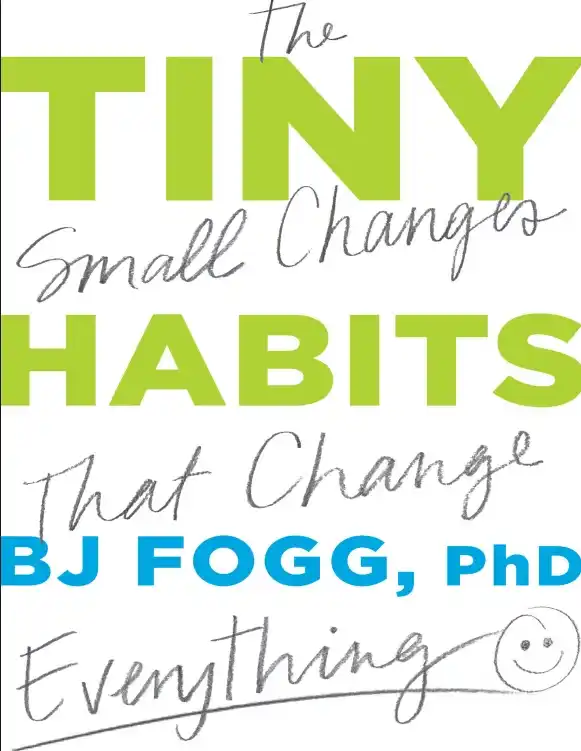
Tiny Habits: The Small Changes That Change Everything” by BJ Fogg presents a revolutionary approach to behavior change. Dr. Fogg, a behavior scientist at Stanford University, draws on two decades of research to explain why most attempts at forming new habits fail and offers a simple yet powerful alternative.
The core of Fogg’s method is understanding that sustainable change comes from starting extremely small rather than relying on motivation or willpower. The Tiny Habits method consists of three key elements: Anchor, Behavior, and Celebration.
An anchor is an existing routine or event in your life that serves as a reminder for your new tiny habit. For example, “After I brush my teeth…” The behavior is the tiny action you want to incorporate—it must be simple enough to do in 30 seconds or less and require minimal effort. For instance, “…I will floss one tooth.” Finally, celebration involves creating positive emotions through immediate self-congratulation after completing the tiny habit, which helps wire the behavior into your brain.
Fogg explains how behavior happens at the intersection of motivation, ability, and prompt. When motivation is high, we can do difficult things. However, motivation naturally fluctuates, which is why relying on it for long-term change is unreliable. Instead, making behaviors tiny increases your ability to perform them regardless of motivation levels.
The book challenges traditional approaches to habit formation by rejecting the notion that habits take 21 or 66 days to form. Instead, Fogg demonstrates that habits can form instantly when the right elements are in place—especially the feeling of success that comes from celebration.
Throughout the book, Fogg addresses common misconceptions about behavior change, such as the belief that information leads to action or that massive action leads to massive results. He provides practical advice for designing habits that “scale up” naturally over time, explaining how tiny actions often grow organically once established.
The Tiny Habits methodology also introduces the concept of behavior design, which involves matching specific habits to your unique nature and circumstances rather than forcing yourself to adopt habits that don’t fit your personality or lifestyle. Fogg emphasizes the importance of focusing on behaviors you want to do rather than those you feel you should do.
One of the most powerful insights in the book is how to use “success momentum” to tackle more challenging habits. By building confidence through tiny successes, you develop what Fogg calls “behavior flexibility” that makes future behavior changes easier.
The book includes numerous real-world examples from participants in Fogg’s Tiny Habits program, demonstrating how this approach has helped people make meaningful changes in health, productivity, relationships, and personal well-being. These cases highlight how small changes often cascade into larger transformations without requiring massive initial effort.
Ultimately, “Tiny Habits” presents a hopeful message: change doesn’t have to be hard. By understanding the mechanics of habit formation and leveraging the power of tiny behaviors paired with positive emotions, anyone can successfully implement lasting changes in their life.