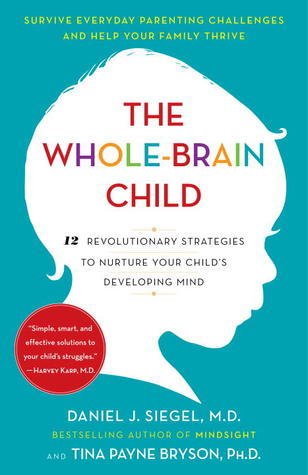
“The Whole-Brain Child,” authored by Daniel J. Siegel and Tina Payne Bryson, is a groundbreaking book that provides parents with revolutionary strategies to nurture their child’s developing mind. Published in 2011, this guide is not intended as a substitute for advice from a trained professional but serves as an essential resource for anyone raising, supporting, or nurturing children. The book focuses on the years from birth to twelve, with particular emphasis on toddlers, school-age kids, and preteens. It offers practical tools and scientific insights into how understanding the brain can transform parenting experiences.
Introduction: Survive and Thrive
The journey of parenthood is filled with both survival moments, those chaotic days where one might be prying a raisin from a nostril, and thriving goals, such as fostering meaningful relationships and helping children become compassionate individuals who enjoy fulfilling lives. Parents often feel they are merely surviving difficult tantrums in restaurants rather than truly guiding their children toward emotional richness and purposeful living. However, the authors argue that these challenging times are actually opportunities for growth and connection. By viewing everyday interactions through the lens of neuroscience, parents can use even the most stressful moments to help their children thrive emotionally, intellectually, and socially.
The core idea behind “The Whole-Brain Child” is integration, the process of linking different parts of the brain so they work together harmoniously. When a child’s brain functions optimally, its various regions collaborate effectively, much like individual singers weaving distinct voices into a unified harmony. This integration allows for improved decision-making, better control over emotions, fuller self-understanding, stronger relationships, and success in academic settings. All of these outcomes begin with the experiences provided by caregivers, which lay the groundwork for mental health and well-being.
Parenting with the Brain in Mind
Understanding the basics about your child’s brain is crucial because it plays a central role in virtually every aspect of life that matters to parents, discipline, decision-making, self-awareness, school performance, and interpersonal relationships. The brain shapes who we are and what we do, and since it is significantly influenced by our experiences, knowing how it changes in response to parenting can empower us to nurture resilience and strength in our children.
One key concept introduced early in the book is neuroplasticity, the discovery that the brain is plastic or moldable throughout life. This means that experiences physically alter the structure of the brain. Neurons fire together and grow new connections based on repeated patterns of activity. For example, hours spent playing video games will wire the brain differently compared to educational activities, sports, music, or face-to-face social interactions. Every experience impacts development, making it imperative for parents to provide enriching environments that promote healthy neural wiring.
To illustrate this principle, consider Marianna’s two-year-old son Marco, who witnessed his babysitter suffer an epileptic seizure while driving. Though unharmed himself, Marco experienced significant trauma. Instead of dismissing his fears, Marianna helped him repeatedly retell the story (“Eea woo woo”), thereby integrating left-brain logic with right-brain emotion. This approach allowed Marco to process his fear and return to normalcy without lingering anxiety. Without such intervention, unresolved emotions could have manifested as phobias or behavioral issues later on.
This narrative highlights the importance of horizontal integration (connecting left and right hemispheres) and vertical integration (linking higher-order thinking with instinctual responses). When either side dominates unchecked, children may exhibit chaotic behavior (right-brain flood) or rigid resistance (left-brain desert). Effective parenting involves balancing these extremes by engaging the entire brain during emotional crises.
Two Brains Are Better Than One: Integrating Left and Right Hemispheres
The human brain consists of two hemispheres, each with unique characteristics. The left hemisphere is logical, literal, linguistic, and linear, it loves lists and order. In contrast, the right hemisphere is holistic, nonverbal, experiential, and autobiographical; it cares deeply about context and emotional meaning. Young children tend to be right-hemisphere dominant due to their immersion in sensory experiences and lack of verbal sophistication. As language develops, the left brain begins to assert itself more strongly.
When a child becomes overwhelmed by big feelings, such as screaming “I’ll die if you leave me!”, they are operating primarily from the right brain. At such times, appealing directly to logic rarely works because the rational part of the brain isn’t engaged. Instead, effective strategies involve connecting first with the emotional needs before redirecting with reason.
Whole-Brain Strategy #1: Connect and Redirect – Surfing Emotional Waves
Tina’s seven-year-old son once emerged from bed angry at her for never leaving him a note during the night. His complaints ranged wildly, from disliking homework to wishing his birthday were closer, but none made logical sense. Rather than defending herself or arguing facts, Tina pulled him close, rubbed his back, and empathized: “Sometimes it’s just really hard, isn’t it?” She listened patiently until he felt heard and connected, then addressed specific concerns calmly after he had returned to a balanced state.
This technique emphasizes attunement, deeply connecting with another person so they feel felt. By using her own right brain to resonate with his distress, she created space for cooperation instead of conflict. Once calm, the boy became receptive to problem-solving, illustrating how addressing emotional needs first paves the way for constructive dialogue.
Whole-Brain Strategy #2: Name It to Tame It, Telling Stories to Calm Big Emotions
Another powerful tool involves storytelling. When Bella refused to flush toilets after witnessing one overflow dramatically, her father Doug used narrative therapy to help integrate her memory. He sat down with her and retold the incident step-by-step, allowing her to revisit the event safely within the framework of shared conversation. Over time, Bella regained confidence and eventually flushed again.
Stories allow children to bring left-brain details into alignment with right-brain emotions. By naming their fears, they gain mastery over them. Whether comforting a toddler who fell off a bike or helping an older child recount a scary encounter with a bully, guided narration helps make sense of overwhelming experiences. Encouraging children to draw pictures, write journals, or talk openly about events further strengthens this integrative process.
Building the Staircase of the Mind: Integrating Upstairs and Downstairs Brain
Beyond lateral division between left and right hemispheres lies a top-down organization known as the upstairs and downstairs brain. The downstairs brain includes primitive structures responsible for basic functions like breathing, blinking, fight-or-flight instincts, and strong emotions. Meanwhile, the upstairs brain houses the cerebral cortex, particularly the prefrontal region, which governs complex processes such as planning, self-control, empathy, and moral reasoning.
A fully functional staircase connects these levels, enabling the upstairs to monitor and regulate lower impulses. However, unlike the mature downstairs present at birth, the upstairs brain remains under construction until mid-twenties. Consequently, expecting young children to consistently display sound judgment or manage intense feelings is unrealistic.
An especially critical component of the downstairs brain is the amygdala, a small almond-shaped mass that acts as a watchdog, rapidly processing threats and triggering immediate reactions. During high-stress situations, the amygdala can hijack the upstairs brain, rendering higher cognition inaccessible. This phenomenon explains why a three-year-old might erupt in fury over missing orange Popsicles despite having purple ones available. Their “downstairs” has taken over, blocking access to rational thought.
Two types of tantrums reflect this dynamic:
- Upstairs Tantrum: A conscious choice to manipulate circumstances.
- Downstairs Tanstrum: An involuntary reaction driven by emotional flooding.
For upstairs tantrums, firm boundaries apply: no negotiation with terrorists. But for downstairs episodes, soothing and comfort come first. Only once calm should discussion about consequences occur. Thus, responding appropriately requires discernment, not only managing misbehavior but also promoting long-term integration.
Whole-Brain Strategy #3: Engage, Don’t Enrage, Appealing to the Upstairs Brain
Rather than confronting defiant behaviors head-on, engage the child’s reflective capacity. At a Mexican restaurant, when Tina noticed her four-year-old sticking out his tongue rudely from behind a pillar, she chose not to command obedience. Instead, she crouched eye-level and asked, “You look angry, is that right?” Upon confirmation, she explored underlying reasons and encouraged negotiation skills. Ultimately, the boy devised a compromise acceptable to all parties.
By tapping into the upstairs brain, parents teach valuable lessons about communication, compromise, and personal agency. Children learn they can influence outcomes through respectful interaction rather than coercion.
Whole-Brain Strategies #4 & #5: Use It or Lose It / Move It or Lose It
Exercise strengthens any muscle, including those involved in executive function. Providing opportunities for decision-making, self-reflection, practicing empathy, and considering ethical dilemmas builds robust cognitive architecture. Allowances offer excellent practice grounds for weighing short-term gratification against long-term savings.
Additionally, physical movement influences brain chemistry profoundly. After fifth-grader Liam fled home overwhelmed by excessive homework, running several blocks restored equilibrium. Exercise released pent-up energy, calming his amygdala and restoring access to higher cognition. Simple tactics like jumping jacks, deep breaths, or going for walks similarly reset dysregulated states.
Kill the Butterflies! Integrating Memory for Growth and Healing
Memory operates via association networks rather than isolated file cabinets. Experiences link neurons across time, shaping current perceptions based on past impressions. Implicit memories, non-conscious recollections formed through repetition or trauma, influence behavior without awareness. Explicit memories require conscious retrieval.
Consider implicit memory akin to muscle memory: changing diapers happens automatically because procedural knowledge resides outside active recall. Yet traumatic associations, like Tina’s son fearing swimming lessons due to prior harsh instructors, can persist unconsciously unless brought into light.
Using techniques like the “remote of the mind,” where children imagine replaying memories like DVDs, gives them control over potentially distressing content. Pausing, fast-forwarding, or rewinding allows gradual exposure to painful scenes. Similarly, encouraging daily reflection promotes explicit awareness of important events.
Parents benefit too. Unresolved adult memories triggered by parenting stressors (e.g., reacting intensely when a baby cries uncontrollably) stem from unprocessed childhood wounds. Bringing these hidden elements forward fosters insight, healing, and healthier family dynamics.
Conclusion: Bringing It All Together
Ultimately, “The Whole-Brain Child” advocates for intentional parenting grounded in science yet delivered compassionately. Each strategy empowers caregivers to view challenges not as disruptions but as developmental milestones. Through consistent application of these principles, whether connecting during meltdowns, naming emotions, building staircases of maturity, or integrating fragmented memories, parents foster integrated brains capable of navigating complexity with grace and wisdom.
By modeling integration themselves, regulating their own reactivity, repairing ruptures swiftly, and cultivating mindfulness, adults create secure attachments vital for lifelong flourishing. While perfection remains elusive, persistence yields profound results. As Siegel and Bryson conclude, thriving begins not despite adversity but because of how we respond to it.