
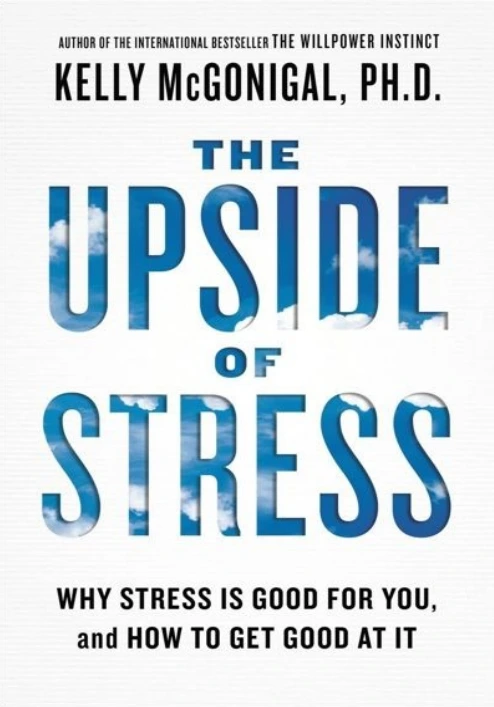
The Upside of Stress challenges the belief that stress is always harmful. Kelly McGonigal shows that how we think about stress changes its effect on our bodies and minds. By reframing stress as a source of energy, courage, and connection, we can grow stronger and more resilient. This book empowers readers to embrace stress as a tool for transformation rather than a threat to avoid.
The Upside of Stress is a groundbreaking book that flips the traditional narrative about stress on its head. Written by Kelly McGonigal , a health psychologist and lecturer at Stanford University, this book argues that stress isn’t inherently bad —how we think about stress determines whether it harms us or helps us grow.
Drawing from cutting-edge research in psychology, neuroscience, and medicine, McGonigal shows how our mindset about stress changes its impact on our body and mind . She also provides practical tools for building resilience, finding meaning in challenges, and using stress as a force for growth rather than destruction.
This book is not about avoiding stress—it’s about learning how to get better at stress .
For decades, stress has been labeled as one of the biggest threats to health and happiness. We’ve been told that stress causes heart disease, anxiety, burnout—and that the goal should be to reduce or eliminate it.
But McGonigal presents a different view:
“How you think about stress affects everything about your experience of it.”
She highlights a key study showing that people who experienced a lot of stress but didn’t believe stress was harmful had no increased risk of dying—even less than people with low stress. In other words, it wasn’t the stress itself that was dangerous—it was the belief that stress is bad .
Key Insight: Your mindset about stress can change its physical and emotional effects.
McGonigal explains that the physiological response to stress—like increased heart rate, faster breathing, and adrenaline release—isn’t always harmful. These responses are actually designed to help us rise to challenges.
The stress response includes:
Important Lesson: Not all stress is toxic—some stress prepares you to perform, connect, and grow.
Stress becomes problematic when it’s chronic, unmanaged, or perceived as overwhelming. But short-term stress, especially when paired with a positive mindset, can be beneficial.
One of the most powerful parts of the book is McGonigal’s guide to shifting your stress mindset . She outlines two core beliefs that transform how we respond to stress:
By adopting these beliefs, people become more resilient, less anxious under pressure, and more likely to find meaning in difficult experiences.
Key Insight: Believing that stress can be helpful makes you more willing to face challenges and grow from them.
Contrary to popular belief, stress doesn’t just isolate us—it can also make us more social and compassionate . One of the hormones released during stress is oxytocin , often called the “cuddle hormone” or the “connection hormone.”
Oxytocin motivates us to seek support, strengthens empathy, and encourages bonding with others. This means stress can actually help us build stronger relationships and communities.
Important Lesson: Stress drives human connection—don’t suffer alone.
Reaching out to others during stressful times isn’t just comforting—it’s biologically programmed to help us recover and thrive.
McGonigal offers practical strategies for transforming stress into a source of strength, purpose, and resilience:
Instead of trying to calm down under pressure, reframe your body’s response as helpful. See your racing heart and quickened breath as signs that your body is energizing you for action.
Ask yourself: Why does this matter to me? Connecting stress to something bigger—like family, work you care about, or personal values—makes it easier to endure and even welcome.
Many people report becoming stronger, more compassionate, and more focused on what matters after experiencing hardship. McGonigal shows how to cultivate this kind of growth intentionally.
Serving others—even in small ways—can shift your perspective on your own struggles and give you a sense of purpose.
Key Insight: The best way to handle stress is not to avoid it—but to move toward it with courage, connection, and meaning.
McGonigal’s insights apply across many areas of life:
Important Lesson: Resilience isn’t about being strong—it’s about knowing how to use stress to grow stronger.
Throughout the book, McGonigal shares compelling stories and studies, including:
These examples reinforce the idea that how we interpret stress shapes our reality .
The Upside of Stress is not a denial of pain or hardship—it’s an invitation to see stress differently. Instead of fearing stress, we can learn to trust ourselves, lean on others, and grow through challenges.
As McGonigal writes:
“The greatest predictor of a happy, meaningful life isn’t the number of hardships you’ve avoided. It’s how you respond to the ones you’ve faced.”
By changing how we think about stress, we can change how we live—with more courage, connection, and purpose.