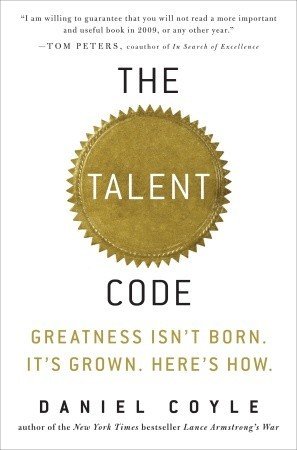
Daniel Coyle’s “The Talent Code” presents a revolutionary framework for understanding how talent develops, challenging the conventional wisdom that exceptional abilities are primarily innate gifts. Through extensive research across global “talent hotbeds”, from Russian tennis clubs to Brazilian soccer fields to Dallas music studios, Coyle identifies a universal biological mechanism underlying skill acquisition: the growth of myelin, a neural insulator that wraps around nerve fibers to increase signal speed, strength, and accuracy. The book articulates a three-part “talent code” consisting of deep practice, ignition, and master coaching, elements that, when combined, create the conditions for extraordinary skill development regardless of apparent natural ability.
The Myelin Mechanism
At the heart of Coyle’s thesis is myelin, a fatty substance that insulates neural circuits in the brain. When we practice a skill, we fire electrical impulses through specific neural pathways. Each firing triggers oligodendrocytes, specialized cells, to wrap those pathways with additional layers of myelin. This insulation makes signals travel up to 100 times faster with 3,000 times more information-processing capacity. Crucially, myelin responds only to urgent, attentive repetition, not passive observation or effortless performance. As Coyle succinctly states: “Skill is insulation that wraps neural circuits and grows according to certain signals.”
This biological reality reframes our understanding of talent development. The virtuoso pianist, championship athlete, or brilliant writer hasn’t been blessed with fundamentally different hardware but has instead, through years of targeted practice, built superior broadband connections in relevant neural circuits. Myelin development follows four key principles: (1) firing is paramount, only active circuit engagement builds myelin; (2) myelin is universal, it grows according to the same rules regardless of skill type; (3) myelin wraps but doesn’t unwrap, habits are difficult to break because we can’t “uninsulate” circuits; and (4) age matters, while myelin production continues throughout life, it’s most efficient during youth.
Deep Practice: Operating at the Edge of Ability
Deep practice, the first element of the talent code, involves operating at the outer edges of one’s ability, where errors occur frequently and must be corrected. Coyle illustrates this through the remarkable case of Clarissa, a thirteen-year-old clarinet student who, in a six-minute practice session captured on video, accomplished what researchers calculated to be a month’s worth of progress. Her secret wasn’t innate talent but a highly targeted approach: she played brief segments, stopped immediately upon making errors, analyzed what went wrong, and repeated until she achieved precision. This “staggering baby” approach, embracing struggle rather than avoiding it, creates the neurological conditions for rapid myelin growth.
Coyle identifies three rules of deep practice:
- Chunk it up: First absorb the whole skill as a single entity (through observation and imitation), then break it into its smallest components, and finally manipulate time, slowing actions to perceive their inner architecture before gradually accelerating.
- Repeat it: Attentive repetition within the “sweet spot”, that productive discomfort just beyond current ability, is essential. Research shows world-class experts practice 3-5 hours daily, not because more is always better, but because this represents the sustainable limit of deep practice. Beyond this threshold, practice becomes shallow and counterproductive.
- Learn to feel it: Developing awareness of errors and progress creates the feedback loop necessary for improvement. This involves cultivating what Coyle calls “divine dissatisfaction”, the ability to sense the gap between current performance and the target.
The book demonstrates how deep practice manifests across domains: Brazilian soccer players develop extraordinary ball-handling through futsal (a compressed version of soccer played on small courts with a heavy ball that forces constant error-correction); Renaissance artists apprenticed for years under master craftsmen, gradually building complex skills through scaffolded challenges; and Meadowmount Music School students accelerate learning by breaking music into fragments and practicing at glacial speeds.
Ignition: The Motivational Spark
Deep practice demands immense energy, far more than most people willingly expend without powerful motivation. This is where ignition, the second element of the talent code, becomes essential. Ignition refers to the primal, often unconscious triggers that create sustained motivation. Coyle demonstrates that breakthrough performances frequently spark talent blooms: after South Korean golfer Se Ri Pak’s 1998 victory, dozens of Korean women entered professional golf; after Russian tennis player Anna Kournikova’s Wimbledon semifinal appearance, Russian women began dominating the sport.
These ignition moments work through “primal cues”, evolutionary triggers that activate deep motivational reserves. The most powerful cue is “future belonging”: the sense that “people like me” can achieve this goal. When Gary McPherson studied young music students, he discovered that their progress correlated not with aptitude tests but with a single question asked before their first lesson: “How long do you plan to play your instrument?” Children with long-term commitment who practiced minimally outperformed short-term committed students who practiced extensively, by 400 percent.
Coyle explores how environments can be engineered to sustain ignition. KIPP (Knowledge Is Power Program) schools transform underperforming students by creating immersive cultures where every detail, from how students carry binders to classroom naming conventions, reinforces identity and purpose. The schools’ mantra “Work Hard, Be Nice” and constant invocation of “College!” (always capitalized) create a coherent motivational ecosystem that sustains the energy required for deep practice.
Language proves particularly powerful in sustaining motivation. Carol Dweck’s research shows that praising effort (“You worked really hard”) rather than intelligence (“You’re so smart”) dramatically increases persistence and performance. Talent hotbeds worldwide use similar language: Spartak Tennis Club uses “borot’sya” (“struggle”) rather than “play”; Curaçao baseball employs “progresa” (“baby steps”); Brazilian soccer age groups are named Bottle, Diapers, and Pacifier, celebrating incremental progress rather than innate gifts.
Master Coaching: The Human Delivery System
The third element of the talent code is master coaching, the precise delivery of information that guides myelin growth. Contrary to popular imagination, master coaches aren’t charismatic motivators delivering inspirational speeches. Instead, they function as “talent whisperers”: quiet, perceptive guides who deliver targeted information at precisely the right moment.
Coyle identifies four virtues of master coaches:
- The Matrix: A vast repository of task-specific knowledge built through decades of deep practice in their domain. Linda Septien, who developed Jessica Simpson and Demi Lovato, spent years systematically analyzing pop performances before creating her teaching methodology.
- Perceptiveness: The ability to read students accurately and customize communication accordingly. John Wooden, studied by researchers Ron Gallimore and Roland Tharp, distributed praise and criticism unevenly based on individual needs, treating players differently because “the good Lord…did not make us all the same.”
- GPS Reflex: Delivering information in short, vivid bursts that guide students toward correct performance, like a navigation system issuing timely turn-by-turn directions. Master coaches speak in imperatives (“Now do X”) rather than questions or suggestions.
- Theatrical Honesty: Using performance and character to deliver difficult truths about performance. KIPP teacher Lolita Jackson shifts instantly between stern correction and warm celebration to help students confront errors while maintaining motivation.
Importantly, coaching approaches must match the skill type. Brazilian soccer coaches speak minimally during futsal games because soccer requires flexible “ivy vine” circuits that thrive on self-directed problem-solving. Suzuki violin teachers, by contrast, provide constant guidance because violin requires precise “oak tree” circuits where early errors become permanently insulated. The master coach’s job is always the same, to maximize appropriate circuit firing, but the methods differ based on the skill’s architecture.
Applications Beyond Sports and Arts
Coyle extends the talent code to education, business, psychology, aging, and parenting. In education, he reframes the “Reading Wars” between Phonics and Whole Language: Phonics builds reliable circuits (deep practice) while Whole Language creates motivational environments (ignition), both are necessary. Finland’s educational success stems from treating teaching as a prestigious profession requiring master’s degrees and continuous improvement, essentially institutionalizing deep practice for educators themselves.
In business, Toyota’s kaizen (“continuous improvement”) philosophy mirrors deep practice, implementing approximately one million tiny fixes annually across its operations. Each small improvement represents another wrap of organizational “myelin,” increasing efficiency and quality.
For psychology, the Shyness Clinic in Palo Alto treats social anxiety as a skill deficit rather than a character flaw, using graduated exposure to help clients build new neural pathways through deep practice. Similarly, Virtual Iraq therapy helps soldiers with PTSD by allowing them to fire new circuits that disconnect traumatic triggers from debilitating responses.
Regarding aging, Coyle explains cognitive decline as myelin degradation, but emphasizes that we retain the capacity to build new myelin throughout life. “Use it and get more of it” replaces the outdated “use it or lose it” mantra, as challenging activities that push us beyond comfort zones continue building neural insulation even in advanced age.
For parents, the talent code shifts focus from identifying innate gifts to nurturing ignition moments and creating conditions for deep practice. Praising effort over ability, paying attention to children’s fascinations, and teaching them about the myelin mechanism itself (as Carol Dweck demonstrated with middle schoolers) transforms their approach to challenges and failure.
Conclusion
“The Talent Code” ultimately reframes talent not as a gift bestowed at birth but as a process accessible to anyone willing to engage in deep practice, find ignition sources, and seek effective guidance. The book’s power lies in replacing mystical notions of “natural talent” with an actionable, scientifically-grounded framework. As Coyle writes, “We are myelin beings”, creatures built to grow skill through targeted struggle. Understanding this mechanism doesn’t diminish the wonder of extraordinary achievement; rather, it democratizes excellence, revealing that the path to greatness follows universal principles available to all who understand how to grow their neural circuits, one wrap of myelin at a time. The talent code isn’t about eliminating the role of genes or environment but recognizing that within our biological constraints, we possess far more agency in developing our abilities than conventional wisdom suggests, making talent not a lottery ticket but a construction project we can all undertake.