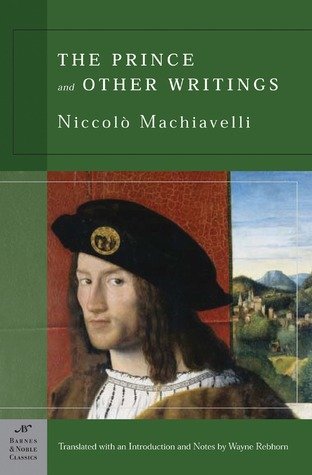
Niccolò Machiavelli’s The Prince, written in 1513 but not published until 1532, five years after his death, stands as one of the most influential and controversial works in political philosophy. Often regarded as the foundational text of modern political realism, it breaks decisively with classical and medieval traditions that tied politics to ethics or divine order. Instead, Machiavelli offers a pragmatic, unsentimental analysis of power, how it is acquired, maintained, and lost. Accompanied in many editions by selections from his other writings, including letters, historical narratives like The Life of Castruccio Castracani, and reflections on republicanism,The Prince and Other Writings reveals a thinker deeply engaged with the turbulent realities of Renaissance Italy, driven by both personal ambition and patriotic urgency.
Historical Context and Purpose
Machiavelli wrote The Prince during a period of profound political instability in Italy. The Italian peninsula was fragmented into rival city-states, Florence, Milan, Venice, Naples, and the Papal States, constantly at war with one another and vulnerable to foreign powers like France and Spain. In 1512, the Medici family, backed by Spanish troops, overthrew the Florentine Republic, ending Machiavelli’s decade-long career as a diplomat and secretary to the republic. Imprisoned and later exiled to his country estate, he composed The Prince partly as a job application, a plea to Lorenzo de’ Medici to restore him to public service, and partly as a blueprint for unifying Italy under a strong, capable ruler who could liberate it from foreign domination.
Dedicated to Lorenzo, the work opens with a humble yet pointed appeal: “If men who have little are bold enough to give advice to princes, how much more ought those who, like myself, have had long experience of great affairs?” Machiavelli positions himself not as a philosopher detached from reality, but as a seasoned observer of human nature and statecraft.
Types of Principalities
Machiavelli begins by classifying states into two broad categories: republics and principalities. Focusing on the latter, he distinguishes between hereditary principalities (ruled by established dynasties) and new principalities (recently acquired). Hereditary rulers enjoy stability because subjects are accustomed to their rule; even if temporarily displaced, they can often regain power with minimal effort. New princes, however, face far greater challenges. Their authority is fragile, their legitimacy questioned, and their subjects prone to rebellion.
New principalities may be entirely new, or annexed territories added to an existing state. Machiavelli analyzes various scenarios: conquest by one’s own arms versus reliance on others (mercenaries, allies, or fortune); mixed states (like Darius’s Persian Empire, conquered by Alexander); and ecclesiastical states (which maintain power through spiritual authority rather than military force).
A key insight emerges early: the method of acquisition determines the difficulty of retention. Those who rise to power through their own virtù, a complex term encompassing skill, courage, intelligence, and decisive action, are more likely to succeed than those dependent on luck (fortuna) or the aid of others.
The Role of Virtù and Fortuna
Central to Machiavelli’s thought is the interplay between virtù and fortuna. Fortuna (fortune) represents the unpredictable forces of history, chance events, external pressures, shifting alliances. Virtù, by contrast, is the human capacity to respond effectively to these forces. A wise prince does not passively accept fate; he shapes it through bold, calculated action.
In Chapter 25, Machiavelli famously compares fortune to a destructive river that floods unpredictably, but notes that prudent leaders can build dikes and embankments in advance to mitigate its damage. He concludes: “I believe that it is better to be impetuous than cautious, for fortune is a woman, and it is necessary, if you wish to keep her down, to beat and knock her about.” This jarring metaphor underscores his belief that aggressive, masculine energy is required to master chaotic circumstances.
Yet Machiavelli also acknowledges limits: even the most skilled ruler cannot control all variables. Success depends on aligning one’s nature with the demands of the times. Pope Julius II succeeded because his impulsive style matched an era that rewarded audacity; a more cautious man would have failed.
The Use of Force, Fear, and Cruelty
One of Machiavelli’s most notorious arguments concerns the use of cruelty. He insists that well-used cruelty, swift, decisive, and aimed at securing order, can be a virtue in a ruler. Drawing on the example of Cesare Borgia, who consolidated power in Romagna by eliminating rivals and installing a ruthless governor (whom he later executed to appease the populace), Machiavelli argues that temporary harshness prevents prolonged disorder.
He distinguishes sharply between being feared and being hated. While love is desirable, it is unreliable; fear, if carefully managed, ensures obedience. “It is much safer to be feared than loved,” he writes, “if one cannot be both.” But a prince must avoid actions that provoke hatred, confiscating property, violating women, or acting arbitrarily, because these incite rebellion.
Mercenaries and auxiliary forces, Machiavelli warns, are dangerous and unreliable. True security comes only from a native army loyal to the prince. Military strength is inseparable from political power: “The main foundations of every state… are good laws and good arms. And since there cannot be good laws where there are not good arms, and where there are good arms there must be good laws.”
Morality and Appearance
Perhaps the most enduring, and misunderstood, aspect of The Prince is its apparent separation of politics from morality. Machiavelli does not advocate immorality for its own sake; rather, he insists that the moral standards of private life do not apply to rulers, whose primary duty is to preserve the state.
In Chapter 18, “How Princes Should Keep Their Word,” he declares: “A wise ruler cannot, nor should he, keep his word when such observance would work against him.” Yet he adds a crucial caveat: the prince must appear virtuous. He should seem merciful, faithful, humane, upright, and religious, but be ready to act contrary to these qualities when necessity demands.
This emphasis on appearance over reality reflects Machiavelli’s deep understanding of political theater. The masses judge by outcomes and images, not intentions. As he bluntly states: “Men are so simple… that the deceiver will always find someone who will let himself be deceived.”
Case Studies and Historical Examples
Throughout The Prince, Machiavelli grounds his theories in concrete examples. He praises Moses, Cyrus, Romulus, and Theseus as founders who used violence to create lasting orders. He admires Ferdinand of Aragon for using religion as a pretext to wage war and consolidate power. He laments the weakness of Italian rulers who failed to arm their people or anticipate threats.
His treatment of Agathocles of Syracuse, a tyrant who rose from obscurity by massacring the ruling class, is especially revealing. Though Machiavelli condemns Agathocles’s “inhuman cruelty,” he acknowledges that such actions enabled him to hold power securely. This tension illustrates Machiavelli’s core dilemma: effective rule sometimes requires morally repugnant acts.
Republicanism and Other Writings
While The Prince focuses on autocratic rule, Machiavelli’s broader corpus, especially his Discourses on Livy, reveals a deep appreciation for republican government. In fact, many scholars argue that The Prince is not a sincere endorsement of tyranny but a strategic tract designed to expose the brutal logic of power, possibly to warn republicans of the dangers they face.
In The Life of Castruccio Castracani, included in many editions of The Prince and Other Writings, Machiavelli crafts a fictionalized biography of a 14th-century condottiero (mercenary leader) who rose to dominate Lucca and challenge Florence. Modeled partly on himself and partly on ideal princely traits, Castruccio embodies virtù: intelligent, adaptable, militarily gifted, and politically astute. The narrative blends history and invention to illustrate how individual agency can shape destiny, even in adverse conditions.
Machiavelli’s letters, particularly his famous correspondence with Francesco Vettori, offer intimate glimpses into his mind. In one letter, he describes his daily routine in exile: hunting by day, then returning home to “enter the ancient courts of past men” by reading classical texts. There, dressed in courtly robes, he converses with figures like Cicero and Livy, forgetting his poverty and humiliation. This image captures Machiavelli’s dual identity: a practical statesman grounded in realpolitik, and a humanist scholar immersed in the wisdom of antiquity.
Patriotism and the Call to Action
The final chapter of The Prince, “An Exhortation to Seize Italy and Liberate Her from the Barbarians,” shifts tone dramatically. Abandoning cold analysis, Machiavelli issues a passionate plea for Italian unity. Citing biblical and classical precedents, he argues that the time is ripe for a new leader, implicitly Lorenzo de’ Medici, to expel foreign occupiers and unify the peninsula.
He evokes Italy’s cultural greatness and contrasts it with its current degradation: “She prays God to send someone to rescue her from these barbarous cruelties and insults.” This nationalist fervor reveals that Machiavelli’s realism is not cynical detachment but a means to a noble end: the restoration of Italian dignity and independence.
Legacy and Misinterpretation
For centuries, The Prince has been read as a manual for tyrants, the origin of the term “Machiavellian” to describe manipulative, deceitful behavior. Yet this interpretation overlooks Machiavelli’s deeper purpose. He was not glorifying evil but diagnosing the harsh necessities of political survival in a corrupt world. His aim was not to corrupt princes but to equip them with clear-eyed understanding.
Modern readers recognize Machiavelli as a pioneer of political science. By rejecting idealistic notions of governance and focusing instead on observable human behavior and institutional dynamics, he laid the groundwork for thinkers like Hobbes, Rousseau, and Weber. His insights into power, leadership, and the gap between appearance and reality remain startlingly relevant in contemporary politics, business, and international relations.
Conclusion
The Prince and Other Writings presents a multifaceted portrait of Niccolò Machiavelli: strategist, historian, patriot, and philosopher of power. At its core lies a radical proposition, that politics must be understood on its own terms, independent of religious or ethical dogma. The effective ruler, Machiavelli argues, must be flexible, pragmatic, and willing to act decisively, even ruthlessly, when the survival of the state is at stake.
Yet beneath the tough exterior lies a profound humanism. Machiavelli’s ultimate goal is not domination but order, stability, and national liberation. He writes not out of love for tyranny, but out of despair at Italy’s fragmentation and hope for its renewal. In blending empirical observation with literary flair, psychological insight with strategic vision, he created a work that continues to challenge, provoke, and illuminate nearly five centuries later.
To read Machiavelli is to confront uncomfortable truths about power, human nature, and the moral compromises inherent in leadership. But it is also to encounter a mind of extraordinary clarity, courage, and civic devotion, one that dared to look at the world as it is, not as we wish it to be.