
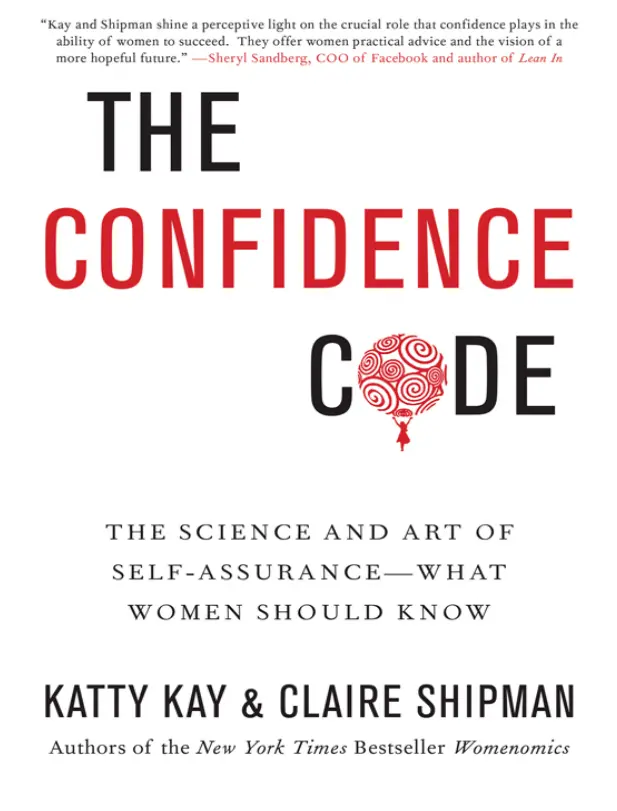
The Confidence Code reveals why confidence is the secret ingredient to success—especially for women. Katty Kay and Claire Shipman combine science, research, and real-life stories to show that confidence isn’t about being perfect—it’s about taking action despite fear. This book empowers readers to stop waiting and start doing, turning self-doubt into strength and unlocking their full potential through courage, risk-taking, and resilience.
The Confidence Code is a compelling exploration of why confidence matters—and how women, in particular, can learn to build more of it.
Written by Katty Kay , BBC news anchor and Washington-based journalist, and Claire Shipman , former ABC News correspondent and contributor to Good Morning America , the book combines scientific research, interviews with successful women, and personal anecdotes to reveal how confidence is not just about feeling good—it’s about taking action, even when you’re uncertain or afraid.
Kay and Shipman argue that confidence is the missing link between competence and success . Many women are highly capable but hold themselves back because they don’t feel “ready enough” or “good enough.” In contrast, men often act despite self-doubt—and reap the rewards.
This book isn’t just for women—it’s a wake-up call for anyone who wants to understand how confidence works and how to develop it.
At its core, confidence is action-oriented . It’s not just about thinking you’re good—it’s about doing something anyway, even when you’re unsure.
Kay and Shipman define confidence as:
“A thing you do. Not a feeling you wait to have.”
They distinguish confidence from competence: you can be extremely competent but still lack the confidence to take risks or put yourself forward.
Key Insight: Confidence is not about arrogance or bravado—it’s about taking action in the face of doubt .
The authors explore the neuroscience and biology of confidence , showing that while genetics play a role, confidence is also a skill that can be developed.
They highlight:
One fascinating study cited in the book shows that people who believe they can improve through effort (a “growth mindset”) are more likely to take on challenges and bounce back from setbacks.
Important Lesson: Confidence is not fixed—it grows with experience, risk-taking, and resilience.
Kay and Shipman dive into the gender gap in confidence , citing research that shows women tend to underestimate their abilities, while men tend to overestimate theirs.
Some key reasons include:
Key Insight: Women are held back not by lack of ability—but by lack of belief in themselves.
The authors offer a range of actionable strategies to help readers build confidence—especially women who struggle with self-doubt or imposter syndrome.
Confidence doesn’t come first—action does. Start before you feel fully prepared, and let experience build your self-assurance.
Instead of fearing failure, treat it as data. Every setback teaches you something valuable about yourself and your path.
Many women wait to be asked or chosen. But confidence means stepping forward without waiting for approval.
Whether in meetings, negotiations, or conversations, practice speaking clearly and confidently—even if you feel nervous.
Building confidence doesn’t require huge leaps. Small victories add up over time.
Important Lesson: Confidence grows through doing—not waiting.
One of the most powerful sections of the book explores how confidence affects career advancement .
Kay and Shipman show that confident employees are more likely to:
Yet many women hesitate to do these things, even when they’re qualified.
Key Insight: Success favors the confident—not always the most competent.
They encourage women to stop seeking perfection and start embracing progress. The best way to prepare for bigger opportunities? Take on small challenges today.
The book also examines how confidence plays a critical role in leadership .
Confident leaders:
The authors profile numerous female leaders—from business executives to politicians—who rose to the top not because they were perfect, but because they acted with confidence, even during moments of doubt.
Important Lesson: Great leaders aren’t born—they become confident through action.
Beyond career growth, the authors discuss how confidence impacts personal life—whether in relationships, parenting, or daily interactions.
Confidence helps you:
Key Insight: Confidence gives you permission to live authentically—not just according to others’ standards.
Throughout the book, Kay and Shipman share compelling stories and studies, including:
These examples reinforce the idea that confidence is not a trait you’re born with—it’s a muscle you build through use .
The Confidence Code is a powerful reminder that confidence is not reserved for the elite or the naturally charismatic . It’s available to everyone who chooses to act, speak up, and keep going—even when they feel uncertain.
As the authors write:
“Real confidence comes from daring to act, especially when you’re not sure you can.”
By learning to embrace imperfection, take calculated risks, and view failure as feedback, we can all grow our confidence and unlock our full potential.