
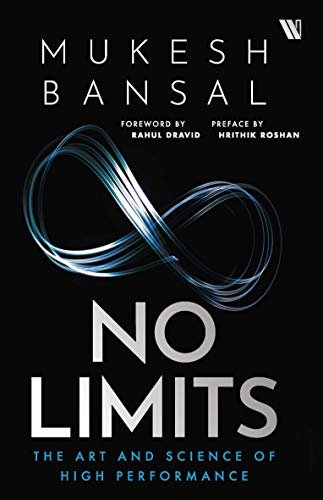
You don’t need special genes or luck to perform at your best. In No Limits, entrepreneur Mukesh Bansal reveals the science-backed habits of top performers across fields, and shows how anyone can apply them. From rewiring your brain through neuroplasticity to mastering focus, energy, and purpose, this book proves that your potential is limitless. Whether you’re an athlete, artist, or executive, you can become a superior version of yourself, one intentional choice at a time. Summary powered by VariableTribe.
Mukesh Bansal’s No Limits: The Art and Science of High Performance is a compelling fusion of ancient wisdom and cutting-edge science that dismantles the myth that greatness is reserved for the genetically gifted or the extraordinarily lucky. Drawing from his journey as a tech entrepreneur, fitness pioneer, and lifelong student of human potential, Bansal presents a clear, actionable roadmap for anyone who wants to break through self-imposed barriers and operate at their highest level, consistently and sustainably.
At the heart of the book is a powerful idea: high performance is a skill, not a trait. It can be learned, practiced, and mastered. Bansal argues that while talent may offer a head start, it’s deliberate practice, mindset, and daily habits that determine long-term success. He shares insights gathered from studying elite performers across business, sports, arts, and wellness, not to idolize them, but to decode the universal principles they all apply, often unconsciously.
One of the book’s most transformative concepts is neuroplasticity, the brain’s remarkable ability to rewire itself based on experience, focus, and repetition. Bansal explains how this scientific truth shatters the outdated belief that “you are who you are.” Instead, you can reshape your brain, build new neural pathways, and develop capabilities you never thought possible, whether it’s learning a language, mastering a craft, or staying calm under pressure. This understanding alone is deeply empowering: your potential isn’t fixed; it’s expandable.
Bansal structures the book around six core pillars of high performance: Mindset, Focus, Energy, Habits, Learning, and Purpose. Each chapter blends research, real-world examples, and practical exercises to help readers apply these principles in everyday life.
In the Mindset section, he explores the difference between a fixed and growth mindset, emphasizing that how you interpret failure determines whether it stops you or propels you forward. High performers don’t avoid mistakes, they study them. They view challenges as invitations to grow, not threats to their ego.
Under Focus, Bansal highlights the modern epidemic of distraction and offers strategies to cultivate deep attention. He explains that true productivity isn’t about doing more—it’s about doing the right things with full presence. Techniques like time-blocking, digital minimalism, and single-tasking are presented not as rigid rules but as tools to reclaim mental clarity.
The Energy chapter shifts the conversation from time management to energy management. Bansal argues that your performance is only as strong as your physical and emotional fuel. Sleep, nutrition, movement, and emotional regulation aren’t “extras”, they’re foundational. He shares how top performers prioritize recovery just as much as output, understanding that sustainable excellence requires rhythm, not burnout.
When it comes to Habits, Bansal demystifies behavior change. He shows how small, consistent actions, done with intention, compound into extraordinary results. Rather than relying on willpower (which is finite), he advocates designing your environment and routines so that the right choices become automatic.
In the Learning section, he champions “learning how to learn.” High performers are voracious learners who seek feedback, embrace discomfort, and constantly update their mental models. Bansal introduces concepts like spaced repetition, active recall, and interleaving, evidence-based methods that accelerate mastery.
Finally, Purpose ties everything together. Without a “why” that resonates deeply, even the most disciplined efforts can feel hollow. Bansal encourages readers to connect their daily actions to a larger mission, whether it’s serving others, expressing creativity, or leaving a legacy. Purpose fuels perseverance when motivation fades.
Throughout the book, Bansal weaves in stories from his own life, co-founding Myntra, launching Cure.fit, navigating setbacks, and redefining success on his own terms. These personal reflections add authenticity and relatability, reminding readers that high performance isn’t about perfection; it’s about progress with awareness.
What sets No Limits apart is its balance of depth and accessibility. Bansal avoids jargon, distills complex ideas into simple truths, and always brings the focus back to application. This isn’t just theory, it’s a field guide for living at your best.
Ultimately, the book delivers on its promise: you are not limited by your past, your genes, or your circumstances. With the right understanding and tools, you can continually evolve into a superior version of yourself, calmer, sharper, more resilient, and more impactful. As Bansal writes, “The only real limit is the one you believe in.”
Summary powered by VariableTribe