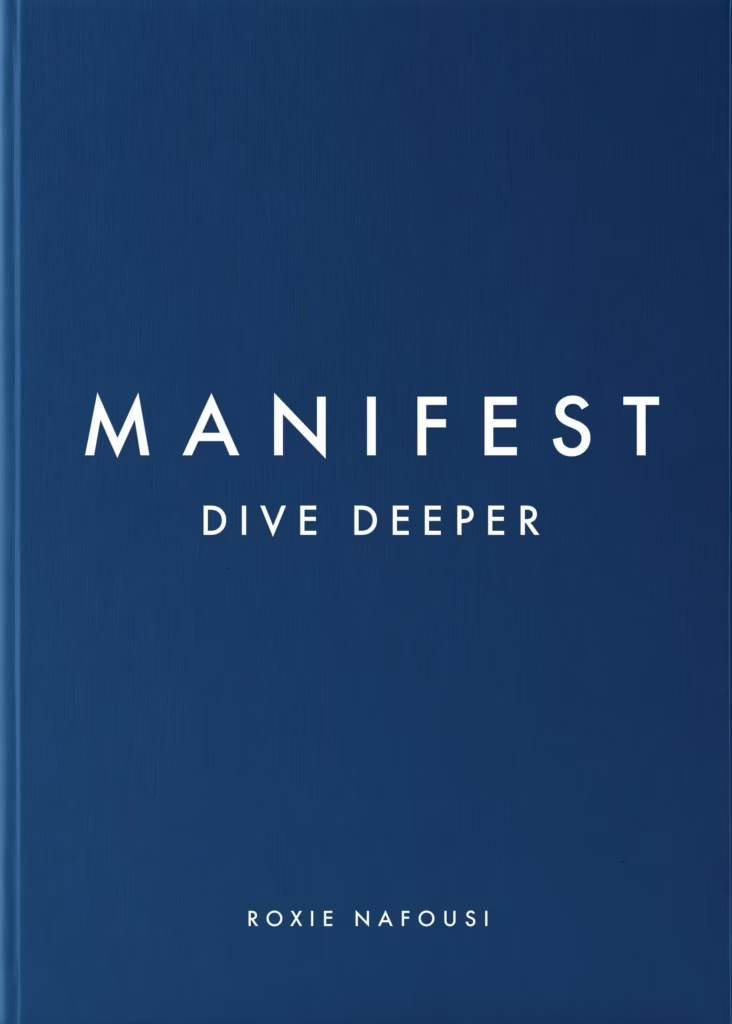
Roxie Nafousi’s MANIFEST: Dive Deeper is not a book about simply wishing for things and waiting for the universe to deliver. Instead, it presents manifesting as a serious self-development practice rooted in psychology, neuroscience, and emotional healing. The book argues that you cannot attract what you want until you heal the fears, doubts, and past wounds that make you believe you are unworthy of having it.
The author, a self-development coach who overcame addiction and low self-worth, shares her seven-step framework. This follow-up to her bestseller MANIFEST focuses on inner work; the deep, often painful process of confronting your past, changing your behavior, and becoming the person capable of receiving your dreams.
The Seven Steps to Manifesting
The book is structured around seven interconnected steps. They are not linear but are practiced simultaneously.
Step 1: Be Clear in Your Vision
You cannot reach a destination you haven’t defined. This step emphasizes gaining crystal-clear clarity on what you truly want—not what society, family, or fear tells you to want. If you struggle to define specific goals, Nafousi suggests manifesting a feeling (e.g., peace, joy, excitement) instead. A key tool here is the vision board, but with a twist: after creating it, you put it away. Looking at it daily creates desperation; putting it away symbolizes trust and surrender to the journey.
Step 2: Remove Fear and Doubt (The Most Critical Step)
This is the heart of the book. Nafousi explains that we don’t manifest from our conscious thoughts but from our subconscious beliefs about what we deserve. Fear and doubt are the primary blocks. These blocks are built from past traumas, conditioning, and unhealed wounds.
-
Healing the wound, not the symptom: When you overreact to a minor comment, it’s because a past wound is being triggered. Instead of fixing the argument (the symptom), you must heal the original memory (the wound).
-
Tools for healing: The book offers practical exercises, including journaling to identify triggers, inner-child meditations (visualizing your adult self comforting your younger self during a painful memory), and a “worst-case scenario” technique to deflate irrational anxiety.
-
Key takeaway: You do not need to be positive 100% of the time. Toxic positivity is harmful. True manifesting allows you to feel sad, angry, or low—you just process those feelings without judgment instead of suppressing them.
Step 3: Align Your Behavior
Manifesting is not passive. You must act like the person you want to become. This is the “fake it till you become it” step, but rooted in authentic action.
-
Your behavior reflects your self-worth: How you treat your body, spend your time, and allow others to treat you sends a message to the universe about what you believe you deserve.
-
Step outside your comfort zone: Growth requires discomfort. The book provides a 7-day challenge to do one uncomfortable thing each day (e.g., speak up in a meeting, try a new hobby).
-
The “Think, Then Do” habit: Stop procrastinating. When a task comes to mind, do it immediately. This builds self-trust and momentum.
Step 4: Overcome Tests from the Universe
Once you start manifesting, the universe will send “tests”—obstacles, challenges, or people who ask you to settle for less. These tests are not punishments; they are opportunities to prove your self-worth.
-
Learning to say no: The biggest test is saying no to what is not worthy of you. This includes toxic relationships, underpaying jobs, or invitations that drain your energy.
-
Stop settling: The book includes an exercise where you list times you have settled for less and identify the limiting belief behind it (e.g., “I stayed in that friendship because I didn’t believe I deserved respect”).
-
Rejection is redirection: Every closed door is guiding you to a better one. When you overcome a test, you level up.
Step 5: Embrace Gratitude (Without Caveats)
Gratitude is the highest vibrational emotion. But Nafousi introduces a unique concept: slow-drip dopamine. Instead of chasing extreme highs (drugs, drama, shopping), you learn to find joy in ordinary, mundane moments—a warm coffee, a sunset, a child’s laugh. This constant, low-level appreciation rewires your brain for happiness.
-
The manifesting sweet spot: Knowing where you want to go while being entirely grateful for what you already have.
-
Practical tools: A “moaning ban” (stop complaining for five days) and a self-celebration exercise where you write down five things you did that day that made you proud, no matter how small.
Step 6: Turn Envy into Inspiration
Envy is a low-vibrational emotion rooted in a scarcity mindset (believing there isn’t enough success/love to go around). Inspiration is high-vibrational and rooted in an abundance mindset.
-
Envy is a guide: When you feel envy, do not judge yourself. Instead, ask: What does this envy reveal that I secretly want for myself? Use that answer to set a new goal.
-
Celebrate others: Actively celebrating someone else’s success, even when you feel jealous, shifts your energy from lack to abundance. Nafousi shares a personal story: she celebrated a friend’s bracelet being worn by Bella Hadid; two years later, Bella Hadid was photographed holding her book.
Step 7: Trust in the Universe
The final step is surrender. You must release control over how and when your manifestations arrive.
-
Surrender vs. force: Pulling a stuck seatbelt harder only locks it. Similarly, desperately trying to force a manifestation pushes it away. You must relax, accept “what is,” and trust divine timing.
-
Expectation is fantasy: The book quotes Russell Brand: “Expectation is just another word for fantasy.” When you insist life unfold exactly as you imagine, you set yourself up for disappointment and block the flow of better opportunities.
-
The mantra: “I allow things to unfold as they are supposed to without expectation.”
Key Concepts Unique to This Book
-
The Vision Board Paradox: Put your board away after making it to avoid desperate, low-vibrational energy.
-
Inner-Child Healing: Your adult reactions are controlled by unhealed childhood memories. Visualizing your adult self comforting your younger self is a powerful release technique.
-
Slow-Drip Dopamine: Real happiness comes from a constant, gentle stream of small joys, not extreme highs.
-
Energy Protection: You must identify “energy-givers” (people/situations that fuel you) and “energy-takers” (those that drain you) and set firm boundaries, even with family.
Who Is This Book For?
This book is for anyone who feels stuck, has tried “positive thinking” without results, or struggles with self-sabotage. It is especially helpful for people who:
-
Feel unworthy of success or love.
-
Are haunted by past trauma or failure.
-
Constantly compare themselves to others on social media.
-
Want to manifest but don’t know what they truly want.
Final Message
The book concludes with a powerful, simple truth: You have always been enough. Manifesting is not about becoming a new person; it is about removing the fear and doubt that hide the magnificent person you already are. By committing to inner healing, aligning your actions, and trusting the journey, you have the power to make life wonderful.