
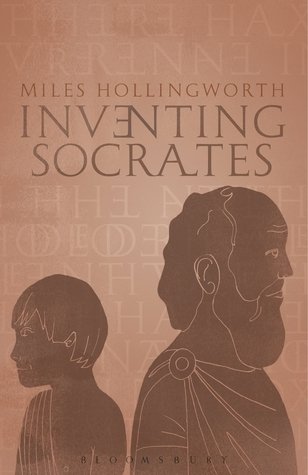
Inventing Socrates explores how the legendary philosopher has been reimagined across centuries, from Augustine to Nietzsche, as a symbol of reason, faith, and self-examination. Miles Hollingworth reveals that Socrates is not a fixed figure, but a mirror reflecting our deepest quests for meaning. A profound meditation on identity, virtue, and the power of questioning, this book invites readers to invent their own Socrates, and in doing so, discover themselves. Summary powered by VariableTribe
Miles Hollingworth’s Inventing Socrates is a deeply reflective and intellectually rich exploration of how the image of Socrates has been shaped, reshaped, and repurposed across centuries, not as a fixed historical figure, but as a philosophical archetype continually reinvented to meet the moral and existential needs of each new generation. Far from being a conventional biography or a dry academic treatise, this book functions as a spiritual and intellectual journey through Western thought, using Socrates as a lens to examine enduring questions about identity, virtue, faith, reason, and the meaning of a life well lived.
Hollingworth begins with a simple yet profound premise: we do not know who Socrates really was. The historical man left no writings of his own. Everything we believe about him comes secondhand, primarily from Plato, Xenophon, Aristophanes, and later interpreters like Augustine, Montaigne, Kierkegaard, and Nietzsche. Each of these figures “invented” their own Socrates, projecting onto him ideals, anxieties, and aspirations that reflected their own times and personal philosophies. To study Socrates, then, is not to recover a lost truth, but to trace the evolution of human self-understanding through one of its most enduring symbols.
The brilliance of Inventing Socrates lies in its ability to weave together history, theology, philosophy, and personal reflection into a narrative that feels both scholarly and intimate. Hollingworth does not merely analyze ideas, he invites the reader into a conversation about what it means to live authentically in a world full of distractions, contradictions, and competing demands. He argues that Socrates endures because he represents the ideal of the examined life, not as an abstract principle, but as a daily practice of questioning, humility, and moral courage.
One of the central threads in the book is the tension between reason and faith. Hollingworth, a theologian and historian of Christian thought, pays particular attention to how early Christian thinkers, especially St. Augustine, engaged with Socrates. Augustine saw in Socrates a kindred spirit—a seeker after truth who, though born before Christ, lived according to the Logos, the divine reason that would later be revealed in Jesus. For Augustine, Socrates was not just a philosopher; he was a proto-Christian, a pagan who unknowingly pointed toward the Gospel. This reinterpretation allowed Christianity to absorb classical philosophy rather than reject it, creating a synthesis that shaped European intellectual tradition for over a millennium.
But Socrates was reinvented in other ways too. In the Renaissance, he became a symbol of individual conscience and intellectual independence. Montaigne admired Socrates’ willingness to admit ignorance, “I know that I know nothing”, and used this stance to champion skepticism and introspection. For Montaigne, Socrates was not a teacher of doctrines, but a model of how to think freely, without dogma or pretense.
Then came Kierkegaard, who saw in Socrates a radical subjectivity, the idea that truth is not something external to be discovered, but something internal to be lived. Kierkegaard contrasted Socrates, who helped others give birth to their own ideas (the “midwife” metaphor), with Christ, who brought a message from God. Yet even in this contrast, Socrates remained essential: he prepared the way for faith by clearing away false certainties.
Nietzsche, meanwhile, turned Socrates into a villain, a representative of rationalism run amok, someone who killed instinct and passion in favor of logic and control. For Nietzsche, Socrates marked the beginning of a decline in Western culture, where life-affirming impulses were suppressed by moral and philosophical systems. Here again, Socrates is not a person, but a symbol, this time of everything that went wrong with enlightenment thinking.
What emerges from Hollingworth’s analysis is that Socrates is less a man and more a mirror. We see in him what we need to see. When society values reason, he becomes the patron saint of logic. When it craves authenticity, he becomes the voice of inner truth. When it fears relativism, he becomes the defender of virtue. And when it seeks spiritual depth, he becomes a seeker on the path to divine wisdom.
This idea, that we invent Socrates to serve our own purposes, is not meant to diminish his importance. On the contrary, it enhances it. His malleability is precisely what makes him timeless. Unlike other historical figures whose legacies are fixed by doctrine or political power, Socrates remains open-ended, available for reinterpretation, always relevant because he challenges us to think for ourselves.
Hollingworth also explores the ethical dimension of Socratic living. The famous dictum “The unexamined life is not worth living,” spoken at his trial, is not just a call to intellectual inquiry, but a demand for moral accountability. To examine one’s life is to ask: Am I living in alignment with my values? Am I deceiving myself? Am I allowing fear, habit, or social pressure to dictate my choices? These are not questions reserved for philosophers, they are essential for anyone who wishes to lead a meaningful life.
The book resonates strongly in today’s world, where identity is fluid, information is overwhelming, and authority is constantly questioned. In an age of cancel culture, where public figures are judged not by growth but by past mistakes, Socrates offers a counter-model: one of continuous self-correction, dialogue, and humility. He did not claim to have answers; he claimed only to seek them honestly. That posture, of openness, curiosity, and willingness to be wrong, is increasingly rare, yet more necessary than ever.
Hollingworth also emphasizes the relational nature of Socratic philosophy. Socrates did not lecture from a podium; he walked the streets of Athens, engaging people in conversation. His method was dialogical, not didactic. This aspect of his character speaks directly to modern concerns about communication, empathy, and civic discourse. In a digital age where debates often devolve into monologues disguised as arguments, the Socratic ideal of patient, respectful dialogue feels revolutionary.
Moreover, the act of “inventing” Socrates is not limited to scholars or theologians. Each of us, in our own way, creates a version of Socrates that guides our decisions. For a student, he might represent intellectual rigor. For a leader, integrity under pressure. For someone recovering from failure, the courage to face judgment with dignity. In this sense, Inventing Socrates is not just a book about philosophy, it’s a guide to self-invention.
Hollingworth writes with clarity, warmth, and deep erudition, never losing sight of the human stakes behind abstract ideas. He avoids jargon and speaks directly to the reader, blending narrative storytelling with philosophical insight. The result is a book that feels both ancient and immediate, like a fireside conversation with a wise friend who helps you see your life more clearly.
Ultimately, Inventing Socrates is an invitation, to think harder, feel deeper, and live more intentionally. It reminds us that the pursuit of wisdom is not a solitary or academic exercise, but a lifelong journey shared with others. We may never know the real Socrates, but by reinventing him, we come closer to understanding ourselves.
Summary powered by VariableTribe
In a world hungry for quick fixes and definitive answers, Hollingworth’s work stands as a quiet but powerful reminder: the most important questions have no final answers, only better ways of asking them. And sometimes, the greatest legacy of a thinker is not what he said, but how he inspires us to keep thinking.
Summary powered by VariableTribe