
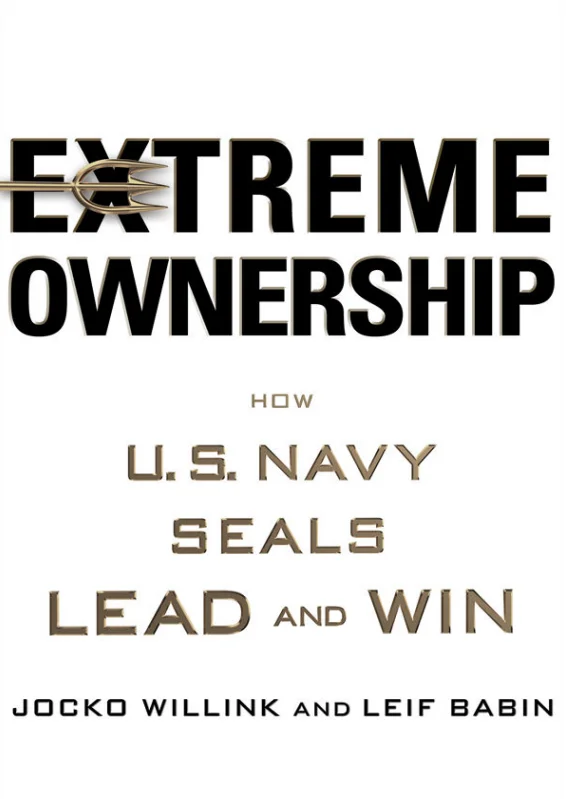
On the battlefield, hesitation gets men killed. In business, it costs money. Either way, the leader must own the outcome. When a SEAL team fails, the leader doesn’t blame the troops, he asks, ‘Where did I fail?’ That’s Extreme Ownership. It’s not about rank; it’s about mindset. The moment you take full responsibility, you unlock the power to fix problems. No excuses. No ‘they.’ Just relentless focus on solutions.
Extreme Ownership is a leadership playbook distilled from brutal combat experiences in Iraq, showing how Navy SEAL tactics apply to business and life. Co-authors Willink and Babin—decorated SEAL officers—argue that true leadership starts with owning everything, even failures beyond your control.
Extreme Ownership:
Leaders must take full responsibility for their team’s outcomes (“There are no bad teams, only bad leaders”).
Example: Willink blamed himself for a friendly-fire incident to learn and improve.
No Bad Teams, Only Bad Leaders:
Leadership (not talent) determines a team’s success.
Example: A struggling SEAL platoon transformed under new leadership.
Decentralized Command:
Empower frontline teams to make decisions (“Junior leaders must understand why“).
Prioritize and Execute:
Focus on one critical mission at a time (“Relax, look around, make a call”).
Cover and Move:
Teams must support each other, not compete internally.
“Discipline Equals Freedom”: Rigorous routines (like 4:30 AM workouts) create flexibility in chaos.
Ego is the Enemy: Leaders must detach from self-interest to serve the mission.
Simplify the Plan: Complex plans fail; use “Commander’s Intent” (clear end goals).
The book alternates between war stories (Ramadi firefights) and business case studies (e.g., CEOs applying SEAL tactics), proving that leadership is universal.