
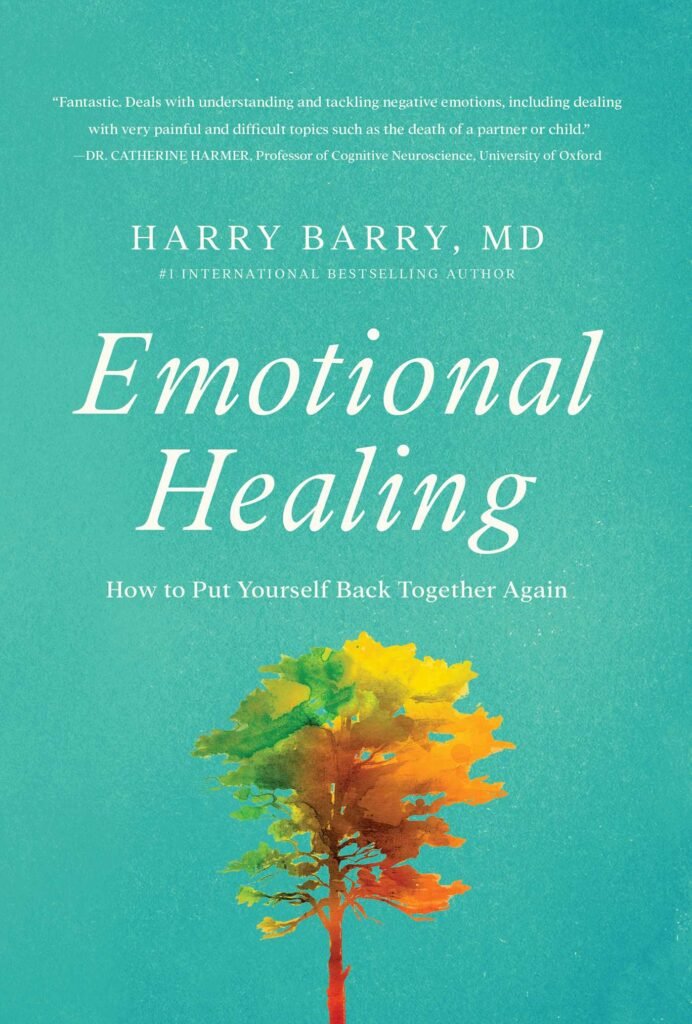
Struggling with grief, trauma, or loneliness? Emotional Healing by Dr. Harry Barry gives you the proven tools to recover, not by ignoring pain, but by transforming it. Using cognitive behavioral therapy, mindfulness, and compassionate exercises, this guide helps you identify emotions, break negative cycles, and rebuild your life with resilience. Perfect for anyone ready to move from survival to thriving. Start healing today, your future self is waiting. Summary powered by VariableTribe
In a world where emotional pain is often minimized, misdiagnosed, or masked with distractions, Dr. Harry Barry’s Emotional Healing arrives as both a lifeline and a roadmap for those navigating the turbulent aftermath of loss, trauma, grief, or profound loneliness. With decades of clinical experience as a general practitioner and mental health advocate, Dr. Barry merges scientific rigor with deep human compassion to offer a practical, step-by-step guide to rebuilding emotional resilience, not through quick fixes or denial, but through honest self-awareness, cognitive restructuring, and compassionate self-care.
The central thesis of the book is both simple and revolutionary: emotional wounds, like physical ones, require proper care to heal. Yet unlike a broken bone, which draws immediate attention and treatment, emotional injuries are often ignored, suppressed, or misinterpreted as personal weakness. Dr. Barry dismantles this myth from the outset, framing emotional pain not as a flaw but as a natural, human response to suffering. Healing, he insists, is not about “getting over it” but about learning to carry pain with grace while reclaiming joy, purpose, and connection.
Drawing heavily on the principles of Cognitive Behavioral Therapy (CBT), along with insights from neuroscience and mindfulness practices, Dr. Barry introduces a structured, holistic model he calls the “Three Pillars of Emotional Healing”: Awareness, Acceptance, and Action. The first pillar, Awareness, challenges readers to identify and name their emotions with precision. Far too often, he explains, people say “I’m stressed” when they’re actually grieving, anxious, ashamed, or overwhelmed. This lack of emotional granularity traps them in cycles of confusion and reactivity. Through reflective exercises and emotion charts, readers learn to distinguish between primary emotions (like sadness or fear) and secondary reactions (like anger or numbness), creating space for clarity.
The second pillar, Acceptance, is perhaps the most counterintuitive yet transformative. Dr. Barry emphasizes that healing begins not when we fight our pain, but when we stop resisting it. He introduces the concept of “radical acceptance,” borrowed from dialectical behavior therapy, which involves acknowledging reality as it is, not as we wish it to be. This doesn’t mean resignation; it means ceasing the exhausting internal war against what has already happened. A widow doesn’t “accept” her husband’s death as good, but she accepts that it occurred, and in that acceptance, she finds the stability to rebuild.
The third pillar, Action, focuses on small, sustainable steps that restore agency. Dr. Barry is adamant that healing is not passive; it requires daily choices that rewire the brain and retrain the nervous system. He provides a suite of evidence-based tools: behavioral activation (scheduling pleasurable or meaningful activities even when motivation is low), thought records (challenging distorted beliefs like “I’ll never be happy again”), grounding techniques for trauma triggers, and the “5-Minute Rule” (committing to just five minutes of a healing activity, often enough to break inertia).
One of the book’s most powerful contributions is its destigmatization of loneliness. Dr. Barry reframes loneliness not as a social failure but as a signal, like hunger or thirst, that our need for connection is unmet. He offers practical strategies for rebuilding social bonds, even for introverts or those scarred by past betrayals, emphasizing quality over quantity in relationships.
Throughout, Dr. Barry weaves in anonymized case studies from his practice: the young man paralyzed by survivor’s guilt after a car accident, the woman who lost her identity after divorce, the elderly patient drowning in isolation after retirement. These stories humanize the theory, showing that healing is messy, nonlinear, and deeply personal, but always possible.
Critically, the book avoids toxic positivity. Dr. Barry never suggests that readers should “just think happy thoughts.” Instead, he validates the darkness while illuminating a path through it. He also addresses the physical dimension of emotional pain, how trauma lives in the body as tension, fatigue, or insomnia, and integrates somatic practices like breathwork, progressive muscle relaxation, and mindful movement.
The tone is consistently warm, authoritative, and free of jargon. Each chapter ends with “Healing Steps”, concrete exercises such as journal prompts, cognitive reframing templates, or self-compassion scripts. These transform the book from a passive read into an active workbook, inviting readers to engage with their healing journey in real time.
By the final chapter, readers are equipped not just with strategies, but with a new identity: not as victims of their pain, but as resilient survivors who are actively rebuilding their inner world. Dr. Barry’s ultimate message is one of hope grounded in science: your nervous system can recalibrate, your thoughts can shift, and your heart can open again, even after the deepest wounds.
Emotional Healing stands out in the crowded self-help landscape because it balances empathy with structure, science with soul. It doesn’t promise a pain-free life, but it guarantees that pain need not define you. For anyone who has ever felt broken by grief, trauma, or loneliness, this book is a compassionate companion saying, gently but firmly: you can put yourself back together.
Summary powered by VariableTribe
The book is organized into three parts mirroring the Three Pillars. Part One (“Understanding Emotional Pain”) explores the neuroscience of trauma, the difference between acute and chronic grief, and the societal stigma around mental health. Part Two (“The Path to Healing”) dives into CBT tools, mindfulness exercises, and somatic techniques, with chapters dedicated to specific challenges like guilt, shame, and abandonment. Part Three (“Living Beyond Survival”) focuses on rebuilding identity, reconnecting with others, and cultivating post-traumatic growth. Each chapter ends with actionable “Healing Steps.”
Dr. Barry’s approach is integrative: he blends CBT’s cognitive restructuring with mindfulness’s non-judgmental awareness and somatic therapy’s body-based interventions. His philosophy rests on three truths: (1) Pain is inevitable, suffering is optional; (2) Healing requires both feeling and doing; (3) Everyone has the capacity for resilience when given the right tools.
A therapist uses the “Emotion Identification Chart” with clients to increase affective granularity. A corporate wellness program adapts the “5-Minute Rule” to reduce employee burnout. A support group for widows practices the “Letter to My Future Self” exercise to foster hope. In each context, the book’s tools are scalable and adaptable.
While some readers may crave more on complex trauma or cultural differences in grief, Dr. Barry intentionally keeps the focus universal and accessible. His strength lies in demystifying therapy, making clinical tools usable for laypeople without oversimplifying. The absence of spiritual language makes it inclusive, though some may wish for more existential depth. Overall, it’s a masterclass in translating professional psychology into everyday healing.
Measurable outcomes include reduced anxiety scores, improved sleep quality, increased social engagement, and greater self-reported emotional clarity within 4–6 weeks of consistent practice.