
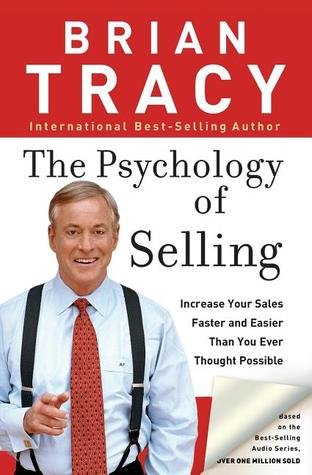

Book Summary: The Psychology of Selling by Brian Tracy (Expanded Edition)
The Core Promise: What if you could double, triple, or even quadruple your sales and income in just a few months? Brian Tracy, a man who went from a broke, high-school-dropout manual laborer working on a Norwegian freighter to one of the world’s top sales trainers (having trained over 500,000 salespeople in 24 countries), says you absolutely can. His book has been translated into 16 languages and is the best-selling sales training program in history. The secret isn’t working harder or being pushier. It’s about mastering the inner game—the psychology of selling.
This book is not a collection of clever closing tricks. It is a complete mental reprogramming guide. Tracy argues that sales success is not an accident; it’s predictable. As he states, “Success leaves tracks.” And it all starts with what’s going on inside your head.
Part 1: The Inner Game of Selling
The 80/20 Rule & The Winning Edge
Tracy opens with a powerful wake-up call: the top 20% of salespeople earn 80% of the money. The bottom 80% scrape by on the leftovers. Even more astonishing, the top 4% (20% of the top 20%) earn as much as the other 96% combined. In every large sales force, four or five people out of one hundred make as many sales as all the rest put together.
But here’s the good news: the difference between the top and the bottom is not a massive gap in talent. It’s just a few small things done consistently well—what he calls “the winning edge.”
He uses the analogy of a horse race: the horse that wins by a nose earns ten times the prize money of the horse that loses by a nose. It’s not ten times faster; it’s just a nose better. In selling, you only need to be a little bit better in a few key areas (prospecting, rapport, identifying needs, presenting, answering objections, closing, and getting referrals) to see an enormous difference in your income.
The Master Program: Your Self-Concept
The most important discovery in psychology, according to Tracy, is the self-concept. This is the “master program” of your subconscious mind—the bundle of beliefs you have about yourself. “You always perform on the outside in a manner consistent with your self-concept.”
And here’s the iron rule: you can never earn 10% more or less than your self-concept level of income. You have an “income thermostat.” If you see yourself as a $50,000-a-year salesperson, your thoughts and actions will keep you right around that number. If you have a great month and hit that by September, you’ll unconsciously sabotage yourself for the rest of the year.
Tracy shares a powerful story: a young farm boy started selling satellite dishes and made more money than ever before. The experience was so traumatic—so far outside his self-concept—that after a few sales, he would go home, turn off the lights, and lie under the covers with his heart pounding. To earn more, you must reset your thermostat by repeating, “I like myself! I like myself! I like myself!” until your subconscious believes it.
The Two Enemies of Sales Success
Tracy identifies the two major psychological obstacles that keep most salespeople poor:
-
Fear of Failure: The subconscious worry that you’ll mess up. This causes you to freeze, perform poorly, and avoid risks. This fear often comes from destructive criticism in childhood.
-
Fear of Rejection: The dread of hearing “no.” This is the #1 reason salespeople only work about 90 minutes a day face-to-face with customers. A Columbia University study found the average salesperson doesn’t make their first call until 11:00 AM and their last call by 3:30 PM. The rest of the time is busywork to avoid rejection.
Tracy’s cure is simple but powerful: Rejection is not personal. It’s like rain. It just happens. A prospect isn’t rejecting you; they are rejecting the offer at that moment. His motto: “Some will. Some won’t. So what? Next!”
He also reveals a stunning statistic: 48% of all sales calls end without the salesperson ever trying to close. And 80% of sales are never closed before the fifth meeting or closing attempt. Most people quit after one call.
Part 2: Why People Buy (The Psychology of the Customer)
Emotional Decisions, Logical Justifications
You cannot sell anything until you understand the psychology of buying. Tracy’s golden rule: People buy for their reasons, not yours.
All buying decisions are 100% emotional. People decide emotionally and then justify logically. As Tracy puts it, “Logic makes sales, but emotion triggers the buying decision.”
The two main motivators are:
-
Desire for Gain (wanting to be better off) – Motivational power of 1.0.
-
Fear of Loss (fear of making a mistake) – Motivational power of 2.5 (two and a half times stronger).
To trigger a sale, you must identify the prospect’s “hot button” —the single most important benefit they are seeking. You do this by asking questions and listening, not by talking.
The 11 Deep Human Needs
Tracy lists 11 fundamental needs that motivate all buying behavior. Your product must appeal to one or more of these:
-
Money (to make or save it)
-
Security (financial, emotional, physical)
-
Being Liked (social acceptance)
-
Status and Prestige (feeling important)
-
Health and Fitness
-
Praise and Recognition
-
Power, Influence, and Popularity
-
Leading the Field (being up-to-date, an “early adopter”)
-
Love and Companionship
-
Personal Growth (learning and self-improvement)
-
Personal Transformation (becoming a different, better person—the most powerful motivator of all)
The Four Questions Every Business Buyer Asks
If you sell to businesses, you must answer these four questions clearly:
-
How much do I pay?
-
How much do I get back?
-
How soon do I get these results?
-
How sure can I be that I will get the results you promise?
Tracy emphasizes that businesses don’t buy products; they buy improved performance, reduced costs, or increased profits. Never talk about what your product is; only talk about what it does for their bottom line.
Part 3: The Sales Process—Step by Step
The Seven Key Result Areas (KRAs) of Selling
Your performance in these seven areas determines your income:
-
Prospecting
-
Building Rapport
-
Identifying Needs
-
Presenting
-
Answering Objections
-
Closing the Sale
-
Getting Resales and Referrals
Prospecting: The Six-Word Formula for Success
Tracy’s most important rule for selling success is just six words: “Spend more time with better prospects.” That’s it.
He teaches a powerful telephone prospecting script that changed his career. Instead of saying, “I want to talk to you about training your salespeople” (which triggers “We can’t afford it”), he started asking: “Mr. Prospect, would you be interested in a proven method that could increase your sales by 20 to 30 percent over the next twelve months?”
The response changed from rejection to “Of course. What is it?” He then said, “That’s exactly why I’m calling. I just need ten minutes of your time to show you this system, and you can decide for yourself.”
Key prospecting rules:
-
Never sell on the phone. Only sell the appointment.
-
Refuse to talk about price or product details until you are face-to-face.
-
When the prospect says, “Send me something in the mail,” reply: “I’d love to, but the mail is undependable. Why don’t I drop it off personally on Tuesday?”
-
Always confirm appointments by calling the receptionist, not the prospect.
Building Rapport: The Friendship Factor
“A person will not buy from you until he is convinced that you are his friend and acting in his best interest.”
The first unspoken question every prospect asks is: “Do you care about me?” If you don’t answer “yes” in the first minute or two, they will politely listen and then say, “Let me think it over.”
How do you build rapport? Listen. Listening is “white magic.” When you listen intensely, the prospect’s self-esteem goes up, and they like you more.
The five keys to effective listening:
-
Listen attentively without interrupting. Lean forward, nod, smile.
-
Pause before replying for 3-5 seconds. This shows you value what they said.
-
Question for clarification using “How do you mean?” (the most powerful question in selling).
-
Paraphrase what they said in your own words to prove you were listening.
-
Use open-ended questions (who, what, where, when, why, how) to keep them talking.
The Approach Close (to Reduce Initial Resistance)
Start every sales conversation with this powerful technique:
“Mr. Prospect, thank you for your time. Please relax; I’m not here to sell you anything right now. All I want to do is show you some of the reasons why so many other people have bought this product. All I ask is that you look at what I have to show you with an open mind, and then tell me at the end whether or not this product makes sense to you. Is that fair?”
The prospect almost always agrees. This does three things: (1) lowers their guard, (2) builds social proof by mentioning other buyers, and (3) forces them to give you an answer at the end (not “let me think it over”).
Answering Objections
When a prospect objects (“It costs too much,” “I need to think it over”), never argue. Use the magic question: “How do you mean?”
This forces them to elaborate. Often, the real objection is not the one they stated. Once you know the real objection, you can answer it.
Tracy also teaches that the best way to overcome objections is before they arise—with testimonial letters. He advises collecting letters from happy customers, putting them in a binder with plastic page protectors, highlighting the best sentences, and showing the binder to every new prospect before they can object. He says this single technique doubled and tripled his sales.
Closing the Sale
Most salespeople never ask for the order. Tracy insists you must. His personal rule that changed his career: “I don’t make callbacks.”
When a prospect says, “Let me think it over,” he replies: “Mr. Prospect, you already know everything you will ever know about this product. From what you’ve told me, it looks like an excellent choice for you. Why don’t you just take it?”
He was astonished at how often this worked. When he stopped allowing prospects to “think it over,” he started selling to virtually everyone he spoke to.
The Trial Close: Use this throughout your presentation to check if you’re on track. Examples:
-
“Does this make sense to you so far?”
-
“Is this what you had in mind?”
-
“Would this be an improvement on your current situation?”
If they say “no” to a feature, that’s fine—it’s not a rejection of the whole sale. You simply move on.
The Demonstration Close: Use this at the very beginning to qualify the prospect:
“Mr. Prospect, if I could show you the best investment available on the market today, are you in a position to invest $5,000 right now?”
If they say yes, they have already agreed to buy if you can prove your claim. If they say no, you know they’re not a qualified prospect, and you save hours of wasted time.
The Power-of-Suggestion Close: Create emotional word pictures. If selling a car: “You are really going to love the way this car handles in the mountains.” The prospect immediately pictures themselves driving through beautiful scenery. If selling a house: “You are going to love living on such a quiet street. It’s so peaceful in the evenings.” These pictures create buying desire long after you leave.
Talking Past the Sale: Talk as if they have already bought. “You are going to love the service you get from our company. When you place an order, it’s confirmed within 30 minutes and shipped within 3 days.” This allows them to mentally project themselves into the role of a satisfied customer.
Part 4: The Six Buyer Personality Types
Tracy warns that you must adapt your style to the prospect’s personality. Selling to everyone the same way is a recipe for failure.
-
The Apathetic Buyer (5%): Never buys anything. Negative, cynical, depressed. Strategy: Politely leave. Don’t waste time.
-
The Self-Actualizing Buyer (5%): Knows exactly what they want. Positive, pleasant. Strategy: Give them exactly what they ask for. Don’t try to sell them something else.
-
The Analytical Buyer (25%): Detail-oriented, slow, concerned with accuracy (engineers, accountants). Strategy: Slow down. Be precise. Provide written data. Don’t rush.
-
The Relater Buyer (25%): People-oriented, sensitive to others’ opinions, needs to be liked. Strategy: Build a relationship. Focus on how others will react to their purchase. Be patient.
-
The Driver Buyer (25%): Task-oriented, impatient, wants results. Strategy: Get straight to the point. Focus on the bottom line. Speed up your presentation.
-
The Socializer Buyer (25%): Outgoing, extroverted, achievement-oriented. Strategy: Be positive and friendly. Get agreements in writing immediately (they forget details easily).
Part 5: The 10 Keys to Success in Selling (Final Chapter)
Tracy distills a lifetime of learning into ten actionable principles:
-
Do what you love. Passion is the fuel of persistence. Excellence requires loving your work.
-
Decide exactly what you want. Only 3% of adults have written goals, and they are the most successful. Use his 7-step goal-setting formula: (1) Decide exactly, (2) Write it down, (3) Set a deadline, (4) List every step, (5) Organize by priority, (6) Take action immediately, (7) Do something every day.
-
Back your goal with persistence and determination. Decide in advance that you will never, ever give up. As Epictetus said, “Circumstances do not make the man; they reveal him to himself.”
-
Commit to lifelong learning. Your mind is your most precious asset. Read every morning. Listen to audio programs in your car. Attend seminars. “The illiterate person is the person who is no longer learning.”
-
Use your time well. Plan every day in advance (the night before). Work from a clean desk. Focus on your most valuable use of time, right now. Ask: “What one thing, if done in an excellent fashion, would have the greatest positive impact on my work?”
-
Follow the leaders. Find the top people in your field and ask them what they do. Model their behavior. “You can’t fly with the eagles if you keep scratching with the turkeys.” Your reference group determines your future.
-
Guard your integrity. Trust is everything. Be honest with your customers and with yourself. Practice the “reality principle” of Jack Welch: “Deal with the world as it is, not as you wish it would be.”
-
Unlock your inborn creativity. Believe you are a genius. Use the “20 Idea Method” : Write your biggest goal as a question (e.g., “How can I double my income?”). Then force yourself to write 20 answers. The 20th idea is often the breakthrough. Do this every morning.
-
Practice the Golden Rule. Treat every customer exactly as you would want to be treated. Ask yourself: “What kind of company would my company be if everyone were just like me?”
-
Pay the price of success. Work hard. Give it “full throttle.” 85% of self-made millionaires say they were no smarter than others, but they worked much harder. “If you only give the plane 80% throttle, you never reach takeoff speed.”
The Most Important Lessons from the Book (Bulleted Summary)
-
Success is predictable. Do what successful people do, and you will get their results.
-
Your self-concept determines your income. You can never earn more than you believe you are worth. Change your beliefs by repeating “I like myself!”
-
Fear of rejection is the #1 obstacle in sales. Rejection is not personal. Adopt the motto: “Some will. Some won’t. So what? Next!”
-
People buy emotionally and justify logically. Find the “hot button”—the one benefit they want most.
-
The fear of loss is 2.5 times more powerful than the desire for gain. Show prospects what they will lose if they don’t buy.
-
Listening is more powerful than talking. The person who asks questions has control.
-
“I don’t make callbacks.” When you give people time to “think it over,” they almost never buy. Close the sale when interest is highest.
-
80% of sales are made after the 5th closing attempt. Most salespeople quit after 1 call.
-
Use testimonial letters. Other people saying your product is good is infinitely more powerful than you saying it.
-
Dress for success. 95% of a first impression is your clothing. Look like a top performer.
-
Learn something new every day. Your mind is your only appreciating asset. Read, listen, attend seminars.
-
Write down your goals. Only 3% of adults have written goals, and they are the most successful people in every field.
The Bottom Line
The Psychology of Selling is not a theoretical textbook; it is a boot camp for the mind. Brian Tracy’s core message is profoundly optimistic: success is learnable. The fears of failure and rejection that hold most people back are just bad mental habits—and habits can be broken.
By changing your self-concept, mastering the seven steps of the sale, understanding buyer psychology, and committing to constant improvement, you can move from the struggling 80% to the wealthy top 20%. As Tracy says, “If you do what other successful people do, over and over again, nothing in the world can stop you from eventually getting the same results.”
He closes with a powerful image: Imagine an airplane. If you give it only 80% throttle, it never reaches takeoff speed. It stays on the ground and crashes. But if you push the throttle to 100%, it lifts off, climbs to cruising altitude, and then you can pull back and relax. Most salespeople never give 100%—and that’s why they never take off. Your future is unlimited if you will simply pay the price.