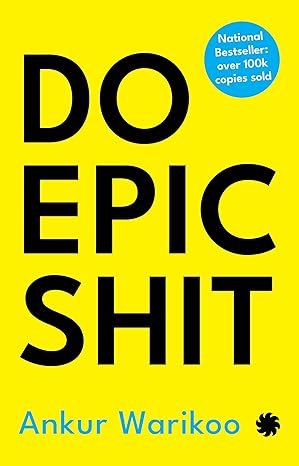
This book is not going to change your life. It is meant to make you more aware. So that you make choices in life from a state of awareness and not ignorance. A year from now, you will wish you had started today. Start today.
Ankur Warikoo starts with a surprising confession: this book might be the most useless one you’ll ever buy. Why? Because it contains nothing you don’t already know. It’s not meant to be a grand revelation or a life-changing manual. Instead, it’s designed to be a reminder. A reminder that life happens to all of us, and we all share similar thoughts, fears, and aspirations. The goal is to put words to your feelings, make you more aware of your choices, and help you live life from a state of awareness, not ignorance.
He suggests you play “book-cricket” with it: open a random page each day, read a few lines, reflect, and smile. The book is a compilation of his most impactful social media thoughts from twelve months, all born from his own failures, reflections, and observations.
The core promise is simple: if you ever read a page and think, “I needed to hear this today,” then he has succeeded.
Ankur’s relationship with success is entirely shaped by his relationship with failure. He believes that reflecting on mistakes is the only real path to success.
Key Ideas on Success & Failure:
The Feeling of Exceeding Yourself: The real joy isn’t just completing tasks but doing more than you expected of yourself—breaking your own limits.
Start Today: A year from now, you won’t regret the results you got, but you will regret not starting. The gap between where you are and where you want to be is filled with either regret or results.
The Magic Formula for Success: The combination of Consistency + Authenticity is unbeatable. If you are fake, you will eventually fail to be consistent. Being your true self makes hard work feel effortless.
Success is a Relationship with Yourself: The world will constantly define success for you (high salary, marriage by 25, etc.). Real self-awareness is realizing this and then rewriting those rules for yourself. If you are unhappy with your life, you don’t need a destination—you just need to move out of where you are, mentally and emotionally.
The Pro vs. The Amateur: The only difference is that the pro showed up every day, fell in love with the process, and chose discipline over excuses.
Failures Are Your Real Life: Once you succeed, people only see the success. If you fail, they only see failure. But you see the journey. The struggles, the habits, the persistence—that is where your true life is lived. Success and failure are just outputs.
The Biggest Roadblock is Ego: Your ego stops you from asking questions, especially to those younger or less experienced. Knowing what you don’t know is power; asking and learning is a superpower.
You Grow Your Passion: You aren’t born with a passion. Passion is the tiny inner nudge that you choose to nurture every single day. It’s persistence, showing up, and doing the hard work because not doing it is harder.
The Mistake of “Experience”: Doing the same thing for five years isn’t five years of experience; it’s one year of experience repeated five times. True experience comes from bulging out of your comfort zone.
Fighting Stereotypes: Sending a non-traditional resume (a video, a colorful design) is scary, but living life as a template is permanently uncomfortable. Being yourself is the coolest way to get attention.
Mistakes Made in His 20s (Highlights):
Continued education because he was good at it, not because it made him happy.
Looked down on people who partied.
Felt morally obligated to fix everyone’s problems.
Thought money would solve all family problems.
Took loans because he assumed he’d have money in the future.
Assumed his work would speak for itself and never asked for what he wanted.
The core lesson of the 20s: Use this decade to discover yourself, not stabilize yourself. Meet people, try jobs, explore. Find what you’re good at and what makes you happy. Then spend your 30s doing that.
Mistakes Made in His 30s (Highlights):
Hired for pedigree (degrees, brands) instead of character and how people operate.
Told himself relationships could wait—time with parents, saying “I love you” to his wife.
Managed everyone the same “scalable” way, forgetting that people are different.
Assumed venture capitalists want to build businesses with you (they want to enter and exit).
Laid people off and thought finding them another job would be okay (it destroys self-respect).
The core lesson of the 30s: Realizing that the ability to do what you want without caring what the world thinks is true success. Money, fame, and recognition are not the answer.
His “Failure Résumé”:
Ankur shares a brutally honest list of failures:
Didn’t get into IITs (his father cried).
Rejected from St. Stephens for BSc.
Dropped out of his PhD in the US.
Didn’t get shortlisted for any IIM for MBA.
Fired as a co-founder from his first startup.
Pitched to 23 VCs for Groupon India; 22 said no.
Lost ₹11 crore in a month on a referral program.
Laid off 80 people from nearbuy.
At 39, he was jobless, with no money, no plan, no direction.
His conclusion: He is who he is because of these failures. The scars are not to be hated; they are signs of a battle fought.
Ankur prefers habits over goals. Goals are about a destination; habits are about becoming a certain kind of person. Habits open multiple doors; goals, if you’re lucky, open just one.
Key Ideas on Habits:
The Trick to Waking Up Early: It’s not about waking up early; it’s about sleeping on time. Otherwise, you’ll be groggy and hate yourself.
Share Your Journey: Your story is valuable to someone who hasn’t been where you are. You have a moral responsibility to share what you know.
Targets vs. Habits: Don’t set targets (e.g., “run a marathon”). Set habits (e.g., “run every day”). Targets leave you hollow once achieved. Habits hire you forever.
Don’t Minimize Struggle—Make it Meaningful: Struggle is inevitable. Instead of suppressing it, ask what it means. Is a difficult colleague a problem or a lesson in patience?
Before You Assume, Ask: Someone ignoring you? Ask. Someone rude? Ask. Asking either validates your assumption or builds understanding.
The Three Things That Reveal Your Priorities:
Your first hour after waking up.
Your last hour before sleeping.
Your calendar.
The Easiest Things to Do are the Easiest to Ignore: Drinking water, sleeping on time, a daily walk. Doing them consistently changes your life.
Know Others vs. Know Yourself: We know others through their actions. We know ourselves through our thoughts. But others only see our actions, not our intentions. So, what you do is what matters.
Your Attendance vs. Your Attention: Your discipline is not defined by your attendance (being present) but by your attention (being fully present).
A Sneak Peek into His Habits:
Carry a notebook everywhere. Don’t waste mental energy on remembering.
Document everything (ideas, to-do lists, meeting notes).
Put everything on a calendar (bills, birthdays, routines).
Share your calendar with your spouse.
Take an afternoon nap.
Use sensory hooks (keep dumbbells by the bed, use a favorite perfume to start the day).
Ankur’s goal is to help people make decisions from a point of awareness, not ignorance. Awareness is the start of a decision, not the end of it.
Key Ideas on Awareness:
Emotional Debt is Worse Than Financial Debt: The debt of never saying “I love you” to your parents, never apologizing, never living for your own happiness. Money can be repaid; emotional debt kills you from within.
Fear Causes Procrastination, Not Laziness: You don’t delay a task because you’re lazy. You delay it because you’re scared of failure, success, or rejection.
Satisfaction is a Superpower: Someone younger will always make more money. If you are still envious, are you truly successful? Being satisfied with your journey is a powerful skill.
Your Self-Talk Determines Your Self-Worth: The stories you tell yourself (“I’m a loser” vs. “I can do this”) become your reality.
The Best Mental Model for Tough Decisions:
Ask, “What’s the worst thing that can happen?”
Imagine it happening vividly.
Ask, “Will I be okay (mentally, socially, financially, emotionally)?” If yes, go for it.
Most Decisions Are Reversible: We assume big decisions are set in stone, so we don’t act. Knowing they are reversible gives serendipity a chance.
Two Choices – The Easy One vs. The Right One:
Easy: Gossip, delay work, stay silent.
Right: Understand someone’s view, meet deadlines, speak up.
The easy thing rewards you instantly. The right thing rewards you eventually.
We Are Addicted to Emotions, Not Things: The car, the phone, the likes – we are addicted to how these things make us feel about ourselves.
The Danger of Ignorance: The most dangerous people are not the ignorant ones; they are the ones who are ignorant but believe they are right.
Resisting the Obvious: When making a decision, ask: “What would most people do?” Then consider the alternate option. Going against the flow helps you find your own flow.
Ankur has been an entrepreneur since age 11 (renting comics from a mat). He believes entrepreneurship is a state of mind, not a profession.
Key Ideas on Entrepreneurship:
The Founder’s Primary Job: As a founder, you must show up every single day, no matter how you feel, no matter what the press writes. No one else will do it for you.
The Best Advice He Ever Got: “If I can’t trust you, it doesn’t matter how smart you are.” Your work is a measure of the trust your manager places in you.
Entrepreneurship is a State of Mind: You can be an entrepreneur in a job by solving problems, energizing your team, and treating your work like your own business.
The Market Doesn’t Care About You: Customers don’t care if the founder is from IIT or hasn’t taken a salary. They care about solving their problems.
Raising Money is an Obligation, Not an Achievement: Congratulating a founder on raising funds is like congratulating a chef on buying vegetables. It’s just an ingredient. Now you are answerable to investors.
Hiring Principle: Attitude >> Experience >> Education. Skills can be taught; attitude is nearly impossible to teach.
The Worst Reasons to Become an Entrepreneur:
“I want to make money.”
“I hate my current job.”
“Everyone is doing it.”
The only good reason is that you are consumed by a problem you want to solve.
Test Your Idea Without Quitting Your Job: Work nights and weekends to test the idea. The pressure of needing money to survive is very different from exploring if an idea works.
Trust as a Competitive Advantage: In a trust-deficient world, operating with trust is a superpower. Pay your team on the first day of the month. Trust them from Day 1. They will surprise you.
Ankur grew up without money, which made him hate it. He learned that disrespecting money leads to money not respecting you. The biggest lesson: money buys freedom, and freedom is a privilege.
Key Ideas on Money & Mistakes to Avoid:
Mistakes He Made with Money:
Took loans to buy real estate without calculating taxes and inflation.
Invested extra cash in startups instead of paying off loans.
Invested in illiquid assets (real estate, startups) and had no cash during tough times.
Took lower-than-market salary for equity that never paid off.
Maxed out credit cards, hoping a future “mega event” would fix everything.
Broke mutual fund investments early, killing the power of compounding.
Discouraged his wife from investing (her investments saved them multiple times).
10 Common Money Mistakes to Avoid:
Not valuing your time (e.g., driving 2 hours to save ₹1000).
Trying to time the market (waiting for highs or lows).
Investing because of FOMO (everyone is buying Bitcoin, so I should too).
Renting your time instead of owning assets (stocks, a business, rental income).
Comparing your money to others (compare the decisions they made, not the outcome).
Running after money (you give up your freedom to earn it).
10 Lies He Was Told About Money:
Money is the root of all evil. (Truth: It’s the importance we attach to it.)
Saving is important. (Truth: Investing to beat inflation is more important.)
Buying a house is the ultimate financial goal. (Truth: It often doesn’t make financial sense and binds you.)
All expensive things are assets. (Truth: Your house, car, and appliances are not assets; your network and knowledge might be.)
The only way to make money is education → job. (Truth: The wisest people create or buy assets.)
Final Lessons on Money:
Understand taxes and inflation.
Give compounding time—decades.
Live like a pauper in your 20s. Pay bills, then invest, then desires.
Take loans only for things that appreciate (education, maybe one house).
Wait for the right opportunity. The price you buy at determines your return.
Ankur believes all problems are interpersonal relationship problems, and it all starts with the relationship you have with yourself.
Key Ideas on Relationships:
The Ultimate Test: Would you be friends with yourself? Marry yourself? Be your own boss? If you have flaws you wouldn’t accept in others, why do you accept them in yourself?
Holding a Grudge is Self-Harm: Someone hurt you once. You hurt yourself a hundred times by replaying it in your head.
Empathy Cannot Be Taught: Empathy (“I understand what you are going through”) is either innate or not. Sympathy (“I feel sorry for you”) is different. Respect (“I admire how you are handling this”) is the highest form.
Run Away from Those Running Away from Themselves: Avoid people who refuse to heal, who don’t want to know their deeper parts, who won’t have difficult conversations with themselves.
Don’t Show Up for Every Argument: Silence is an undeniable life hack for peace. Arguments need fuel; your silence cuts it off.
True Friends Are Happy for Your Success: Anyone can be there in tough times. True friends celebrate your wins without a hint of jealousy.
Your Thoughts Define You, Not Your Friends: You are not the average of the five people you spend time with. You are the average of the five thoughts you spend the most time with. Choose your inputs (books, social media, podcasts) wisely.
Lessons from His Parents:
Risk and failure are a state of mind. Have no fear and no regret.
Always ask, “What would the other person be thinking?”
Nothing matters more than showing up every day.
Respect comes from conduct, not title or age.
Perfection is personal—it makes others wonder, but for you, it’s just a habit.
Letters to His Kids (Vidur & Uzma):
Don’t forget what feels “unfair.”
See things for what they can be (a cardboard box is a robot, a kitchen set).
It’s your mess; you fix it.
The story in your head is the most important.
Don’t ever forget where you come from. Be grateful for your privilege, not proud of it.
Live your own life, not someone else’s definition of success.
Ankur ends by sharing his personal superpower: his relationship with time. He guards it ferociously, schedules everything, and treats it as the one thing that helps him in every area of life. He asks you to find your own superpower—the one thing that keeps you going when nothing seems right. It could be discipline, kindness, attention to detail, or a rebellious nature. This inner armour will ensure you never return home defeated. The most powerful things lie within us, and they are the easiest to overlook.