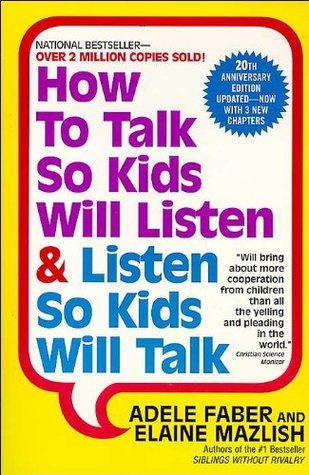
“How to Talk So Kids Will Listen, and Listen so Kids Will Talk” by Adele Faber and Elaine Mazlish stands as a seminal work in the field of parenting and child psychology. More than just a collection of advice, it is a practical, step-by-step manual designed to fundamentally transform the way adults communicate with children. The book’s enduring popularity, selling over three million copies and being translated into twenty languages, is a testament to its effectiveness and accessibility. At its core, the book offers a revolutionary approach: replacing punitive, dismissive, or manipulative communication patterns with a language of empathy, respect, and collaboration that affirms the dignity of both parent and child.
The genesis of this transformative method stems from the authors’ training under the late child psychologist Dr. Haim Ginott, whose central tenet was that there should be “no more scratches on their souls.” This philosophy underscores the entire book, which argues that traditional parenting techniques often wound a child’s spirit through denial, blame, and control, ultimately damaging self-esteem and the parent-child relationship. The book was born from a direct response to parents who, inspired by the authors’ earlier work, pleaded for concrete tools and exercises to learn these new skills themselves. Thus, the 30th-anniversary edition presented here functions not as a theoretical treatise but as an interactive workshop, complete with exercises, role-playing scenarios, cartoons, and tear-out reminder pages.
The book is structured around five key skill sets, each meticulously broken down into actionable strategies. These skills are presented not as a rigid formula, but as principles to be adapted to individual families and personalities.
1. Helping Children Deal with Their Feelings
The first and foundational chapter emphasizes that a child’s behavior is directly linked to how they feel. When kids feel right, they behave right. The primary obstacle to this is the adult tendency to deny, minimize, or judge a child’s emotions. Statements like “You don’t really feel that way,” “There’s no reason to be so upset,” or “Stop crying” teach children to distrust their own perceptions and rely solely on the adult’s interpretation of reality. This denial can confuse and enrage a child, leading to escalating arguments.
To counter this, the book teaches four specific methods to provide “first aid” to a distressed child:
- Listen with Full Attention: Give the child your undivided focus. A sympathetic silence can be more powerful than words.
- Acknowledge Feelings with a Word: Simple acknowledgments like “Oh,” “Mmm,” or “I see” invite the child to continue sharing.
- Give the Feeling a Name: This is perhaps the most challenging yet crucial skill. Instead of asking “Why do you feel that way?” (which forces analysis), the parent identifies the emotion: “That must have been embarrassing,” “You sound angry,” or “It must be frustrating.” Naming the feeling validates the child’s inner experience and gives them the vocabulary to understand themselves.
- Give Wishes in Fantasy: When a child wants something impossible, granting it in fantasy can be soothing. Saying “I wish I could make the banana ripe for you right now!” acknowledges the desire without giving in to demands.
The book stresses that the attitude behind these words is paramount. If the words are not infused with genuine empathy, they will feel phony and manipulative. The goal is not to agree with every feeling (“You’re absolutely right!”) but to acknowledge that the feeling exists. This process allows children to begin processing their emotions and, remarkably, often leads them to solve their own problems, as illustrated by the father whose son worked out a conflict with a friend after simply being listened to.
2. Engaging Cooperation
Once feelings are validated, the next challenge is to guide behavior without resorting to commands, threats, or lectures. The book demonstrates that common responses like blaming, name-calling, shouting, lecturing, or using sarcasm typically provoke resistance, resentment, guilt, or defiance in the child. These reactions create a cycle of conflict that erodes cooperation.
Instead, the authors propose five positive alternatives to engage a child’s cooperation:
- Describe What You See: State the problem factually without accusation. Instead of “You spilled the milk!”, say “The milk is spilled.”
- Give Information: Provide facts rather than insults. Instead of “You never clean up!”, say “Wet towels left on the bed make it damp.”
- Say It With a Word: Use a single word as a reminder. Instead of a long lecture about the dog, simply say “Dog.”
- Talk About Your Feelings: Express your honest emotions using “I” statements. Instead of “You’re making me sick,” say “I get very tense when I hear screaming.”
- Write a Note: Sometimes, the written word is more effective and less confrontational than spoken words. A note like “Please put me back so I can dry. Thanks! Your Towel” can be humorous and effective.
The book cautions against overusing “please” when genuinely upset, as it can lead to explosive anger when ignored. It also highlights the power of humor and the importance of allowing children time to process requests, especially if they are tired or preoccupied. Notes, in particular, are praised as a creative tool that can convey a message without creating tension.
3. Alternatives to Punishment
The book makes a radical argument: punishment doesn’t work. While it may produce immediate compliance, it does so at a great cost. Punishment shifts the child’s focus from understanding their misbehavior to fantasizing about revenge, feeling hatred toward the parent, or experiencing guilt and unworthiness. It deprives the child of the opportunity to take responsibility and face the natural consequences of their actions.
Instead of punishment, the authors advocate for several alternatives:
- Point Out a Way to Be Helpful: Redirect energy towards a solution.
- Express Strong Disapproval (Without Attacking Character): Separate the deed from the doer. Say “I’m furious that my saw was left outside to rust!” instead of “You’re irresponsible!”
- State Your Expectations: Clearly state what you expect going forward.
- Show How to Make Amends: Guide the child to repair the harm done.
- Offer a Choice: Empower the child with options.
- Take Action: Remove the object of conflict (e.g., locking the toolbox).
- Allow Consequences: Let the child experience the natural outcome of their behavior (e.g., not having ice cream because they were disruptive).
For persistent problems, the book introduces a powerful technique called Problem-Solving. This collaborative process involves:
- Talking about the child’s feelings and needs.
- Talking about the parent’s feelings and needs.
- Brainstorming together to find mutually agreeable solutions.
- Writing down all ideas without judgment.
- Deciding which suggestions to implement.
This method fosters mutual respect and teaches children that conflicts can be resolved through dialogue and compromise, rather than through power struggles.
4. Encouraging Autonomy
The ultimate goal of parenting, the authors argue, is to raise independent, responsible individuals. However, well-intentioned efforts to help can inadvertently foster dependence. Constantly telling a child what to eat, wear, or do creates a dynamic where the child feels powerless and resentful.
To nurture autonomy, the book recommends:
- Let Children Make Choices: Offer choices within limits (e.g., “Do you want the red pants or the gray ones?”). This practice builds decision-making skills.
- Show Respect for a Child’s Struggle: Avoid rushing to fix things. Instead, offer supportive information like “Sometimes it helps if you tap the lid with a spoon” when a jar is stuck. Acknowledge that a task “can be hard” to validate their effort.
- Don’t Ask Too Many Questions: Bombarding a child with questions like “Did you have fun?” can feel invasive and pressure them to report a positive experience. Simple greetings like “Glad to see you” are often better.
- Don’t Rush to Answer Questions: When a child asks a question, respond with “What do you think?” or “You wonder about that,” encouraging them to explore their own thoughts before receiving an answer.
- Encourage Use of Sources Outside the Home: Point children toward other resources like librarians, teachers, or doctors, reducing their reliance on the family.
- Don’t Take Away Hope: Refrain from crushing dreams with harsh realities. Instead of saying “You’ll never get a job as a teacher,” respond with “So you’re thinking of trying out for the play!”
This section acknowledges the bittersweet nature of letting go. As parents, we derive deep satisfaction from being needed, and watching our children become independent can be an emotional journey. Yet, true liberation for the child comes from being trusted to manage their own lives.
5. Praise
The final chapter redefines praise, arguing that traditional praise like “Good girl!” or “You’re so smart!” can be harmful. Such praise focuses on the outcome and the parent’s approval, which can make children dependent on external validation and afraid to fail. It turns every action into a performance for an audience.
The book suggests replacing evaluative praise with descriptive feedback. Instead of saying “Good drawing!” describe what you see: “I see you used bright colors in this picture,” or “You kept working on that puzzle until you found the last piece.” This type of feedback helps children appreciate their own efforts, notice details, and develop an internal sense of accomplishment. It allows them to decide for themselves what they value about their work.
In conclusion, “How to Talk So Kids Will Listen, and Listen so Kids Will Talk” is not a quick-fix guide. It is a profound invitation to shift one’s fundamental mindset. It challenges parents to move away from a model of control and dominance towards one of connection and respect. By learning to listen deeply, acknowledge feelings, collaborate on solutions, and encourage independence, parents can build stronger relationships, foster greater self-esteem in their children, and create a home environment built on mutual dignity and understanding. The book empowers parents with practical tools to end the cycle of conflict and replace it with a language that nourishes the soul of both the child and the adult.