
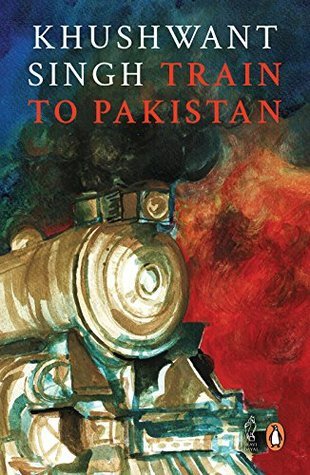
Train to Pakistan by Khushwant Singh is a gripping novel set during the 1947 Partition of India. In a peaceful Punjabi village, religious harmony shatters as refugees flee and violence erupts. When a train carrying Muslim passengers is ambushed, a criminal-turned-hero makes the ultimate sacrifice. This powerful story explores the cost of hatred, the failure of leadership, and the enduring power of love and courage in times of chaos.
Train to Pakistan is a powerful and haunting novel that captures one of the darkest chapters in Indian history, the Partition of India in 1947.
Written by Khushwant Singh, one of India’s most respected journalists and historians, this novel is not just a work of fiction, it is a deeply researched, emotionally raw account of how religious hatred, political manipulation, and mass hysteria tore apart a nation and led to one of the largest migrations in human history.
“The only thing more terrifying than the violence was the silence that followed.”
Set in a small Punjabi village called Mano Majra, the story unfolds with quiet simplicity before descending into chaos, betrayal, and tragedy. Through ordinary characters caught in extraordinary circumstances, Singh explores the fragility of peace, the ease with which neighbors can become enemies, and the courage it takes to do what is right, even when no one else will.
This summary walks you through the full narrative arc, key themes, character analysis, and historical significance of Train to Pakistan, offering a comprehensive understanding of why this book remains a timeless masterpiece.
The novel opens in Mano Majra, a fictional border village straddling Punjab, now split between India and Pakistan after the end of British rule.
It’s a sleepy, peaceful place where:
The train is central to the story, not just as transportation, but as a symbol of connection, routine, and fate. Every night, the mail train whistles through, briefly disrupting the stillness.
But in August 1947, everything changes.
The British leave. India is divided. And Mano Majra becomes a frontier town overnight.
“They didn’t know they were on a border until someone told them.”
Suddenly, their lives are no longer their own. Decisions made in distant capitals begin to ripple through their homes, hearts, and futures.
Singh doesn’t focus on politicians or generals. Instead, he tells the story through five central characters:
A Sikh villager known as a “bad man” for his past crimes and brawls. But beneath his rough exterior lies deep loyalty and love for Nooran, a Muslim girl. He dreams of redemption.
“Even a thief can be brave when love is at stake.”
A young Muslim woman engaged to be married, but secretly in love with Jugga. Her family plans to move to Pakistan, forcing her into exile from the man she loves.
An educated outsider who arrives in the village claiming to be a reformer. Calm, intellectual, and idealistic, he believes in justice and unity, but struggles to act when violence erupts.
The local magistrate, a weary, cynical man burdened by power. Once an idealist, he has grown numb to suffering. He knows what’s coming but does nothing to stop it.
Collectively, they represent innocence lost. They trust each other until propaganda turns suspicion into fear, and fear into fury.
These characters aren’t heroes or villains, they’re human beings trying to survive moral collapse.
The novel unfolds in four acts, tracing the descent from peace to horror.
After Partition is announced, refugees begin streaming through Mano Majra, Muslims heading to Pakistan, Sikhs and Hindus fleeing to India.
The government sends soldiers to guard the border. Rumors spread about massacres in nearby towns. Fear creeps in.
Despite this, life continues. Marriages are planned. Crops are harvested. The train keeps running.
But tension builds.
Two sinister figures arrive:
Propaganda works. Suspicion replaces trust.
When a group of Muslim refugees passes through safely, the villagers feel proud of their restraint. But the seeds of doubt have been planted.
Hukum Chand receives intelligence that a ghost train, loaded with dead Sikh and Hindu refugees, is approaching from Pakistan.
To prevent retaliation, he makes a cold decision: allow a train full of innocent Muslim passengers to pass through Mano Majra… knowing that a mob of angry Sikhs is waiting to ambush it.
He rationalizes it as “necessary” to maintain order elsewhere.
“One massacre might prevent ten.”
No one warns the villagers. No one stops the train.
On a dark night, the train slows near Mano Majra. Drunk and enraged men storm it with swords and clubs.
Men, women, children, slaughtered in minutes.
Only two survivors crawl away.
In the aftermath, the village is paralyzed by guilt and shame.
And then comes the twist.
Iqbal, the intellectual, is arrested for allegedly inciting violence. To save him, Jugga sacrifices himself.
He confesses to a crime he didn’t commit, saying:
“Let the world think I did it. At least let someone hang for this.”
His execution becomes the final act of grace in a story filled with failure.
Mano Majra shows that peace isn’t natural, it must be nurtured. It collapses quickly when leaders fail, rumors spread, and institutions turn blind eyes.
“Peace is not the absence of conflict, it’s the presence of justice.”
Before Partition, religion was a private matter. Afterward, it became a weapon.
Neighbors who once shared food now see each other as enemies. Love across faith lines becomes dangerous.
Nooran and Jugga’s forbidden romance highlights how politics destroys personal bonds.
Hukum Chand represents the failure of leadership.
He sees the disaster coming but chooses inaction. He believes saving thousands justifies sacrificing a few.
“If everyone had done their duty, there would have been no need for heroes.”
But his compromise leads to atrocity.
The novel asks: What happens when good people do nothing?
The villagers don’t start the violence, but they don’t stop it either. Their silence enables the massacre.
Singh suggests that neutrality in the face of evil is itself immoral.
Jugga begins as a criminal but dies a hero.
By taking blame for the massacre, he redeems himself, not legally, but morally.
“A man is not judged by his past, but by his choices at the crossroads.”
His death is tragic, but meaningful.
While Train to Pakistan is fiction, it reflects real events.
In 1947, when Britain granted independence, India was divided along religious lines:
This led to:
Ghost trains, trains arriving full of corpses, were real. One such train entered Amritsar in September 1947, packed with slaughtered Muslims.
Khushwant Singh, being Punjabi himself, witnessed the trauma firsthand. His writing carries authenticity and grief.
“History books record numbers. Novels remember faces.”
Singh uses powerful symbols throughout:
Represents both connection and destruction.
Most of the action happens at night. Violence occurs under cover of darkness.
Not just a line on a map, but a psychological divide.
More deafening than screams.
At its heart, the novel is about love in impossible times.
Jugga and Nooran’s relationship defies religion, tradition, and fate.
Their love is pure, but doomed.
Nooran is taken to Pakistan. Jugga stays behind. They never meet again.
Yet their bond becomes a quiet rebellion against hatred.
“In a world that demanded division, they chose unity.”
Singh reminds us that even in the worst moments, humanity survives, in small acts of kindness, loyalty, and sacrifice.
Train to Pakistan was published in 1956, but its message grows more relevant with time.
It warns us about:
Its lessons apply to modern conflicts rooted in nationalism, xenophobia, and identity politics.
As global tensions rise, the novel serves as a cautionary tale:
Peace is precious, and fragile.
Singh masterfully depicts how normal people become killers.
Key factors:
The attackers aren’t monsters, they’re farmers, fathers, brothers, driven mad by rumor and rage.
“Evil doesn’t always wear a mask. Sometimes it wears a turban.”
Here are key concepts to keep in mind:
Simple, direct prose. No melodrama. The horror speaks for itself.
Linear timeline, building tension like a thriller, until the inevitable explosion.
The novel challenges readers to reconsider:
These shifts foster empathy, responsibility, and vigilance.
Train to Pakistan is not entertainment, it is a memorial.
It honors the millions who suffered during Partition, those who died, those who survived, and those who lost everything.
It teaches that:
As Khushwant Singh writes:
“When people talk of the partition, they say ‘we’ and ‘they.’ But there was no ‘we’ and ‘they.’ There was only ‘us.’”
This book forces us to look into the mirror, and ask:
What would I have done?
Would I have stayed silent?
Would I have joined the mob?
Or would I have stood alone, like Jugga, for what is right?
Comments
1Hello to every , as I am in fact eager of reading this webpage’s post to be updated daily.
It includes nice information.