
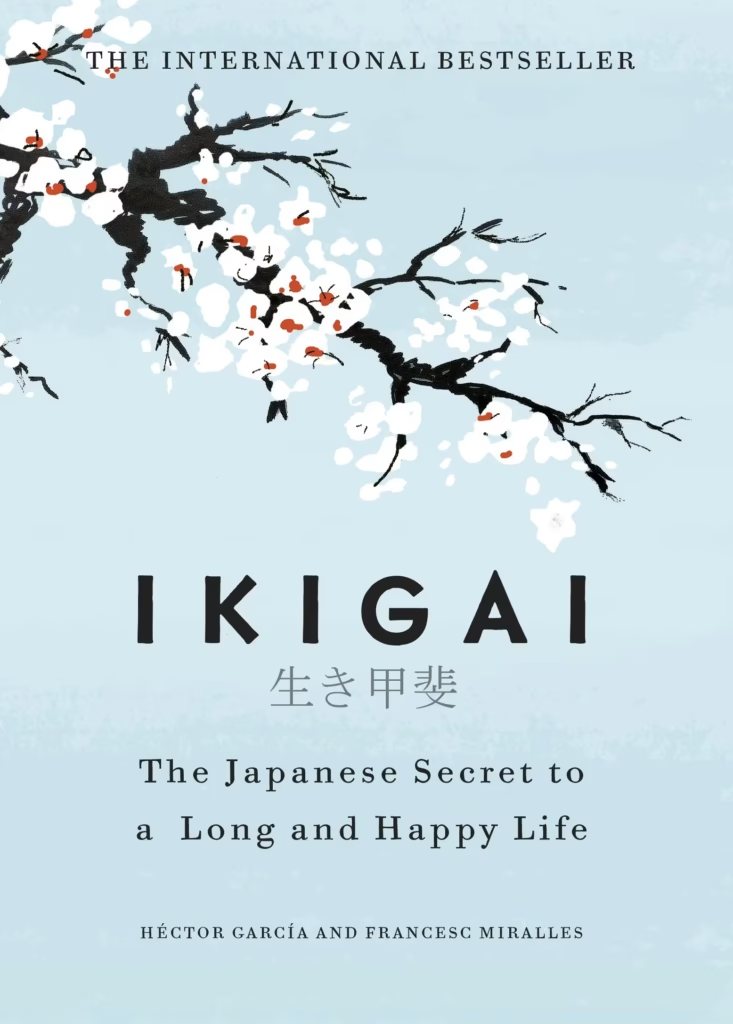
Ikigai: The Japanese Secret to a Long and Happy Life explores how people in Okinawa live longer, happier lives by finding purpose in everyday moments. Written by Hector Garcia and Francesc Miralles, this book shows how to slow down, connect deeply, and build daily habits that bring joy and longevity. It’s not about grand success—it’s about finding small reasons to keep going every day.
Ikigai is a powerful book that explores the Japanese philosophy of finding purpose and joy in everyday life , drawing inspiration from the lifestyle of people living on Okinawa , one of the world’s Blue Zones where people live longer, healthier lives.
Written by Hector Garcia (a Spanish-Japanese writer who lives in Tokyo) and Francesc Miralles (a Spanish author and journalist), this book blends Eastern wisdom with Western storytelling , offering readers practical insights into how to live with meaning, clarity, and peace—no matter your age or stage in life.
The word ikigai translates to “reason for being” or “the reason you wake up in the morning.” It’s not just about happiness—it’s about finding value and fulfillment in the small things.
“Find your ikigai, and you will never work a day in your life.”
This summary gives you a deep yet concise breakdown of the book’s core ideas, helping you discover your own sense of purpose and live a more meaningful, joyful, and long life.
At its heart, ikigai is:
“The intersection of what you love, what you are good at, what the world needs, and what you can be paid for.”
This concept is visualized as a Venn diagram with four overlapping areas:
Finding balance at the center of these circles gives you your ikigai —your personal sense of mission and motivation.
Key Insight: Ikigai isn’t a grand life plan—it’s the daily habits, passions, and relationships that give life meaning.
A large part of the book focuses on Okinawa, Japan , where many people live past 100 and enjoy active, fulfilling lives well into old age.
Garcia and Miralles explore why:
One key idea is the concept of moai —a group of lifelong friends who offer emotional and financial support throughout life.
“Having a strong social circle and a clear reason to live increases longevity.”
Important Lesson: Purpose, connection, and rhythm—not money or youth—are the keys to lasting happiness.
In Western culture, retirement often brings a loss of identity and purpose. But in Japan, especially among those who practice ikigai, people never retire from their reason to live .
They continue contributing through:
“When you have a reason to live, you naturally want to live longer.”
This mindset leads to better mental health, reduced stress, and greater satisfaction—even during difficult times.
The authors break down ikigai into four essential components:
Focus on small joys and daily routines that bring fulfillment—like drinking tea, walking, or cooking.
“Don’t wait for big moments. Find happiness in the little things.”
Physical movement and mental engagement keep the brain sharp and the body healthy.
“A sedentary life is the enemy of ikigai.”
Close friendships and community bonds provide emotional support and a sense of belonging.
“Your moai keeps you grounded and connected.”
Do what brings you joy, even if it doesn’t make you rich. Passion fuels energy and creativity.
“Money comes and goes—but purpose lasts.”
Key Insight: Ikigai grows from consistency, not intensity. It’s found in the rhythm of daily life.
The book highlights several daily habits practiced by people in Okinawa:
Okinawans follow the rule of hara hachi bu —eating until you’re 80% full. This helps prevent overeating and supports longevity.
Regular social interaction reduces loneliness and improves mental health.
Curiosity and learning don’t stop with age. Many elderly people in Okinawa take up new skills, crafts, or activities.
Walking, gardening, and light physical activity are built into daily life—not forced exercise.
Simple rituals like expressing thanks before meals or reflecting at the end of the day help maintain a positive outlook.
Clutter-free homes and intentional living reduce stress and improve focus.
“Simplicity is the essence of ikigai.”
For professionals and entrepreneurs, ikigai offers a refreshing alternative to hustle culture. Instead of chasing burnout, ikigai encourages:
Many people feel lost when they don’t find their dream job right away. Ikigai teaches that purpose emerges gradually through consistent action and small joys.
“You don’t find ikigai—you grow it.”
Important Lesson: You don’t need a perfect career to feel fulfilled—just a sense of direction and meaning.
The authors suggest asking yourself these questions:
These questions help you identify your unique ikigai.
They also encourage readers to:
“Your ikigai may change over time—but it should always guide you forward.”
Throughout the book, Garcia and Miralles share inspiring stories of people living with ikigai:
He wakes up early every day to fish, not because he has to—but because he loves it. He says, “I don’t see it as work. I see it as my calling.”
She learned pottery in her 50s and now sells her pieces locally. She finds joy in creation and connection—not just income.
At 92, he still tends his garden daily. He says, “It keeps me young. And it makes me feel needed.”
These real-life examples show that ikigai isn’t about wealth or fame—it’s about living fully, no matter your age or circumstances .
The book encourages several powerful mindset changes:
“Ikigai isn’t something you achieve—it’s something you live.”
The authors offer actionable advice for discovering and nurturing ikigai:
Start your day with intention—whether it’s stretching, journaling, or enjoying a cup of tea mindfully.
Write down what makes you happy, what you’re grateful for, and what gives your life meaning.
Remove physical and mental clutter that distracts you from what matters most.
Surround yourself with a small group of close friends who support you emotionally and socially.
Whether it’s reading, cooking, writing, or walking—find small pleasures that energize you.
Eat mindfully and stop when you’re 80% full. This simple habit improves health and awareness.
Important Lesson: Ikigai begins with small, intentional choices—and grows from there.
Modern psychology confirms what the Japanese have known for centuries:
Ikigai aligns closely with concepts like:
All of them point to the same truth:
Happiness comes from meaning, not achievement alone.
Ikigai is more than a book about happiness—it’s a guide to living with intention, joy, and purpose every single day.
It teaches that:
As the authors write:
“People who live with ikigai never really retire—they just keep going, because they know why they’re going.”

Comments
1Thanks for the book!