
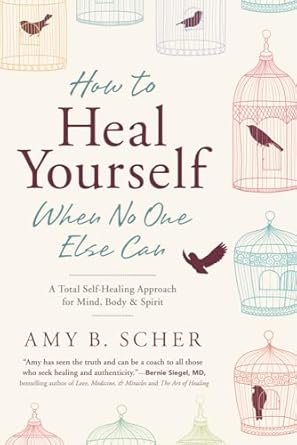
Stuck in chronic pain, emotional trauma, or illness that won’t budge? How to Heal Yourself When No One Else Can by Amy B. Scher offers a powerful, step-by-step energy healing method that works when everything else fails. Using tapping, chakra clearing, and emotional release techniques, you’ll learn to clear stuck energy, rewire limiting beliefs, and reclaim your vitality, no matter your diagnosis. Healing begins when you realize the power was inside you all along. Summary powered by VariableTribe
Amy B. Scher’s How to Heal Yourself When No One Else Can emerges as a groundbreaking and deeply compassionate guide for those navigating chronic illness, emotional trauma, or persistent life challenges that resist conventional solutions. Drawing from her own harrowing journey with late-stage Lyme disease, an illness that left her bedridden and dismissed by countless medical professionals, Scher blends personal narrative with energy healing techniques to offer a radical proposition: true healing often begins not in the doctor’s office, but within the landscape of your own energy field.
The book is not a rejection of modern medicine but a bold expansion of it. Scher argues that while physical symptoms manifest in the body, their roots often lie in unresolved emotional patterns, limiting beliefs, and stuck energy. When traditional treatments fail or plateau, energy healing provides a complementary path, one that empowers individuals to become active participants in their own recovery. The title’s promise is both literal and metaphorical: when external help runs out, your inner resources do not.
At the heart of Scher’s approach is the 6-Step Energy Healing Process, a structured yet intuitive framework designed to release emotional blockages and restore energetic flow. These steps Feel It, Name It, Locate It, Release It, Replace It, and Anchor It, guide readers through a process of deep self-inquiry and energetic clearing. For example, “Locate It” invites readers to identify where a particular emotion (like fear or shame) resides in the body as physical sensation, a tight chest, a knot in the stomach, and then use simple tapping or visualization to release it.
One of the book’s most empowering aspects is its accessibility. Scher demystifies energy work, presenting it not as mystical or esoteric, but as a natural extension of emotional awareness. She avoids complex jargon, instead offering clear, step-by-step instructions that anyone can follow, whether sitting on a sofa, lying in bed, or even commuting. Techniques like Emotional Freedom Technique (EFT or “tapping”), chakra balancing, and meridian tracing are explained with warmth and practicality, accompanied by real-life success stories from her clients and her own life.
Scher also tackles the psychological barriers to healing with remarkable honesty. She explores how beliefs like “I don’t deserve to get better” or “My pain is my identity” can unconsciously sabotage recovery. Through gentle but firm inquiry, she helps readers identify and reframe these subconscious programs, replacing them with affirmations rooted in self-worth and possibility. This cognitive-emotional shift, she insists, is often the missing link in persistent health issues.
Critically, Scher emphasizes that healing is not always about cure, it’s about freedom. Freedom from suffering, from self-blame, from the tyranny of symptoms that define your days. She shares how, even when her Lyme symptoms didn’t fully vanish, her relationship to them transformed. Pain no longer controlled her; she learned to live with greater peace, joy, and agency despite it. This distinction, between healing and curing, is central to the book’s philosophy and offers profound relief to those who’ve been told they must “fix” themselves to be whole.
The tone throughout is warm, witty, and refreshingly candid. Scher doesn’t peddle false hope or magical thinking. Instead, she offers what she calls “practical spirituality”: tools that work whether or not you believe in them, because they’re grounded in your own attention, breath, and intention. Her vulnerability about her darkest moments, weeping in hospital beds, feeling abandoned by the medical system, makes her guidance feel earned, not theoretical.
How to Heal Yourself When No One Else Can has resonated with hundreds of thousands precisely because it meets people where they are: exhausted, frustrated, and ready to try something different. It’s a manual for the moment when you realize no one is coming to save you, and that, in fact, you never needed saving. You only needed remembering: that you’ve always held the keys to your own healing.
Summary powered by VariableTribe
The book opens with Scher’s personal story, establishing credibility through lived experience. She then introduces core concepts of energy anatomy, chakras, meridians, and the biofield, before detailing her 6-Step Process. Each step gets its own chapter with guided exercises, troubleshooting tips (e.g., “What if I can’t feel anything?”), and client case studies. Later chapters address specific issues: forgiveness, fear, grief, and the role of joy in healing. The final section focuses on integration, how to maintain energetic clarity long-term.
Scher’s philosophy rests on three pillars: energy follows attention, emotions are energy in motion, and you are your own greatest healer. She integrates principles from EFT, traditional Chinese medicine, and New Thought spirituality, but filters them through a pragmatic, no-nonsense lens. Her approach is trauma-informed, emphasizing safety, choice, and pacing.
A woman with fibromyalgia uses daily tapping to reduce pain flares. A veteran processes PTSD by locating fear in his body and releasing it with breathwork. A cancer patient combines chemotherapy with chakra balancing to maintain emotional resilience. In each case, energy healing complements, never replaces, medical care, offering agency where patients often feel powerless.
While skeptics may question the scientific basis of energy work, Scher wisely focuses on outcomes, not theory: “If it reduces your suffering, it’s valid.” The book’s strength lies in its user-friendly design, readers can start healing within minutes of opening it. Some may wish for more on cultural context or scientific studies, but Scher prioritizes accessibility over academic rigor, which aligns with her mission: healing for everyone, not just the spiritually fluent.
Measurable outcomes include reduced symptom severity, improved emotional regulation, increased sense of control, and greater engagement in daily life, even amid ongoing health challenges.

Comments
1GREAT, how to do tapping