
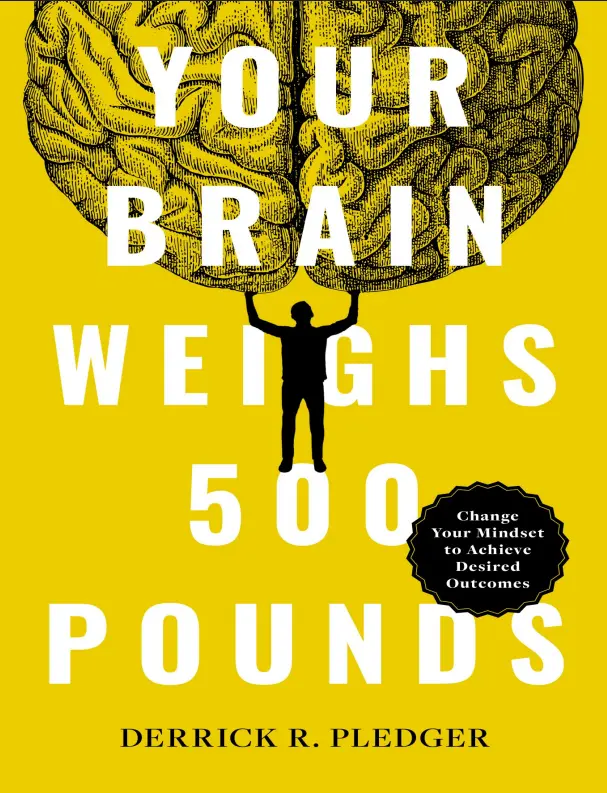
Your Brain Weighs 500 Pounds is a teen-friendly guide to managing stress, identity, and emotional weight. Derrick R. Pledger speaks directly to young people, helping them understand their brains, emotions, and self-worth. With honesty and compassion, the book equips teens to deal with pressure, build resilience, and find clarity in a world that often feels overwhelming.
Your Brain Weighs 500 Pounds is a motivational and mindset-focused guide designed primarily for teenagers and young adults dealing with emotional pressure, self-doubt, and the weight of expectations—both internal and external.
Written by Derrick R. Pledger , an author, speaker, and leadership coach, this book uses short, impactful chapters—referred to as “recipes”—to help readers reshape their thinking, build discipline, and achieve greatness through mindset shifts .
The title symbolizes how teens often feel mentally burdened by life’s challenges—even though the brain only weighs about three pounds, it can feel like it carries 500 pounds of stress, fear, expectation, and pressure .
“You may not be special—but you were made to do something special.”
This book is not just for teens—it’s also valuable for anyone looking to improve their mindset, overcome procrastination, and build better habits for personal and professional growth.
Pledger opens with a powerful metaphor:
“If you’re reading this, your brain probably weighs about 3 pounds—but sometimes it feels like 500.”
He explains that while our brains are biologically light, the emotional load we carry can feel crushing —especially during adolescence, when identity, relationships, school, and future decisions weigh heavily.
He explores how today’s youth are under immense pressure from:
Key Insight: You’re not weak because you feel overwhelmed—you’re human. And understanding your brain is the first step to managing its weight.
A major theme of the book is helping teens understand how their minds work. Pledger explains:
He uses real-life examples and relatable analogies to show how thoughts shape feelings, and how both impact actions and outcomes.
“Your brain is not broken—it’s just trying to protect you. But sometimes it gets confused about what’s actually dangerous.”
Important Lesson: Learning how your brain works helps you take back control—especially over your thoughts and emotions.
One of the most impactful parts of the book focuses on the idea that teens carry emotional baggage —things like past failures, trauma, negative self-talk, and comparison traps.
Pledger encourages readers to:
He also talks about how social media fuels insecurity by creating unrealistic comparisons and constant validation-seeking behavior.
“You don’t have to carry every hurt forever. Some things are meant to be felt—not kept.”
Key Insight: What you think about yourself matters more than what others think about you.
Throughout the book, Pledger offers actionable strategies to help teens lighten their mental load:
Important Lesson: You were not made to carry everyone else’s expectations. You were made to discover your own path.
Pledger dives deep into how teens form their identity and how they define their self-worth .
He discusses:
He introduces the idea of “the mirror test” :
“You weren’t created to live someone else’s dream. You were created to live your purpose.”
Key Insight: Building a healthy relationship with yourself is one of the most important things you can do for your mental health.
Pledger addresses the intense pressure teens feel around:
He reminds readers:
“You are not your GPA. You are not your test score. You are not what people say behind your back.”
Instead of chasing perfection, he encourages teens to focus on progress, growth, and effort.
Important Lesson: Success isn’t about being perfect—it’s about showing up, learning, and pushing forward.
Teen years are full of complex social dynamics. Pledger guides readers through:
“You don’t need followers—you need believers in you.”
This message empowers teens to stop seeking popularity and start building meaningful connections.
What makes this book stand out is its use of real-life stories and conversations . Pledger shares insights from his experience working with teens, including personal anecdotes and quotes from students who’ve struggled and grown.
These stories make the content relatable and remind readers:
Key Insight: You are not your worst day. You are capable of overcoming anything with the right mindset and support.
While the book is written directly to teens, Pledger also speaks to educators, parents, and mentors. He emphasizes the importance of:
“Teens don’t always need advice, they need someone who listens without judgment.”
Important Lesson: Supportive adults play a huge role in shaping how teens view themselves and the world.
Your Brain Weighs 500 Pounds is not just a book—it’s a lifeline for teens dealing with stress, confusion, and pressure.
It teaches that:
As Pledger writes:
“You were never made to stay stuck. You were made to rise.”
This book gives teens the tools to start rising—mentally, emotionally, and spiritually.