
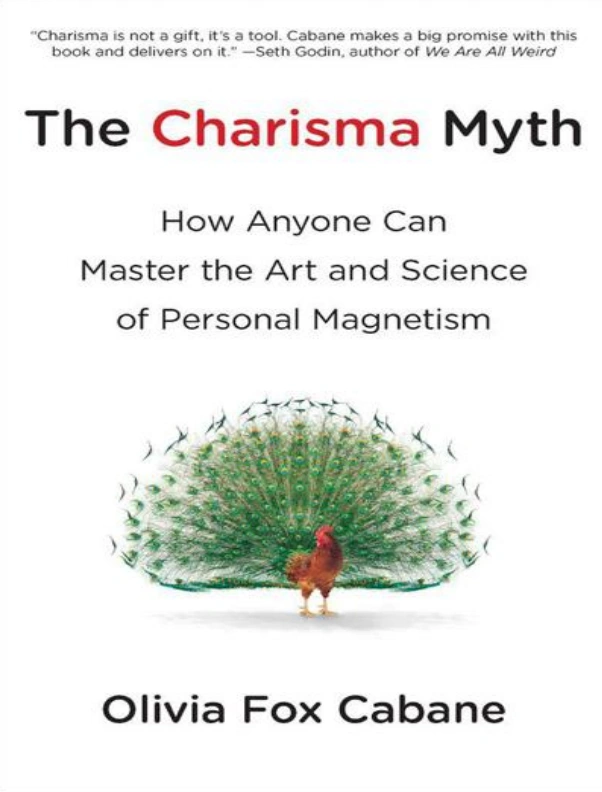
Contrary to popular belief, charisma isn’t reserved for the naturally gifted. It’s a set of behaviors and mindsets anyone can learn. By mastering presence, warmth, and power, you can become more influential, persuasive, and memorable. Whether in business or life, The Charisma Myth teaches you how to project confidence, connect deeply, and leave a lasting impression.
Olivia Fox Cabane opens her groundbreaking book with a powerful demonstration of charisma’s malleability. In 1955, Marilyn Monroe walked through Grand Central Terminal completely unnoticed, then transformed herself into a magnetic presence simply by changing her posture and body language. This illustrates Cabane’s central thesis: charisma is not an innate gift but a learnable skill that anyone can develop through practice.
The book challenges three common myths: that you must be naturally outgoing, physically attractive, or fundamentally change your personality to be charismatic. Instead, Cabane presents charisma as a set of specific behaviors and mental states that can be systematically learned and refined.
Presence forms the foundation of all charisma. It means being fully engaged in the moment rather than distracted by internal thoughts. Cabane notes that research shows our minds wander nearly half the time, making true presence rare and therefore highly impactful.
The author provides simple techniques to develop presence:
Focus on physical sensations like your breath or the feeling in your toes
Practice mindful listening by paying full attention to conversations without preparing responses
Use the “responsibility transfer” technique to reduce anxiety by visualizing handing your worries to a benevolent universe
Cabane emphasizes that even a few seconds of genuine presence can transform an interaction, making others feel truly heard and valued.
Power is the perception that you can affect the world around you through influence, authority, expertise, or status. Cabane explains that power is communicated primarily through:
Body language that takes up space and conveys confidence
Voice control using slower speech, strategic pauses, and dropping intonation at sentence ends
Posture that appears grounded and self-assured
The “big gorilla” exercise demonstrates how adopting expansive physical postures can trigger actual biochemical changes that increase confidence hormones and decrease stress hormones.
Warmth is goodwill toward others—the perception that you care about their wellbeing. Cabane provides extensive tools for developing warmth:
Gratitude practices like finding three things to appreciate in any situation
Compassion exercises including visualizing others with “angel wings”
Self-compassion techniques such as the Metta loving-kindness meditation
The author notes that warmth is often the missing element for highly competent professionals who come across as cold or intimidating.
Cabane provides a systematic approach to handling the mental discomfort that inhibits charisma:
1. Destigmatize Discomfort
Recognize that difficult emotions are normal human experiences. Rather than feeling shame about feeling anxious or insecure, understand that these reactions are survival mechanisms that everyone experiences.
2. Neutralize Negativity
Our minds often distort reality, focusing on negatives due to evolutionary survival instincts. Cabane suggests:
Viewing negative thoughts as “graffiti on a wall” that doesn’t define you
Depersonalizing experiences (“there is anger arising” rather than “I am angry”)
Zooming out to see your situation from a cosmic perspective
3. Rewrite Reality
Since the brain can’t distinguish imagination from reality, consciously create helpful interpretations of challenging situations. Cabane shares how she transformed pre-speech anxiety by imagining her insomnia as preparation for future success—a visualization that proved remarkably accurate.
Based primarily on presence and attentive listening, this style makes others feel heard and understood. Ideal for one-on-one interactions, consultations, and building trust. Elon Musk and Bill Gates exemplify this approach.
Projecting complete conviction in a noble vision, this style inspires belief and commitment. Steve Jobs and Martin Luther King Jr. demonstrated visionary charisma. It requires crafting compelling narratives and communicating with authentic passion.
Radiating warmth and complete acceptance, this style creates emotional bonds and safety. The Dalai Lama exemplifies this approach. It’s particularly effective for difficult conversations and building loyalty.
Projecting status, competence, and confidence, this style commands attention and obedience. It’s most effective in crises and situations requiring decisive action. Colin Powell represents this style.
Cabane emphasizes that the most charismatic people can flex between styles based on personality, situation, and goals.
Within seconds, people form lasting judgments. Cabane provides detailed guidance on:
Tribal wear: Dressing appropriately for your environment
The perfect handshake: Ten specific steps including palm contact, firm grip, and eye contact
Conversation starters: Using open-ended questions and bouncing attention back to others
Listening requires:
Never interrupting
Pausing before responding
Making eye contact
Showing absorption through facial expressions
Speaking benefits from:
Vocal variation: Fluctuating pitch, tempo, and volume
Power cues: Slowing speech, inserting pauses, dropping intonation
Warmth cues: Smiling while speaking (even on the phone)
Visual language: Using metaphors and sensory-rich descriptions
Cabane emphasizes that nonverbal communication often outweighs words, especially in high-stakes situations. Key techniques include:
Mirroring: Matching others’ posture to build rapport
Personal space: Respecting comfort zones
Eye contact: Maintaining soft, relaxed focus
Posture: Taking up space while remaining still
The book provides frameworks for:
Handling difficult people: Using the “divide and conquer” approach and the Benjamin Franklin Effect (asking favors to build rapport)
Delivering bad news: Combining compassion with clear communication
Giving criticism: Starting positively, being specific, depersonalizing the issue
Apologizing: Listening fully, showing genuine remorse, and offering solutions
Charismatic presentations require:
One clear message with three to five supporting points
Stories, metaphors, and relatable examples
Practiced delivery with strategic pauses
Focus on the audience rather than self
During uncertainty, charismatic leaders should:
Maintain equanimity (others will mirror your calm)
Express high expectations with confidence
Articulate a bold vision
Act decisively
Cabane addresses the potential downsides of increased charisma:
Envy and resentment: Counteract by reflecting glory onto others and giving people ownership of your success through the JALIR sequence (Justification, Appreciation, Laying out the impact, Responsibility).
Oversharing: When people feel too comfortable, they may reveal too much. Interrupt with “me too” stories to help them regain perspective.
Higher expectations: Counter by showing vulnerability and humanity. Clinton’s “Manhattan Project” vulnerability campaign transformed his public perception.
Loneliness at the top: Stay connected by seeking honest feedback and maintaining genuine peer relationships.
Power abuse: Charisma can convince people even when you’re wrong. Practice humility and second-guess your decisions.