
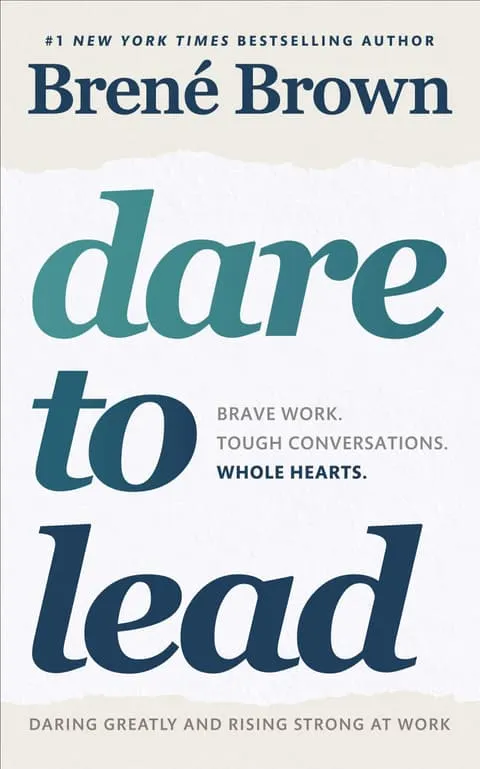
The Big Problem This Book Solves
Have you ever worked for a boss who avoids tough conversations? Who says “yes” to your face then does something else behind your back? Who blames instead of teaches? Who rewards exhaustion as if it’s a badge of honor?
Brené Brown spent 20 years researching why organizations struggle with these problems. Her conclusion? We don’t have a skills problem. We have a courage problem. And courage isn’t something you’re born with – it’s four specific skill sets anyone can learn.
The Most Important Idea: Vulnerability Is NOT Weakness
This is the #1 myth the book destroys. Brown defines vulnerability as “the emotion we experience during times of uncertainty, risk, and emotional exposure.”
Here’s her killer question that she asks every audience: “Can you give me a single example of courage that did NOT require vulnerability?”
No one ever can. Think about it:
-
Speaking up when you disagree = vulnerability
-
Admitting a mistake = vulnerability
-
Giving honest feedback = vulnerability
-
Asking for help = vulnerability
-
Innovating when failure is possible = vulnerability
If you want courage, you MUST be willing to be vulnerable. There’s no shortcut.
The Four Courage Skill Sets (The Heart of the Book)
Skill #1: Rumbling with Vulnerability
“Rumbling” means staying in the messy middle of a hard conversation instead of running away. When you feel uncomfortable, your brain wants to escape. Rumbling means staying anyway.
The Six Myths Brown Destroys:
-
“Vulnerability is weakness” – False. It’s literally the birthplace of courage, love, joy, and creativity.
-
“I don’t do vulnerability” – You do. Every time you try something new, wait for news, apologize, or care about something that could fail. You can do vulnerability consciously, or it will do you unconsciously.
-
“I can go it alone” – We are biologically wired for connection. Needing no one is not strength; it’s a lie your brain tells you.
-
“You can engineer the discomfort out” – No app, algorithm, or system can remove uncertainty from human relationships.
-
“Trust comes before vulnerability” – They grow together. You need to risk a little vulnerability to build trust, and you need trust to risk more vulnerability.
-
“Vulnerability is disclosure” – NO. Vulnerability without boundaries is confession, manipulation, or desperation. Great leaders share appropriately, not everything with everyone.
The Best Rumble Tool: “The story I’m telling myself is…”
Example: Instead of saying “You’re angry at me,” say “The story I’m telling myself is that you’re frustrated because I didn’t finish the report. Is that accurate?”
This single phrase has saved thousands of conversations. It acknowledges you’re making up a story (which we all do), invites correction without blame, and keeps connection alive.
Skill #2: Living into Your Values
The Problem: Most organizations have posters with words like “integrity” and “excellence,” but no one knows what those actually mean as behaviors.
The Solution: Pick TWO core values (not ten). Then define 3-4 specific behaviors that support each value and 3-4 “slippery behaviors” that violate it.
Example – If your value is “courage”:
-
Supporting behaviors: Speak up in meetings, admit when I don’t know something, give direct feedback
-
Slippery behaviors: Stay quiet to avoid conflict, pretend I have all the answers, talk about people instead of to them
Why this works: When values are vague, no one can be held accountable. When they’re specific behaviors, everyone knows exactly what’s expected.
The Bottom Line: “Clear is kind. Unclear is unkind.” Feeding people half-truths or avoiding clarity to stay comfortable is actually cruel.
Skill #3: BRAVING Trust
Trust is not built in grand gestures. It’s built in small moments – what researcher John Gottman calls “sliding door moments.”
The BRAVING Inventory (7 elements of trust):
| Element | What It Means |
|---|---|
| Boundaries | You respect my limits. You say no when needed. |
| Reliability | You do what you say you’ll do. |
| Accountability | You own your mistakes, apologize, and make amends. |
| Vault | You keep confidences. You don’t share what isn’t yours to share. |
| Integrity | You choose courage over comfort. What’s right over what’s easy. |
| Nonjudgment | We can both ask for help without fear of being judged. |
| Generosity | You assume the best about my intentions. |
The Self-Trust Question: Use the same BRAVING list to ask yourself: Do I keep my own boundaries? Do I do what I tell myself I’ll do? Am I generous with myself when I fail?
Brown’s powerful quote: “I don’t trust people who don’t love themselves and tell me ‘I love you.’ Be careful when a naked person offers you a shirt.” – Maya Angelou
Skill 4: Learning to Rise (Getting Back Up)
If you’re brave enough to dare greatly, you WILL fall. Fail. Get your ass kicked. This skill set teaches you how to get back up.
The 3-Step Process:
Step 1: The Reckoning – Recognize when you’re emotionally hooked. Your body gives signals: clenched jaw, dry mouth, racing thoughts. Pause and get curious instead of reacting.
Step 2: The Rumble – Write down your “shitty first draft” (SFD) – the ugly, blame-filled story you’re making up. Then reality-check it using “The story I’m telling myself is…”
Step 3: The Revolution – Once you’ve rumbled with the truth, write a new ending. Own the story so it doesn’t own you.
The Delta: The difference between your SFD and the truth is where all your learning lives.
The 16 Armored Behaviors (What to Stop Doing)
Brown identifies 16 ways leaders protect themselves instead of leading bravely. The most common:
-
Perfectionism – Thinking “if I look perfect, I can avoid shame.” Actually makes everything worse.
-
Foreboding Joy – When something good happens, immediately thinking “when will disaster strike?”
-
Numbing – Using food, work, alcohol, social media to avoid discomfort. But you can’t numb dark emotions without also numbing joy.
-
Being a Knower – Needing to have all the answers instead of staying curious.
-
Cynicism & Sarcasm – Cheap ways to tear down without contributing anything.
-
Leading from Hurt – Projecting your unhealed wounds onto others.
The Best Stories from the Book
The Ham Fold-over Debacle: Brown was overwhelmed with work. Her husband Steve came home and said “We don’t even have any damn lunch meat.” She launched into a full argument, certain he was attacking her. When she finally used “The story I’m telling myself is…” she learned he was just hungry. He wanted a ham fold-over sandwich. The entire fight was in her head.
Colonel DeDe Halfhill: In the Air Force, she asked airmen who was tired. Everyone raised their hands. Then she asked “Who’s lonely?” Fifteen people raised their hands. By naming the real emotion, she opened conversations that saved lives.
Stefan Larsson at Old Navy: He turned around the company by creating a “no shame, no blame” culture where outcomes were just “learnings,” not judgments. His team added $1 billion in sales in three years.
The One Sentence You’ll Never Forget
“You can either invest a reasonable amount of time attending to fears and feelings, or squander an unreasonable amount of time managing ineffective and unproductive behavior.”
Choose wisely.
Who Should Read This Book
-
Leaders at any level (CEO to team lead)
-
Anyone who dreads giving or receiving feedback
-
People who avoid tough conversations
-
Teams stuck in gossip, blame, or back-channeling
-
Anyone tired of “poster values” that no one actually lives
What You’ll Walk Away With
After reading Dare to Lead, you’ll have:
-
A clear definition of vulnerability (and why it’s essential)
-
The “story I’m telling myself” tool to defuse conflict
-
Your two core values with specific behaviors
-
The BRAVING inventory to build and repair trust
-
Permission to be imperfect, scared, and brave at the same time
Brown’s final invitation: “Choose courage over comfort. Choose whole hearts over armor. Choose the great adventure of being brave and afraid at the exact same time.”