
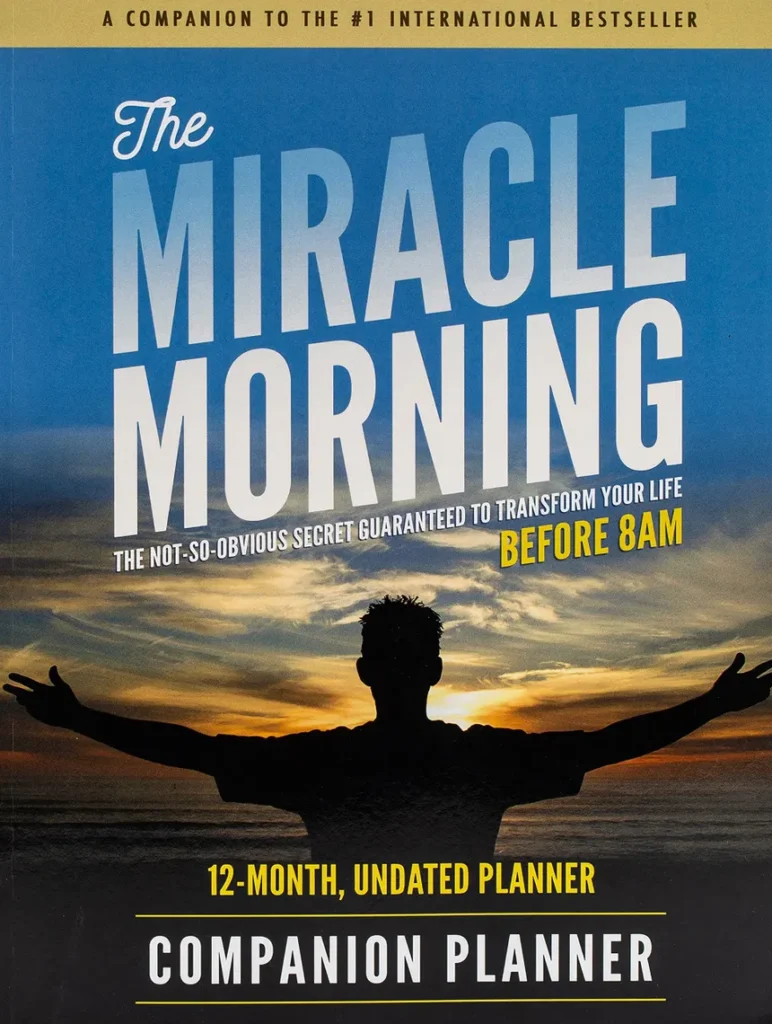
Hal Elrod’s “The Miracle Morning” transforms your life through six daily practices: Silence, Affirmations, Visualization, Exercise, Reading, and Scribing. After dying in a car accident and facing $425,000 in debt, Elrod created this 30-day system. His 5-step snooze-proof strategy makes waking up easy. Your success cannot exceed your personal development level. Join thousands who changed their lives—all before 8:00 a.m.
The Miracle Morning is built on a simple but profound idea: how you wake up each morning determines the quality of your entire life. Hal Elrod argues that your level of success will never exceed your level of personal development, because success is something you attract by the person you become.
At age 20, Elrod was hit head-on by a drunk driver, died at the scene, and was clinically dead for six minutes. He suffered 11 broken bones, permanent brain damage, and was told he might never walk again. He recovered and rebuilt his life. Then in 2008, during the economic crash, he lost half his income, fell $425,000 into debt, became severely depressed, and hit rock bottom—which he describes as worse than dying. Out of desperation, he created a morning routine that transformed his life within months, leading him to pay off all debt, double his income, run a 52-mile ultra-marathon, and achieve his dreams.
Elrod presents a sobering statistic: of 100 people at the start of their careers, only 1 will be wealthy, 4 financially secure, 5 will still be working out of necessity, 36 will be dead, and 54 will be broke and dependent on others. Only 5% create lives of freedom. The causes of mediocrity include:
Rearview Mirror Syndrome (RMS) – Believing your past limits your future. People filter every choice through past failures.
Lack of Purpose – Most people can’t articulate why they wake up, living merely to survive.
Isolating Incidents – Thinking each choice only affects that moment, not realizing that how you do anything is how you do everything.
Lack of Accountability – Without someone holding you responsible, most people don’t follow through.
Mediocre Circle of Influence – You become the average of the five people you spend the most time with.
Lack of Personal Development – You can’t achieve Level 10 success with Level 2 personal development.
Lack of Urgency – The “someday” mindset leads to a life of regret.
Elrod asks: Why did you wake up this morning? Most people wake up because they have to, hitting snooze and resisting their lives. This resistance sends a message that you’d rather be unconscious than conscious. The snooze button is a form of self-sabotage. Every time you hit it, you’re programming yourself to not follow through on commitments.
Set intentions before bed – Your first thought in the morning is usually your last thought before sleep
Move alarm clock across the room – Movement creates energy
Brush your teeth – Simple activity raises wake-up motivation
Drink a full glass of water – Dehydration causes fatigue
Get dressed or shower – Prepare to start your day
These six practices form the Miracle Morning routine:
S – Silence (meditation, prayer, deep breathing, gratitude). Benefits include reduced stress, increased self-awareness, clarity, and peace of mind.
A – Affirmations – Reprogram your subconscious mind by repeating statements about who you want to become. Elrod used affirmations to overcome his “horrible memory” from brain damage. Affirmations should include: what you want, why you want it, who you need to be, and what you’ll do.
V – Visualization – Mentally rehearse your ideal day and outcomes. Elrod visualized writing this book and people loving it. Use all five senses to make it vivid.
E – Exercise – Morning exercise boosts energy, health, confidence, and mental clarity. Even 10 minutes makes a difference.
R – Reading – Learn from experts who’ve already achieved what you want. Reading just 10 pages daily equals 18 books per year.
S – Scribing (Journaling) – Writing gains clarity, captures ideas, reviews lessons, and acknowledges progress. Journaling counters “gap-focus” (always focusing on what’s missing rather than what’s accomplished).
For busy people, Elrod offers a condensed version: 1 minute each for Silence, Affirmations, Visualization, Scribing, Reading, and Exercise. This ensures daily personal development even on hectic days.
Elrod divides habit formation into three 10-day phases:
Days 1-10: Unbearable – The new habit feels painful. Most people quit here, not realizing this phase is temporary.
Days 11-20: Uncomfortable – Still challenging but easier. Requires continued discipline.
Days 21-30: Unstoppable – The habit becomes part of your identity. You transform from someone who “tries” to someone who “is” (e.g., from “I’m not a morning person” to “I am a morning person”).
Elrod shares his own journey from hating running to completing a 52-mile ultra-marathon using this framework.
Elrod controversially argues that how you feel when waking up depends more on what you tell yourself than actual hours of sleep. Through experimentation, he found that affirming “I am getting exactly the sleep I need to feel energized” works better than focusing on hours. The mind-body connection is powerful.
Responsibility vs. Blame – Responsibility determines who is committed to improving things. Blame determines fault. You can’t change the past, but you can take responsibility for your future.
Your outer world reflects your inner world – Improve yourself first; your life situation will follow.
Do the right thing, not the easy thing – Every choice shapes who you’re becoming.
If they can do it, so can I – Another person’s success is evidence that it’s possible for you.
Elrod shares a vulnerable exercise: sending an email to 5-30 people asking for their honest feedback on your top 2-3 areas of improvement. He did this with family, friends, colleagues, and even ex-girlfriends. The feedback gave him more self-awareness and growth in one week than the previous five years combined.
Elrod challenges readers to commit to The Miracle Morning for 30 consecutive days. He provides a free Fast Start Kit with tracking sheets, daily checklists, and exercises. He strongly recommends finding an Accountability Partner to join the challenge.
Elrod concludes: “Let today be the day you give up who you’ve been for who you can become.” Where you are is a result of who you were, but where you end up depends entirely on who you choose to be from this moment forward. The Miracle Morning is not just a routine—it’s a way to wake up to your full potential and create the extraordinary life you deserve.